
Feng Shui for Studio Apartments: How to Create Zones and Maximize Energy Flow


Studio apartment feng shui presents a unique challenge: how do you create distinct, intentional energy zones in a single room that serves as bedroom, living room, workspace, and sometimes dining room all at once? In a conventional home, each room has a defined energetic purpose — the bedroom is for rest, the living room for gathering, the office for focus. In a studio, all of these energies compete for the same square footage.
This post contains affiliate links. If you buy through them, we may earn a small commission at no extra cost to you.
The good news is that feng shui has always been adaptable to constraints. Classical feng shui was developed in a context where most people lived in modest, multi-use spaces — the idea of dedicating separate rooms to separate functions is relatively modern and culturally specific. With the right approach, a well-designed studio apartment can actually have more intentional energy than a large home where rooms are filled haphazardly.
Here's how to apply feng shui principles to a studio apartment in a way that's practical, aesthetically cohesive, and genuinely effective at creating a space that supports different aspects of your life without each one bleeding into the others.
🔗 AFFILIATE LINK → Amazon: "room divider folding screen"💬 CTA sugerido: "A folding screen like this one is one of the most versatile tools for creating visual separation between zones without any permanent installation."
The Core Challenge: Zone Separation
The biggest feng shui issue in a studio apartment is the blurring of energetic boundaries. When your bed is visible from your desk, you're essentially sleeping in your office and working in your bedroom — neither energy is clean or distinct. When your sofa faces your unmade bed, the living space carries the residue of sleep energy. This blurring affects both the quality of your rest and the quality of your work and social energy.
Many of the same ideas apply to other small homes. See our guides to feng shui for tiny homes and feng shui for rental apartments.
The solution is intentional zone creation — using furniture, rugs, lighting, and sometimes physical dividers to create distinct energetic areas within the single room. You don't need walls to create zones; you need clear visual and energetic anchors that signal to your nervous system (and your chi) that you're moving from one mode of life to another.
Creating the Sleep Zone
The bed is the most energetically important piece of furniture in any home, and in a studio it's particularly critical to give it a defined, protected space. Position the bed in the commanding position — where you can see the door from the bed without being directly in line with it. This is a universal feng shui principle that applies regardless of the size of the space.
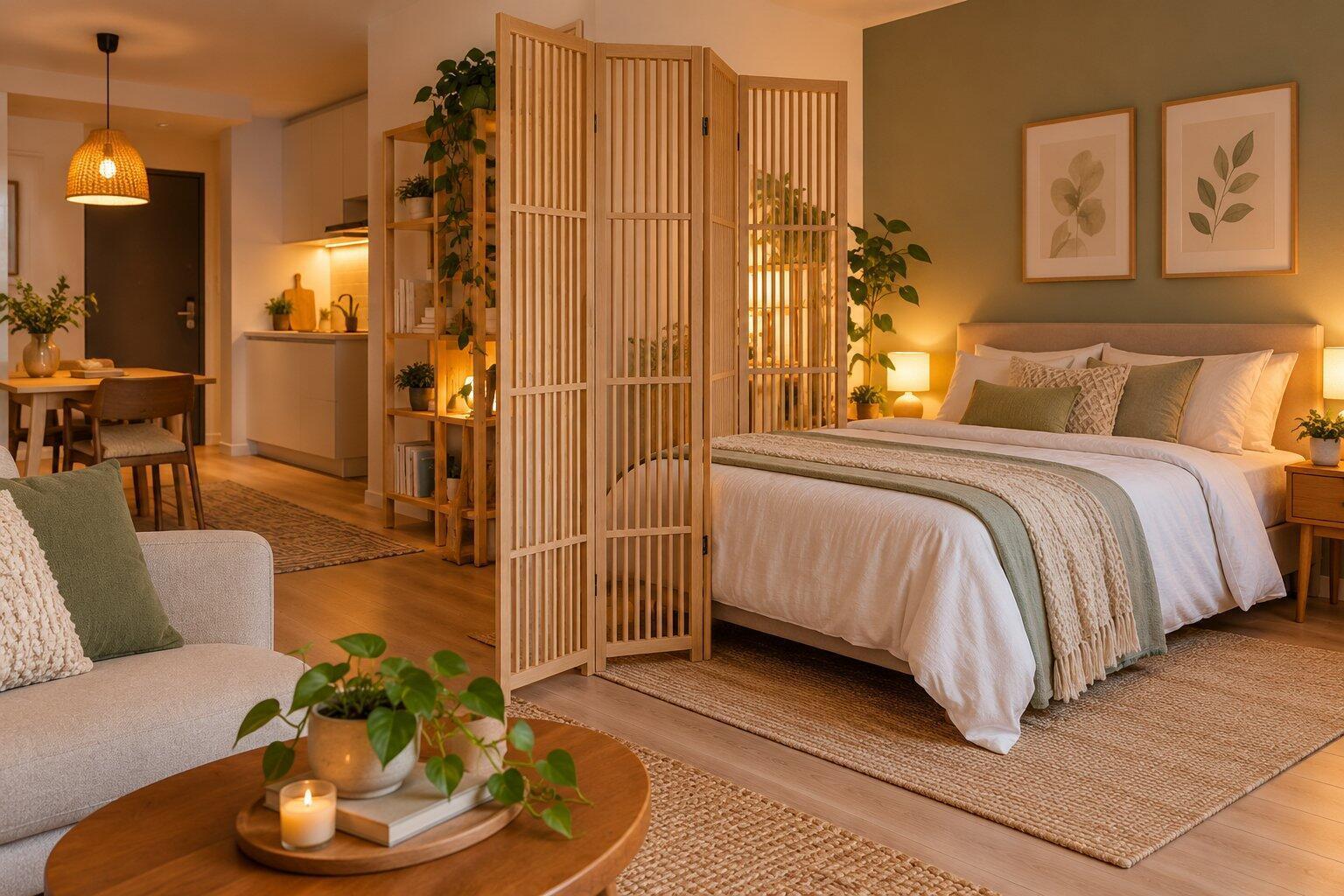
A folding screen or an open bookshelf is the simplest way to separate the bed without blocking light. Compare folding room dividers or open-back bookshelf dividers. For bed placement itself, follow these bedroom layout rules.
Create a visual boundary around the sleep zone. A curtain on a ceiling-mounted track is one of the most elegant solutions — it can section off the bed completely when you're working or hosting, and draws back when not needed. An open bookshelf used as a room divider is another option: it separates the space while allowing light to pass through and providing storage. A distinctive rug that only exists in the sleep zone is the simplest option — it defines the territory without adding any height or visual weight.
🔗 AFFILIATE LINK → Amazon: "ceiling curtain track room divider"💬 CTA sugerido: "Installing a ceiling curtain track like this to separate your sleeping area creates a more defined and restful environment — essential in a studio layout."
Keep Electronics Out of the Sleep Zone
In a studio, this requires discipline. The temptation to use your laptop in bed or keep your desk within arm's reach of your pillow is strong. But in feng shui, the bedroom (or the sleep zone within a studio) should be as free as possible from work energy and electronic stimulation. Even in a tiny space, designating "this area is for sleep and rest only" — and actually following that rule — makes a measurable difference to sleep quality and the overall energy of the space.
Creating the Work Zone
If you work from home in a studio, the home office zone is critical. Place your desk in the commanding position within its zone — facing the room, ideally with a wall behind you rather than a window (which can create instability). If the only wall space for a desk puts your back to the room, place a small mirror on the desk to see behind you.
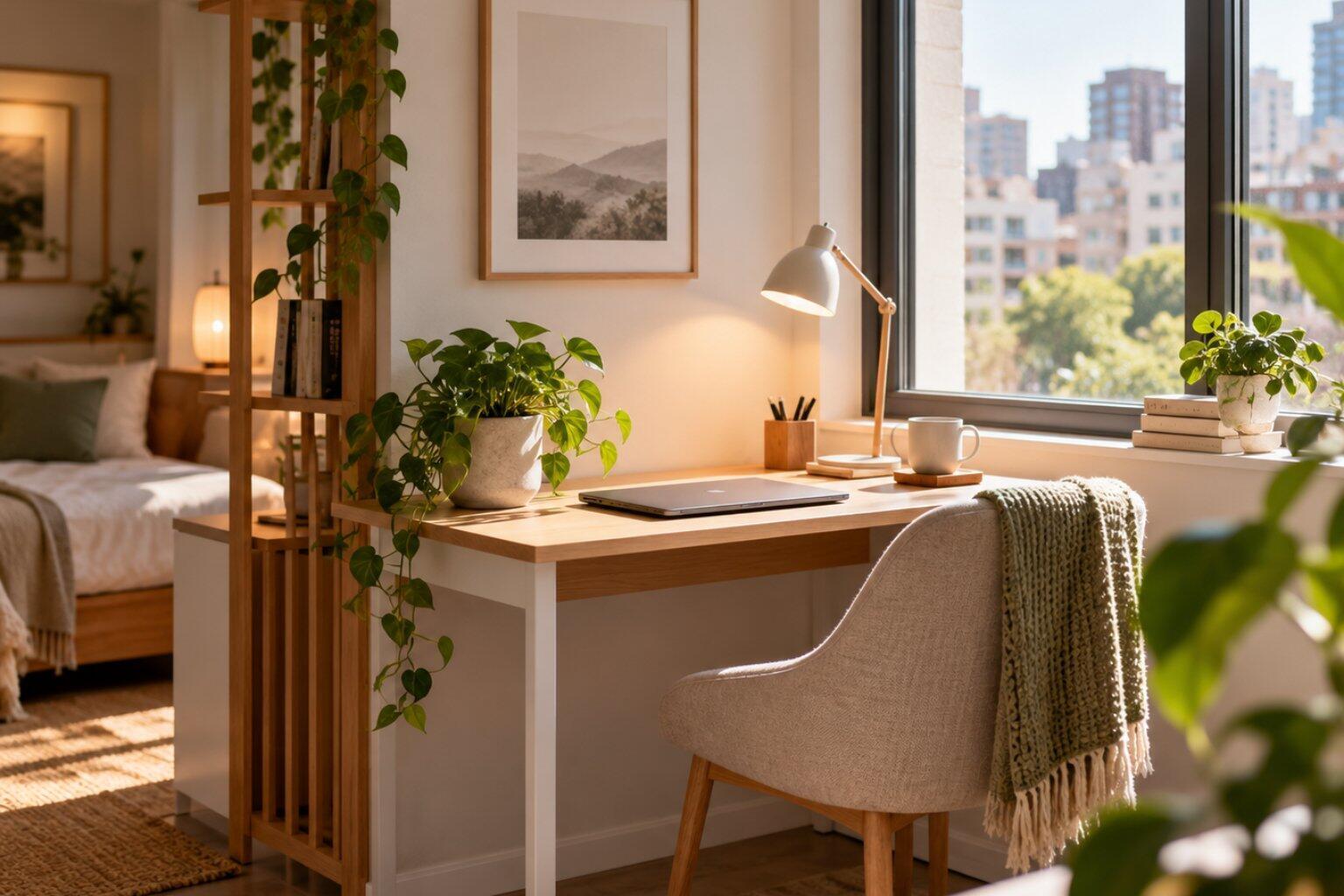
For desk position and focus, see these home office feng shui tips.
The work zone should have its own distinctive feel: brighter lighting (a task lamp at minimum), your work-specific tools and materials, and ideally some visual distinction from the rest of the apartment. A different rug, a plant specifically for the work area, or even just the consistency of keeping the desk clear and ready signals that this is a space for focused, productive energy.
In a studio, the sofa or seating area typically serves as the living room equivalent. Position seating so it faces toward the room and the entry, not toward the bed. A sofa with a solid back (facing outward) and a coffee table creates a clear social zone that functions as a room within the room.
This is the area for your most beautiful, uplifting decor — artwork you love, plants that bring life, good ambient lighting. Since this is the zone where you'll receive guests and spend leisure time, it should feel as open and welcoming as possible. Avoid cluttering it with workout equipment, storage bags, or anything that makes the space feel like a catch-all.
🔗 AFFILIATE LINK → Amazon: "compact loveseat apartment"💬 CTA sugerido: "In a studio, choosing a compact loveseat like this over a full-size sofa keeps the space proportionate and leaves room for energy to circulate freely."
Using Mirrors Wisely in a Studio
Mirrors in small spaces require careful thought. A strategically placed mirror can make a studio feel significantly larger — which is good. But mirrors facing the bed are considered problematic in feng shui (they can disturb sleep and amplify energy during a time meant for stillness). A large mirror on a wall perpendicular to the bed, or in the entry area, or facing a window to reflect natural light, works beautifully without the bedroom placement issue.
More detail on mirror placement near the bed is in our guide to bedroom mirror feng shui rules.
Decluttering as a Non-Negotiable
In a studio apartment, clutter is energetically magnified. There's nowhere for it to hide, no room to close the door on a mess. Every item in the space is visible (or almost visible) at all times. This makes decluttering not just aesthetically important but energetically essential. Before applying any other feng shui principle to a studio, a thorough declutter is step one.
Use these feng shui decluttering tips for small spaces to get started.
Choose storage that conceals rather than displays — ottomans with storage inside, beds with drawers, cabinets with doors rather than open shelving where possible. Visual clutter is chi clutter. The cleaner and more intentional your surfaces, the more spacious and alive the energy of the apartment will feel, regardless of its actual square footage.
Plants and Natural Elements
Plants are among the most powerful feng shui tools in a studio apartment because they bring living chi into a space that might otherwise feel like it's circulating the same stale energy. A plant in the wealth corner (southeast), one near the entry to invite good energy in, and one near the workspace to support vitality and focus — three well-chosen plants can transform the energetic atmosphere of even the smallest studio.
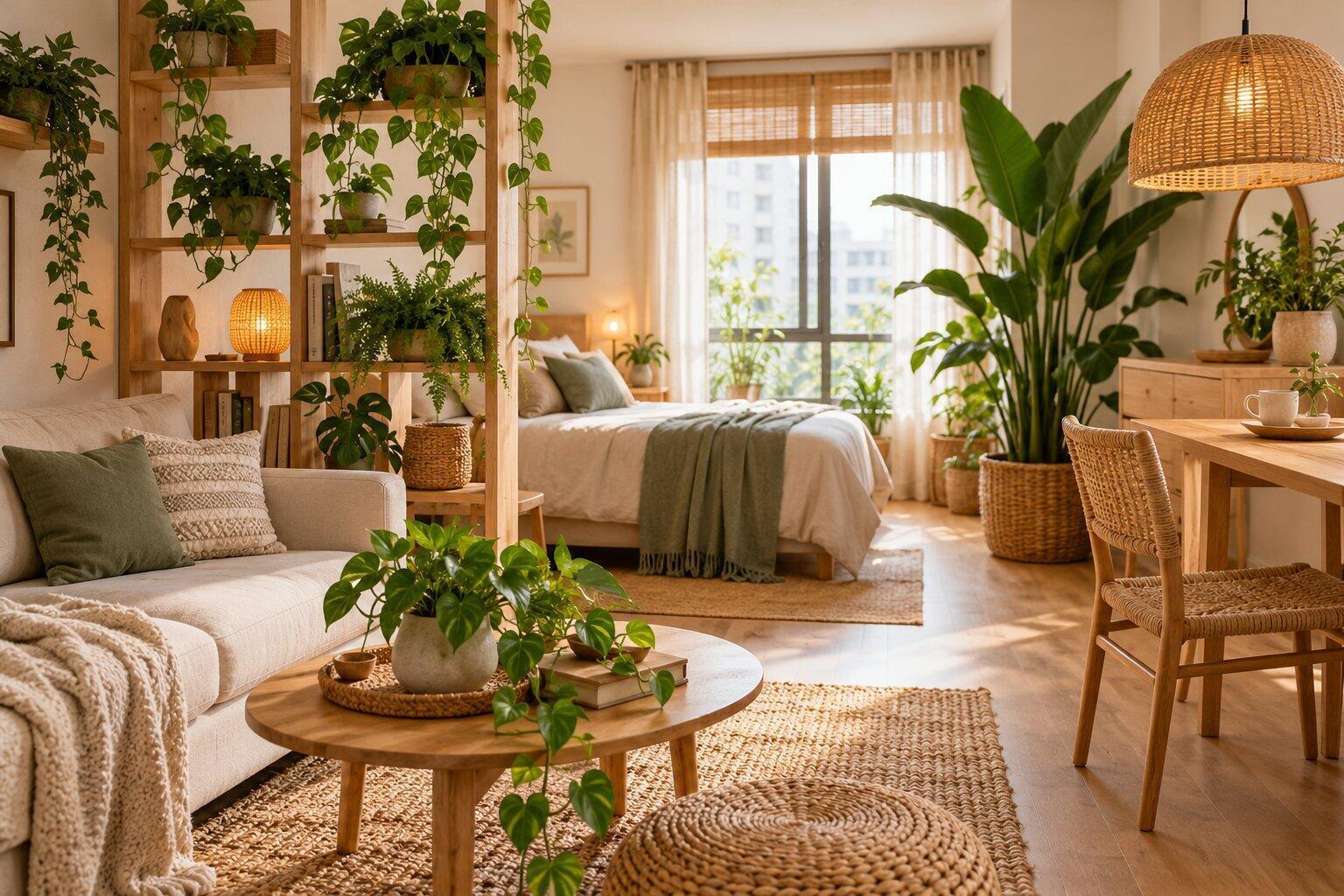
Choose plants with rounded or heart-shaped leaves for gentle, flowing energy — pothos, philodendron, and peace lilies are all excellent choices. Avoid very spiky or sharp-leaved plants in the sleep zone (they generate active, alerting energy that works against rest).
Studio Apartment Feng Shui: Frequently Asked Questions
Where should the bed go in a studio apartment?
Place it as far from the front door as the room allows, with a solid wall behind the headboard, and separate it visually from the living and work areas.
How do you create zones in a studio without walls?
Use rugs, lighting, bookshelves and folding screens to give the sleep, work and living areas their own clear edges.
Can I have a mirror in a studio apartment?
Yes. Mirrors help a studio feel bigger, but avoid placing one so it faces the bed.
What is the most important feng shui step in a studio?
Decluttering. In one room, clutter affects every area at once, so keeping surfaces and pathways clear matters most.
More Feng Shui Tips