
Feng Shui for Tiny Homes: Smart Placement Ideas


Living in a tiny home can feel peaceful, efficient, and deeply intentional, but only when the space supports how you actually live.
When every square foot matters, placement becomes more important than decoration. That is where feng shui can help.
With a few smart adjustments, you can create a tiny home that feels calmer, more open, and easier to move through each day.
- Why Feng Shui Matters More in a Tiny Home
- Start With Clear Pathways and Open Movement
- Use Smart Furniture Placement to Create Stability
- Define Zones Even in One Open Room
- Be Selective With Storage and Visible Decor
- Improve the Sleeping Area for Rest and Recovery
- A Practical Tiny Home Feng Shui Reset
Why Feng Shui Matters More in a Tiny Home
In a larger home, one awkward corner or crowded pathway may not affect the whole space. In a tiny home, every object, every piece of furniture, and every storage choice has a stronger impact. A blocked walkway, overloaded shelf, or poorly placed bed can make the entire home feel tight and unsettled.
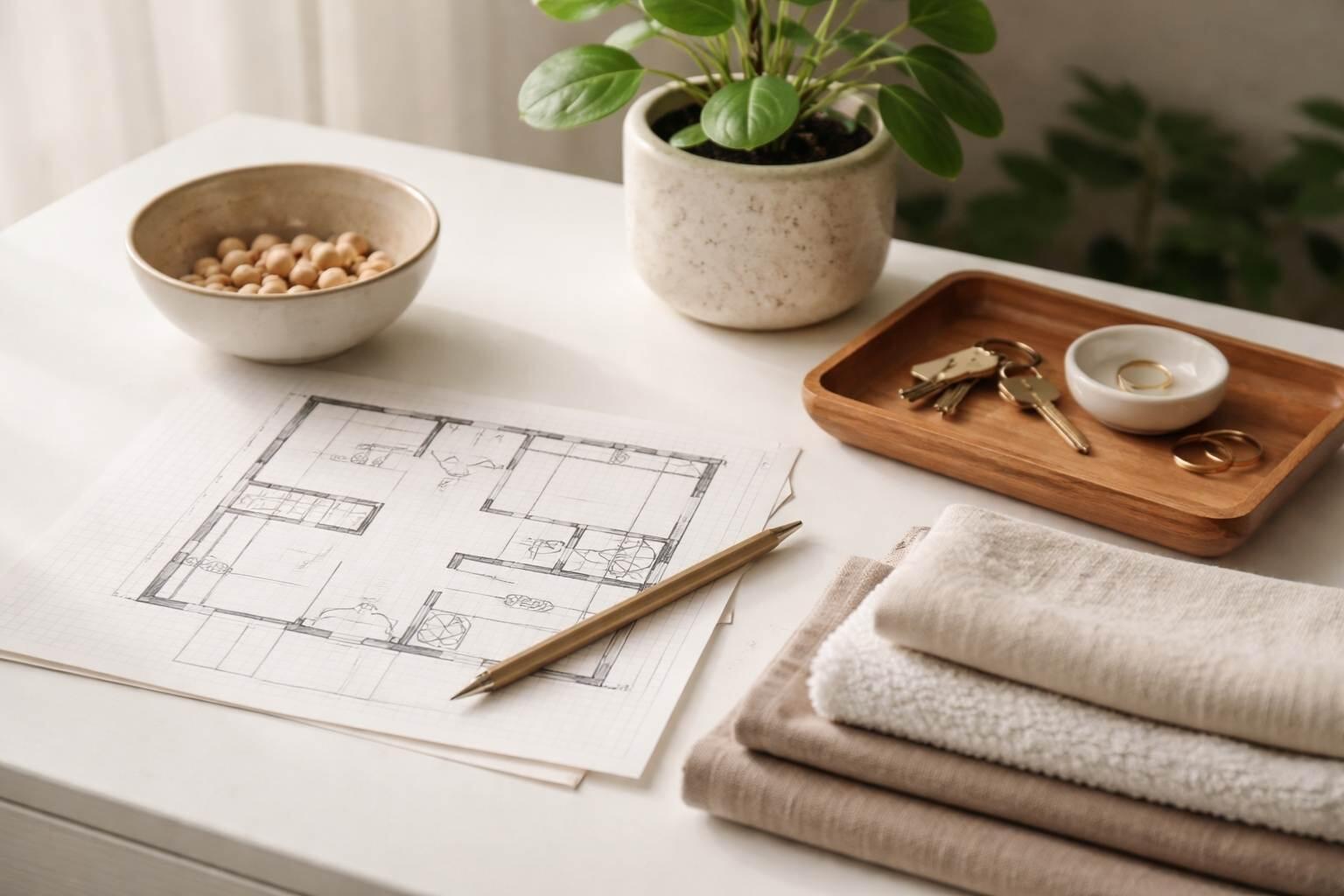
Feng shui for tiny homes focuses on flow, function, and emotional ease. The goal is not perfection. It is to make the space feel supportive, organized, and balanced. In a smaller layout, that usually means keeping the energy moving, reducing visual pressure, and making each area feel purposeful.
When your tiny home is arranged well, it can feel surprisingly spacious. It may still be small, but it will feel more breathable, grounded, and comfortable.
Start With Clear Pathways and Open Movement
One of the most useful feng shui principles for small homes is protecting the natural flow of movement. If you have to squeeze past furniture, sidestep storage bins, or twist around sharp corners, the space can start to feel stressful.
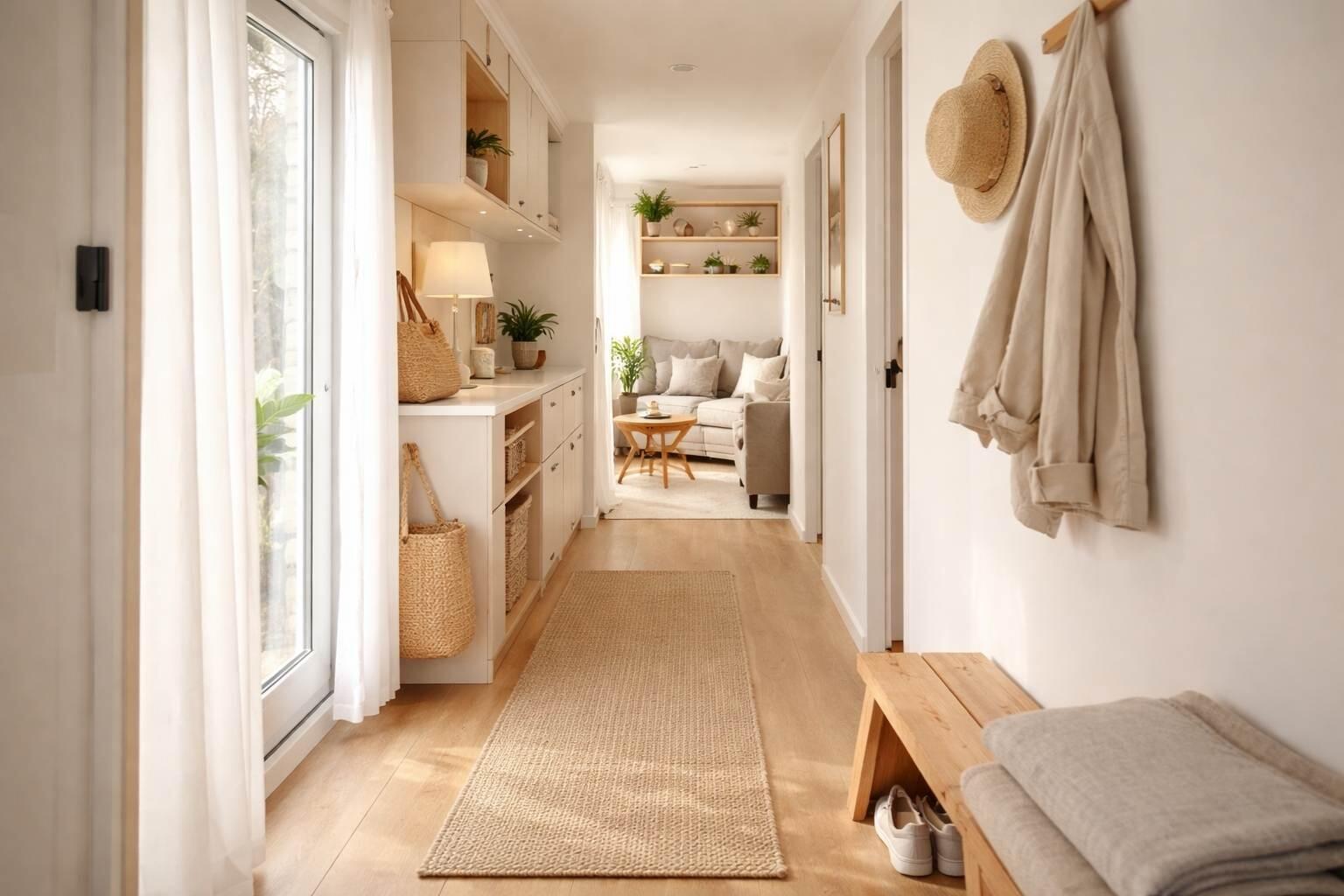
Walk through your tiny home slowly and notice where movement feels tight. Pay attention to:
pathways between the door and the main living area
routes to the bed, bathroom, and kitchen
areas where furniture corners stick out
spots where bags, shoes, or laundry tend to collect
Your goal is to create simple, clear movement lines. This does not mean everything must be minimal. It means the home should feel easy to navigate.
A few practical ways to improve flow include using slimmer furniture, keeping floor space as open as possible, and avoiding storage that spills into walkways. In feng shui, open pathways help energy circulate more smoothly, which can make the home feel lighter and less crowded.
Use Smart Furniture Placement to Create Stability
In a tiny home, furniture placement should do more than save space. It should also create a sense of security and balance. The biggest pieces in your home, such as the bed, sofa, dining bench, or desk, shape how the space feels.
Whenever possible, place important furniture in a position where you can see the entrance to that area without being directly in line with it. In feng shui, this is often called a command position. It can help a room feel more supportive and less exposed.
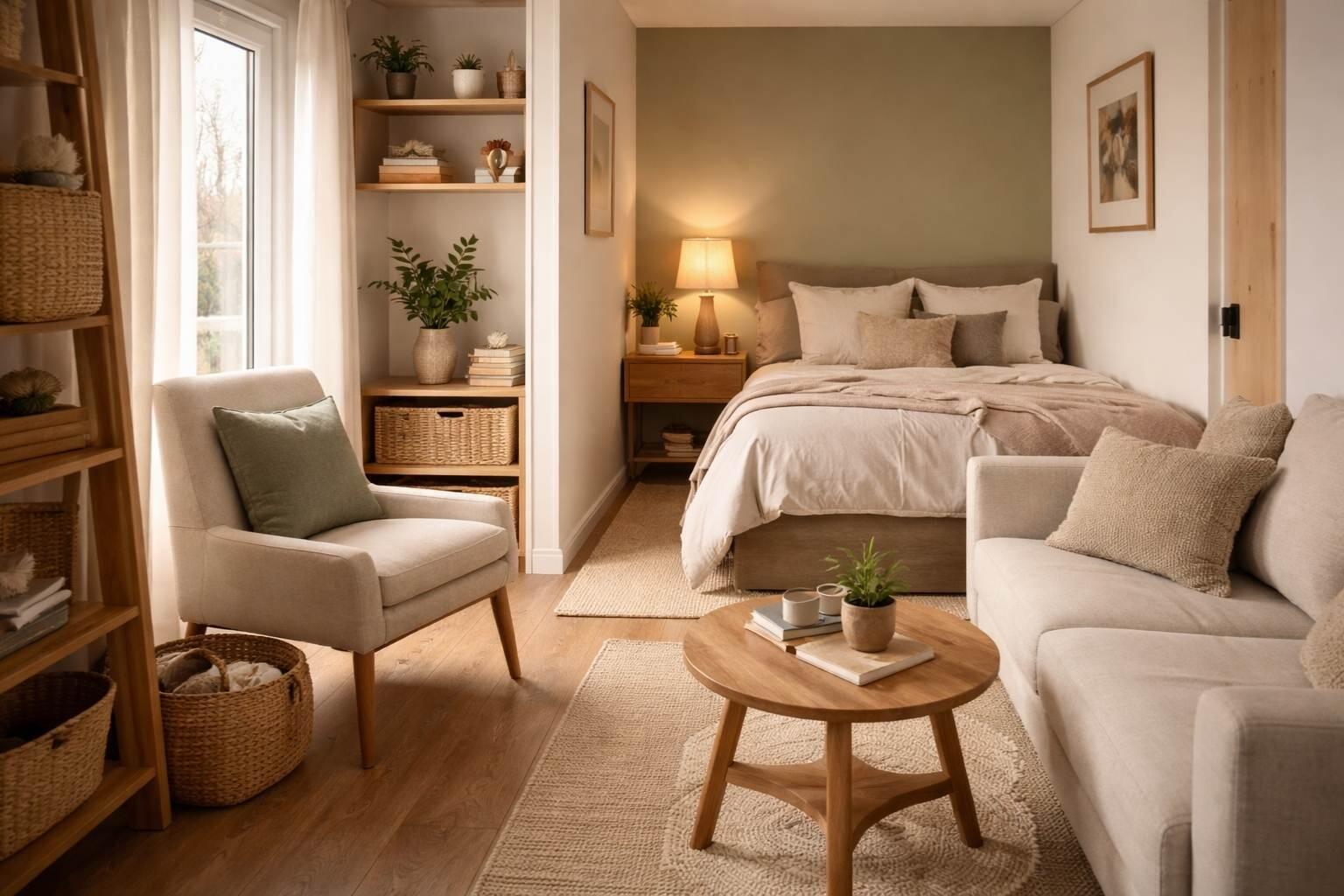
For example:
A bed should ideally feel protected, with a solid wall behind it when possible.
A desk works better when you are not facing a blank wall for long periods, unless the area is styled to feel inspiring.
A sofa should not float in a way that makes the seating area feel unstable or disconnected.
In tiny homes, perfect placement is not always possible. That is normal. The goal is to improve what you can. Even a small shift, like angling a chair more intentionally or moving a side table away from a tight corner, can change the feel of the room.
Define Zones Even in One Open Room
Many tiny homes combine sleeping, relaxing, eating, and working into one open space. Without clear zones, the home can start to feel mentally cluttered, even when it looks tidy.
Feng shui works well when each area has a clear purpose. You do not need walls to create that. You just need enough visual and functional separation so the space feels organized.
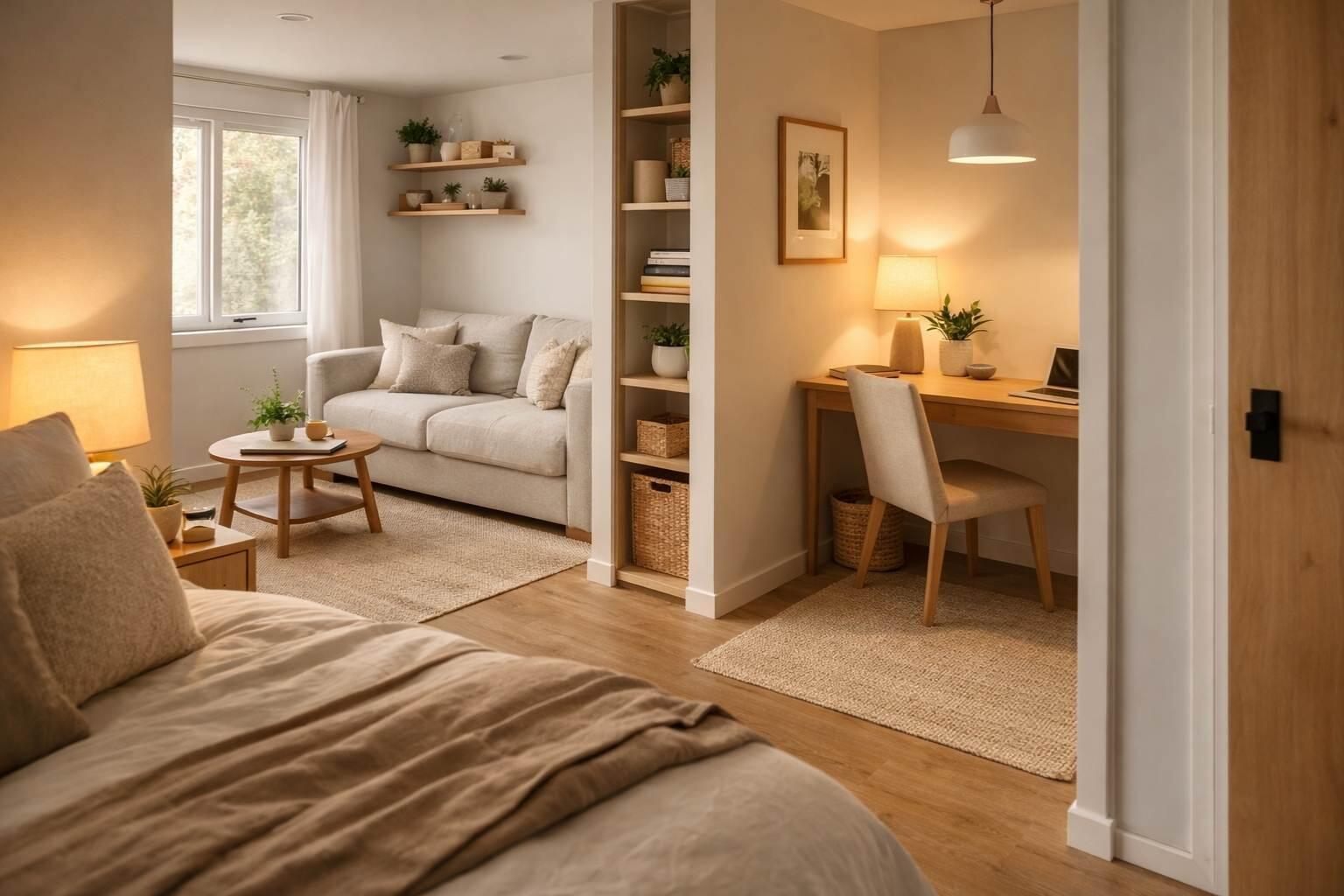
You can define zones by using:
Rugs to anchor a seating area
Lighting to distinguish work and rest zones
Shelving or benches as subtle dividers
Color shifts in textiles or decor
Trays or baskets to group related items
This is especially helpful if your bed is near your desk or dining area. When everything blends, it becomes harder for the mind to relax. Creating zones helps each activity feel contained, which brings more calm to the whole home.
Be Selective With Storage and Visible Decor
Tiny homes need storage, but too much visible storage can create visual heaviness. Open shelves packed with bins, baskets, books, and daily-use items may be practical, but they can also make the home feel busy.
In feng shui, what you see affects how you feel. That means storage should support calm, not compete for attention.
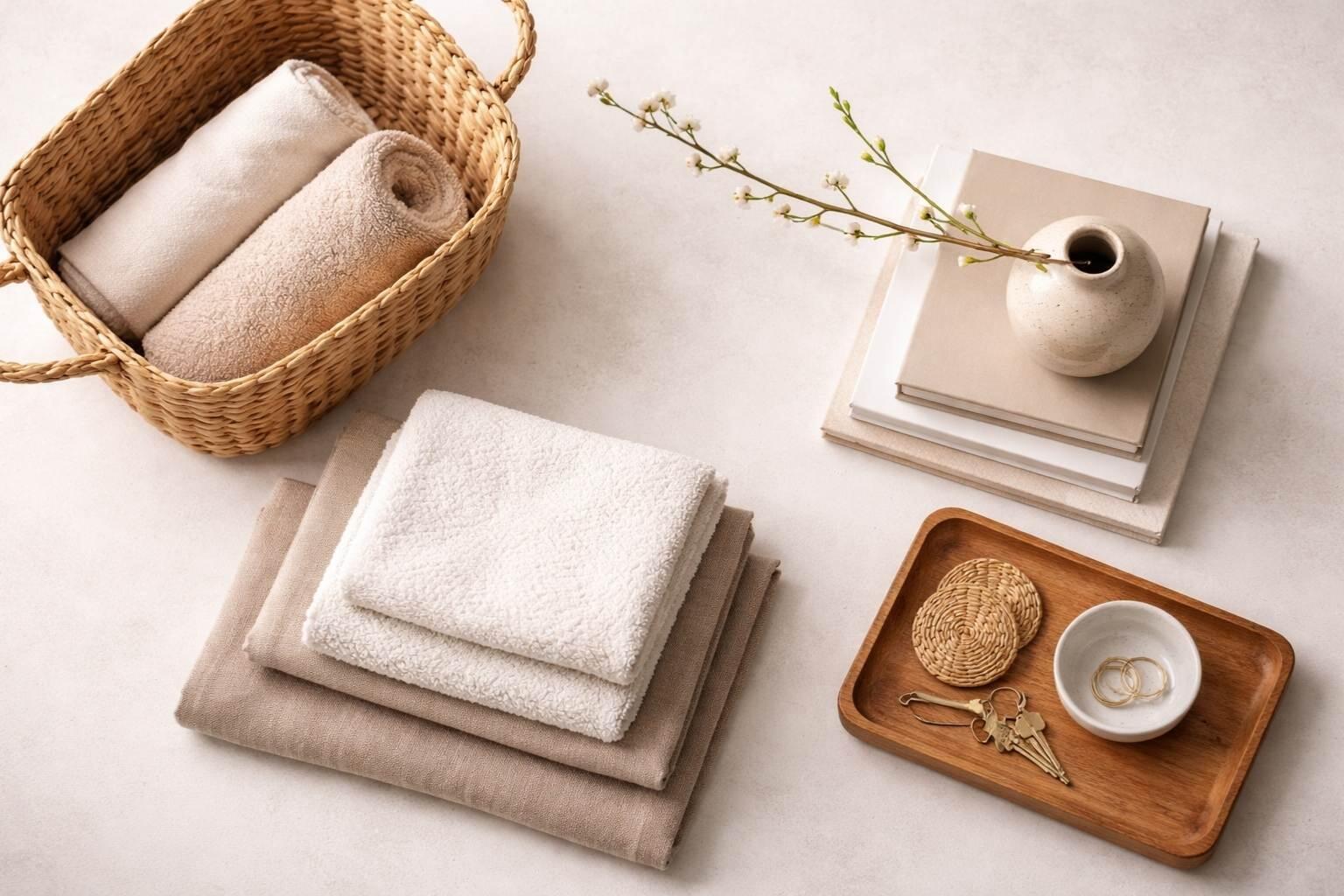
Try these placement ideas:
Keep the most-used items easy to reach
Store less-used items higher or in closed compartments
Leave some shelves partially empty
Avoid stacking objects all the way to the ceiling unless necessary
display a few meaningful items instead of many small ones
The same goes for decor. In a tiny home, one plant, one framed print, or one beautiful ceramic piece can have more impact than a large mix of accessories. Thoughtful restraint often feels better than trying to fill every empty surface.
Improve the Sleeping Area for Rest and Recovery
Sleep can be harder in a tiny home when the bedroom area doubles as storage, workspace, or living room. Even if your bed is part of a multifunctional layout, feng shui can help it feel more restful.
Start by reducing active or distracting energy around the bed. That may mean moving work materials farther away, hiding cords, or keeping under-bed storage neat and limited. If you use under-bed storage, soft items like linens are generally better than heavy, forgotten clutter.
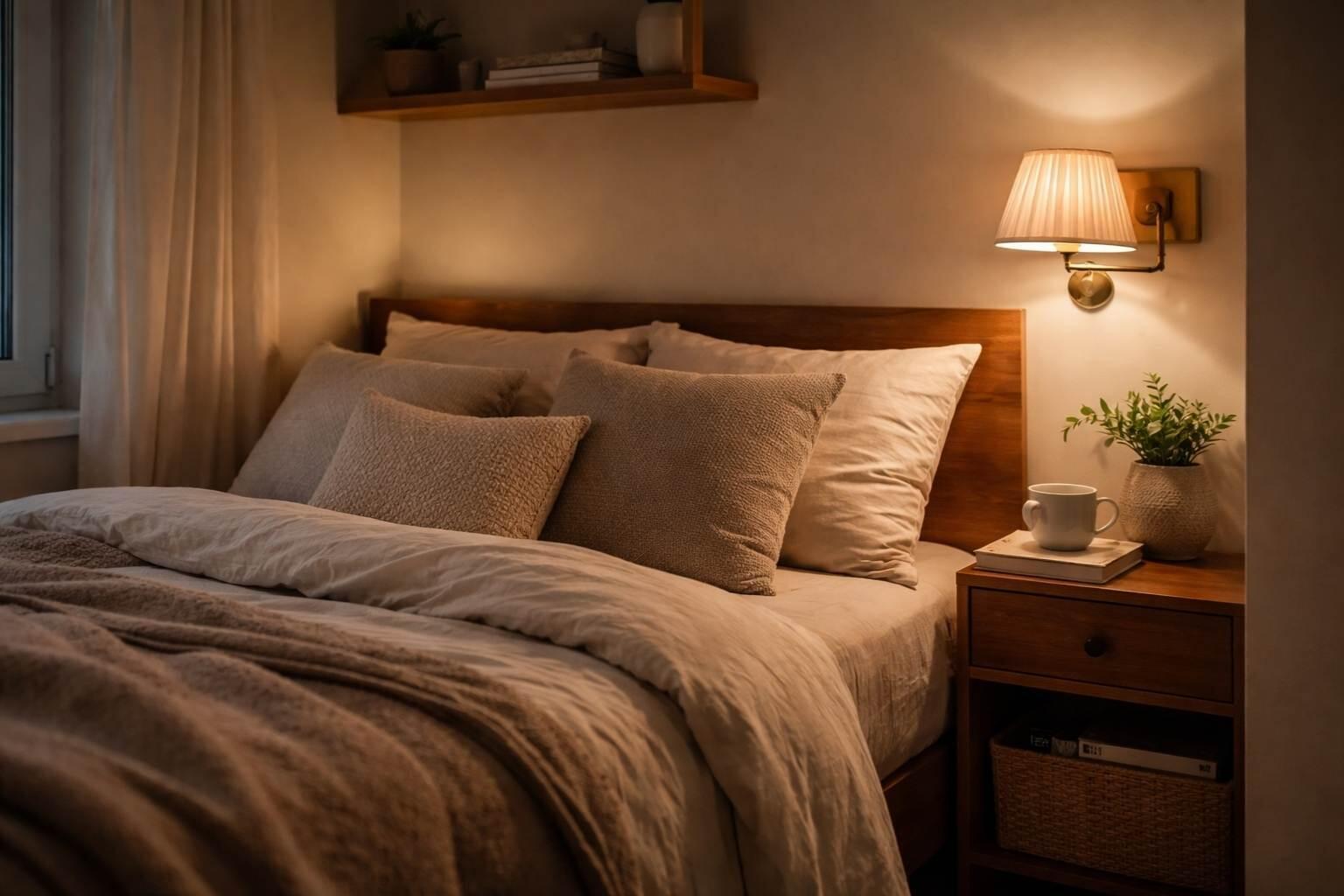
A few simple ideas can support a calmer sleeping area:
Keep the space above the bed visually light
If possible, avoid heavy shelving or large objects directly above where you sleep. A tiny home already has enough visual compression. The area around the bed should feel protected, not crowded.
Use soft layers to create comfort
Textiles matter in small spaces. Bedding, curtains, and rugs can soften a compact layout and make the sleeping zone feel more grounded. Choose colors and materials that feel calm rather than overstimulating.
Separate sleep from activity when you can
Even a small curtain, folding screen, or shift in lighting can help the sleeping area feel distinct from the rest of the home. This supports better mental separation between rest and activity.
A Practical Tiny Home Feng Shui Reset
If your tiny home feels cluttered, heavy, or awkward, start small. You do not need to redesign everything. A focused reset can make a noticeable difference.
Use this simple process:
Stand at your front door and notice your first impression. Does the space feel open, crowded, or confusing?
Clear one main pathway completely. Choose the route you use most often.
Adjust one major furniture piece to improve stability or sight lines.
Remove five items that do not support daily life or visual calm.
Create one clearly defined zone for rest, work, or relaxation.
Add one element that brings softness or life, such as a plant, lamp, or natural texture.
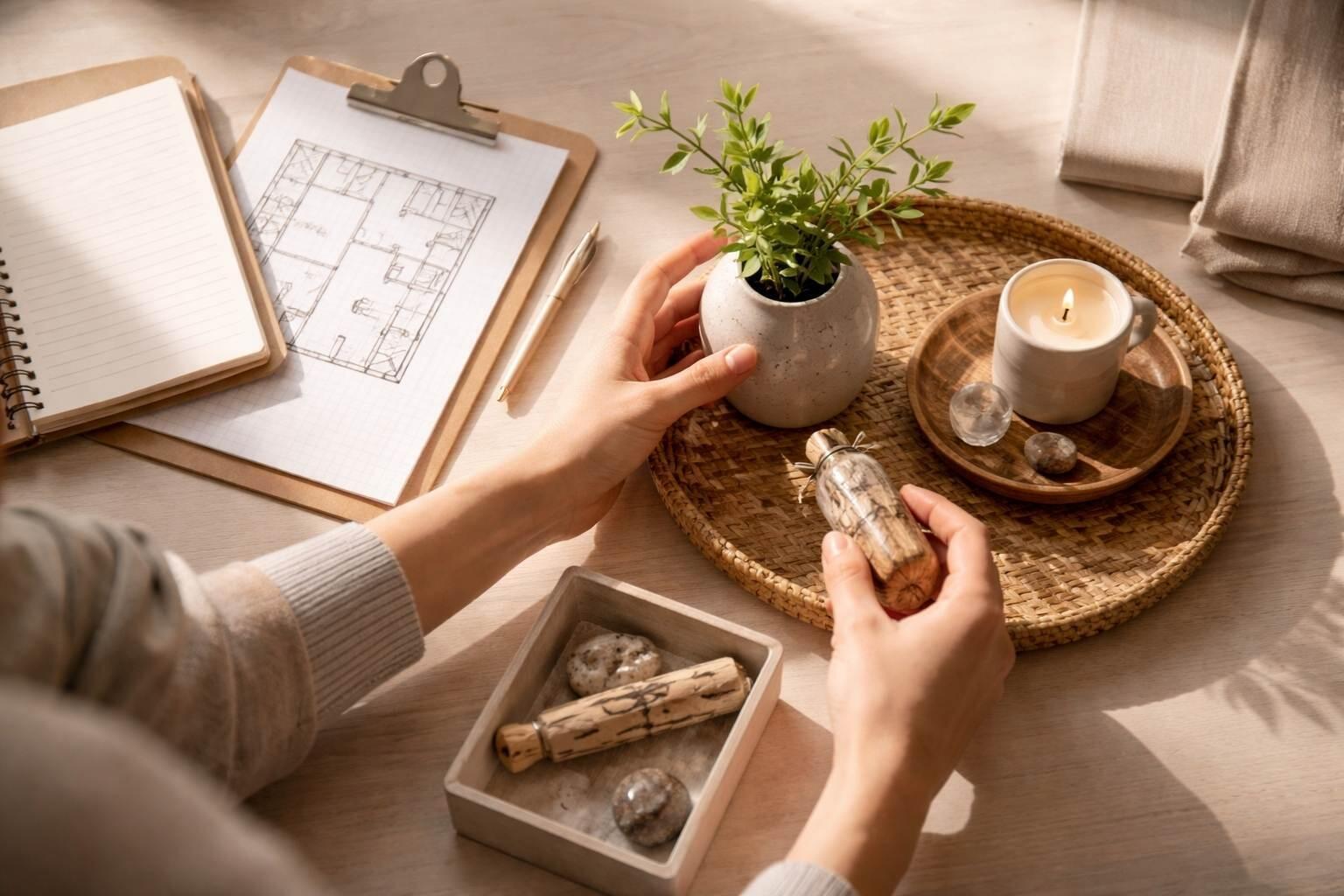
This kind of reset works because it improves both function and feeling. Feng shui for tiny homes is often most effective when you focus on the changes that affect everyday experience right away.
A tiny home does not need to feel limited. With smart placement ideas, it can feel intentional, balanced, and deeply comfortable. Start with flow, support your key furniture, and give each area a clear purpose. Small shifts can change the entire mood of the space and help your home feel better every day.
More Feng Shui Tips