
Feng Shui Decluttering Tips for Small Spaces That Feel Stuck

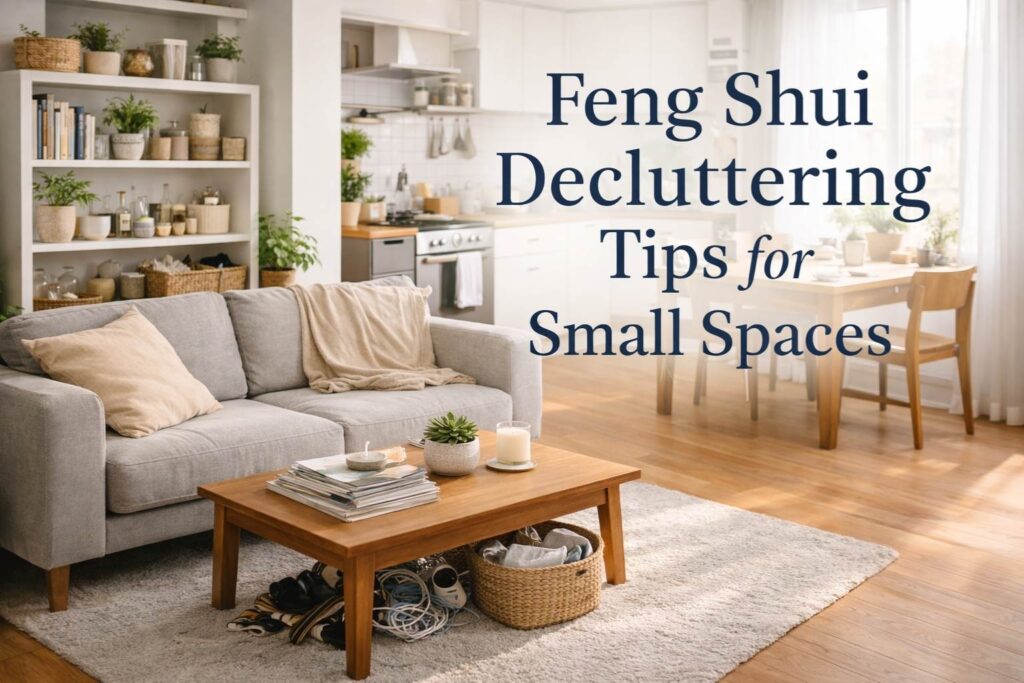
Small spaces can feel cozy and efficient, but they can also start to feel heavy fast. When every item is visible, and every corner has to work harder, clutter can build up in ways that affect both function and mood.
In feng shui, this kind of buildup can interrupt the sense of ease and movement you want in your home. This guide will help you declutter a small space with better energy flow in mind, so your home feels lighter, calmer, and easier to live in.
Why Small Spaces Feel Stuck So Easily
In a small home, clutter tends to have more impact because there is less room to absorb visual noise. A pile on the counter, an overstuffed shelf, or a chair covered in clothes can quickly make the whole room feel crowded.
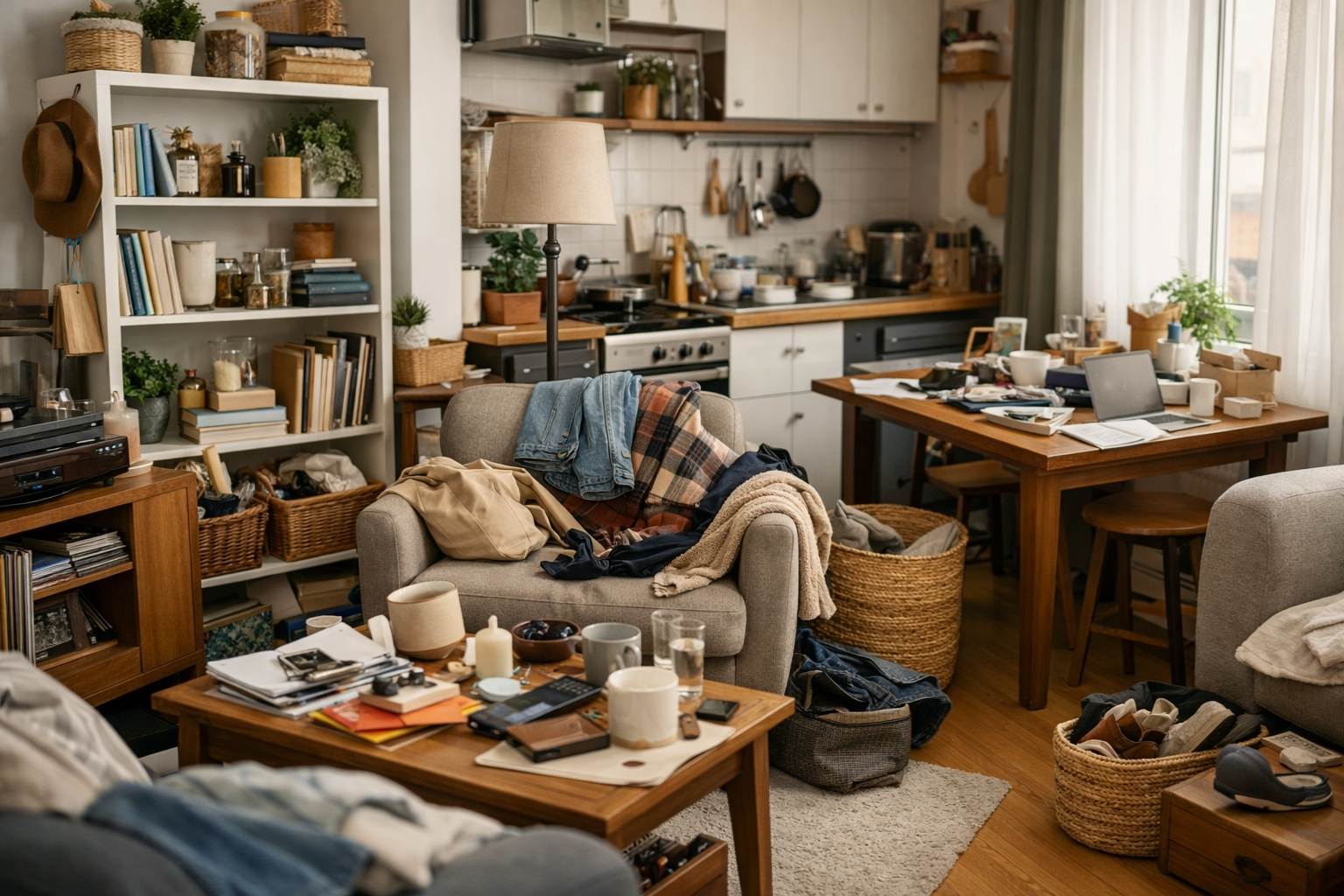
From a feng shui perspective, good flow depends on openness, function, and intention. When a space is packed with too many objects, it can start to feel stagnant rather than supportive. This does not mean your home has to look minimal or empty. It means your belongings should fit the space, serve a purpose, and allow movement to happen naturally.
A small space usually feels stuck when:
Pathways are blocked or tight
Surfaces are always full
Storage is overflowing
Too many items compete for attention
The room has no visual resting point
The goal is not perfection. The goal is to make the space feel breathable again.
Start With What You See First
One of the easiest ways to shift the feeling of a small space is to begin with the areas your eyes land on immediately. These visual hotspots set the tone for the room before you even notice the rest.
Focus first on:
the entry area
coffee tables and side tables
kitchen counters
open shelving
the foot of the bed
the bathroom sink area
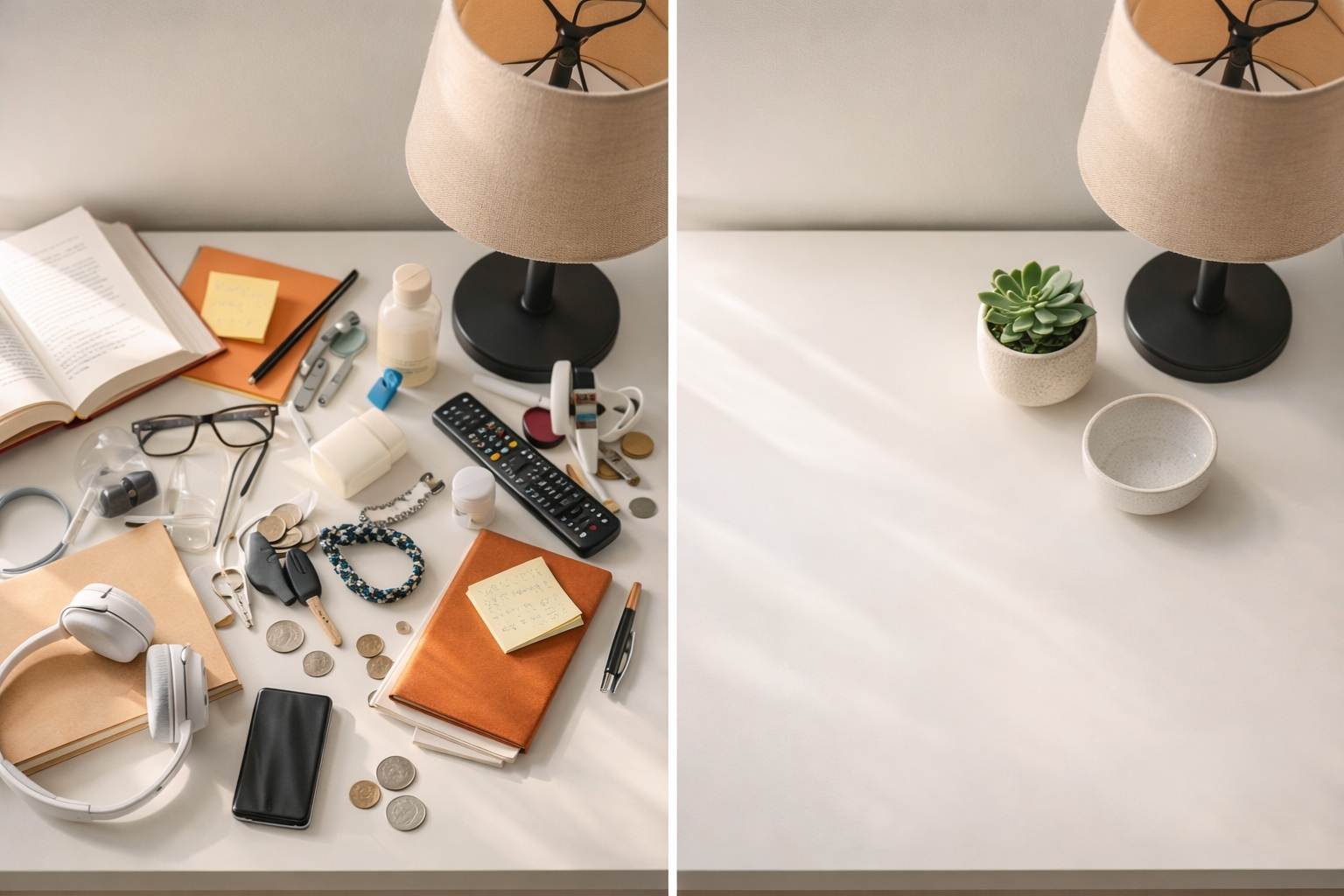
When these surfaces are crowded, the whole home can feel busier than it is. Clearing just one visible zone can make a small room feel more open right away.
Try keeping only a few items out in the open, especially if they are practical or meaningful. A lamp, a bowl, a plant, or one favorite object often feels better than many small unrelated pieces. In feng shui, this supports clarity and allows energy to circulate more smoothly.
Clear Pathways to Improve Energy Flow
Flow matters even more in a compact home. If you have to squeeze around furniture, step over baskets, or shift items every time you move through a room, the space will feel harder to use and harder to relax in.
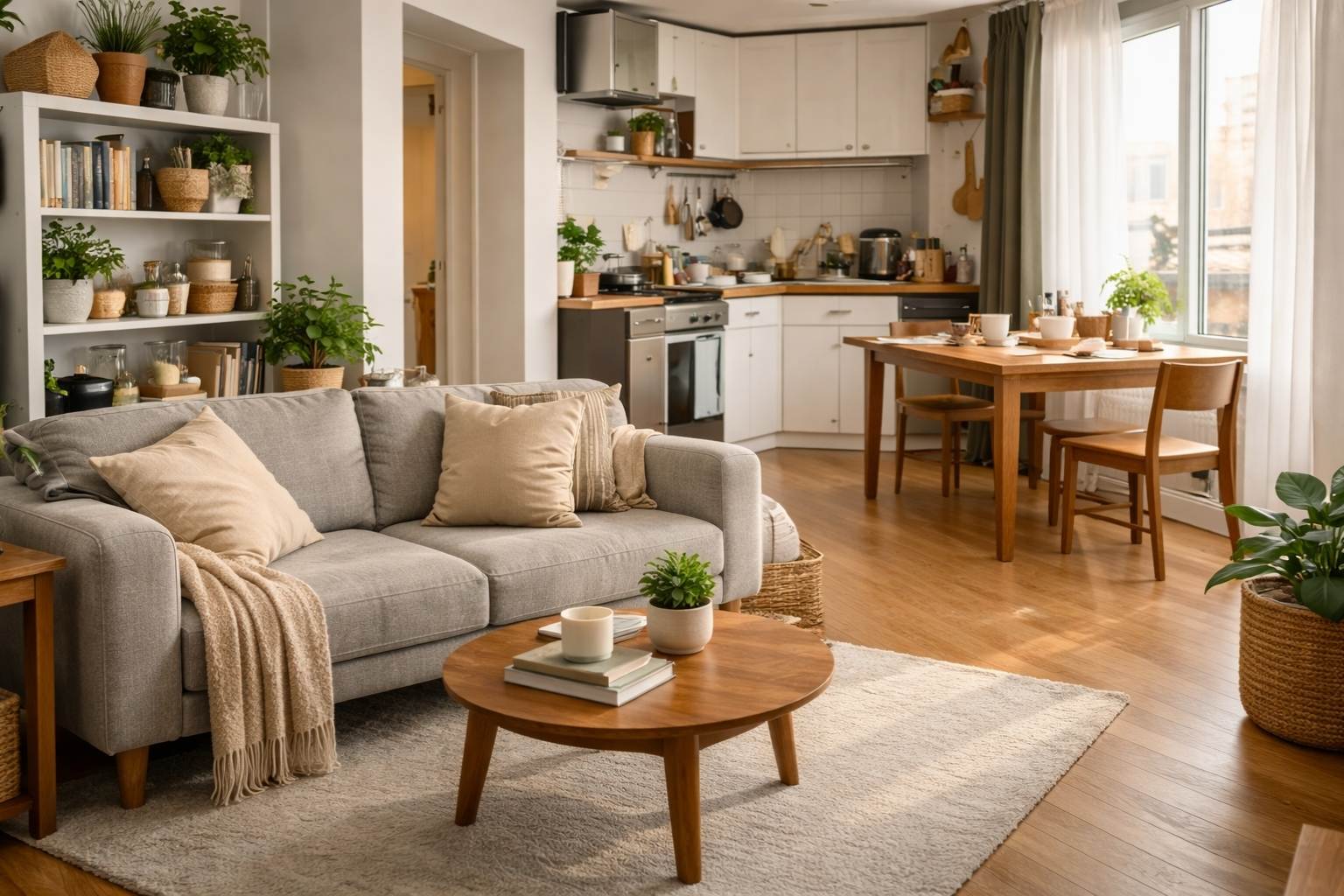
Walk through your home slowly and notice where movement feels interrupted. Look for places where:
Doors do not open fully
Drawers or cabinets are blocked
Furniture creates narrow walkways
Bags, shoes, or boxes collect on the floor
Cords and small items gather near transitions
Even a few extra inches of open space can change how a room feels. Repositioning furniture, removing one unnecessary piece, or relocating storage bins can create a noticeable improvement.
A good question to ask is: can energy, light, and people move through this room without friction? If the answer is no, start there.
Use Storage to Support, Not Hide, Clutter
In small spaces, storage can be useful, but it can also become a way to postpone decisions. Containers, baskets, and bins help only when what is inside them is intentional and manageable.
Instead of buying more storage right away, check whether your current storage is helping the space feel calmer or simply hiding excess. Overfilled drawers and stuffed under-bed bins still create a sense of pressure, even if they are out of sight.

Use storage well by following a few simple principles:
Choose limits before you organize
Let the drawer, bin, or shelf define how much belongs there. When a category no longer fits, that is often a sign to edit it down.
Store by use, not just by category
Keep daily items easy to reach and occasional items farther away. This reduces friction and keeps the space functional.
Avoid “just in case” storage zones
A small home benefits from a clear purpose. Random catch-all baskets tend to become clutter magnets.
In feng shui, hidden clutter still affects the feeling of a home. Organized storage works best when it reduces stress instead of concealing it.
A Simple Feng Shui Decluttering Plan for Small Homes
Decluttering a small space does not have to become a full weekend project. A steady, focused approach often works better because it is easier to maintain.

Use this simple plan:
Pick one micro-zone at a time. Think one drawer, one shelf, one nightstand, or one corner.
Remove everything from that zone. This helps you see how much is really there.
Sort into clear groups. Keep, relocate, donate, recycle, or discard.
Return only what fits and functions well. Leave a little open space if possible.
Check the visual effect. Does the area now feel lighter and easier to use?
Repeat with the next small area. Momentum matters more than speed.
This method works well because it keeps the process practical and low-pressure. In a small home, even one completed zone can create a visible shift.
You can also prioritize these areas first if your space feels especially stuck:
entryway
kitchen counters
under the bed
bathroom storage
closet floor
desk or work surface
Common Decluttering Mistakes in Small Spaces
Some decluttering habits seem helpful at first, but can keep a small home feeling crowded.
One common mistake is keeping too many things “because they might be useful.” In a limited space, rarely used items need to earn their place. Another is relying on decorative storage without reducing what you own. This can make a room look organized while still feeling full.
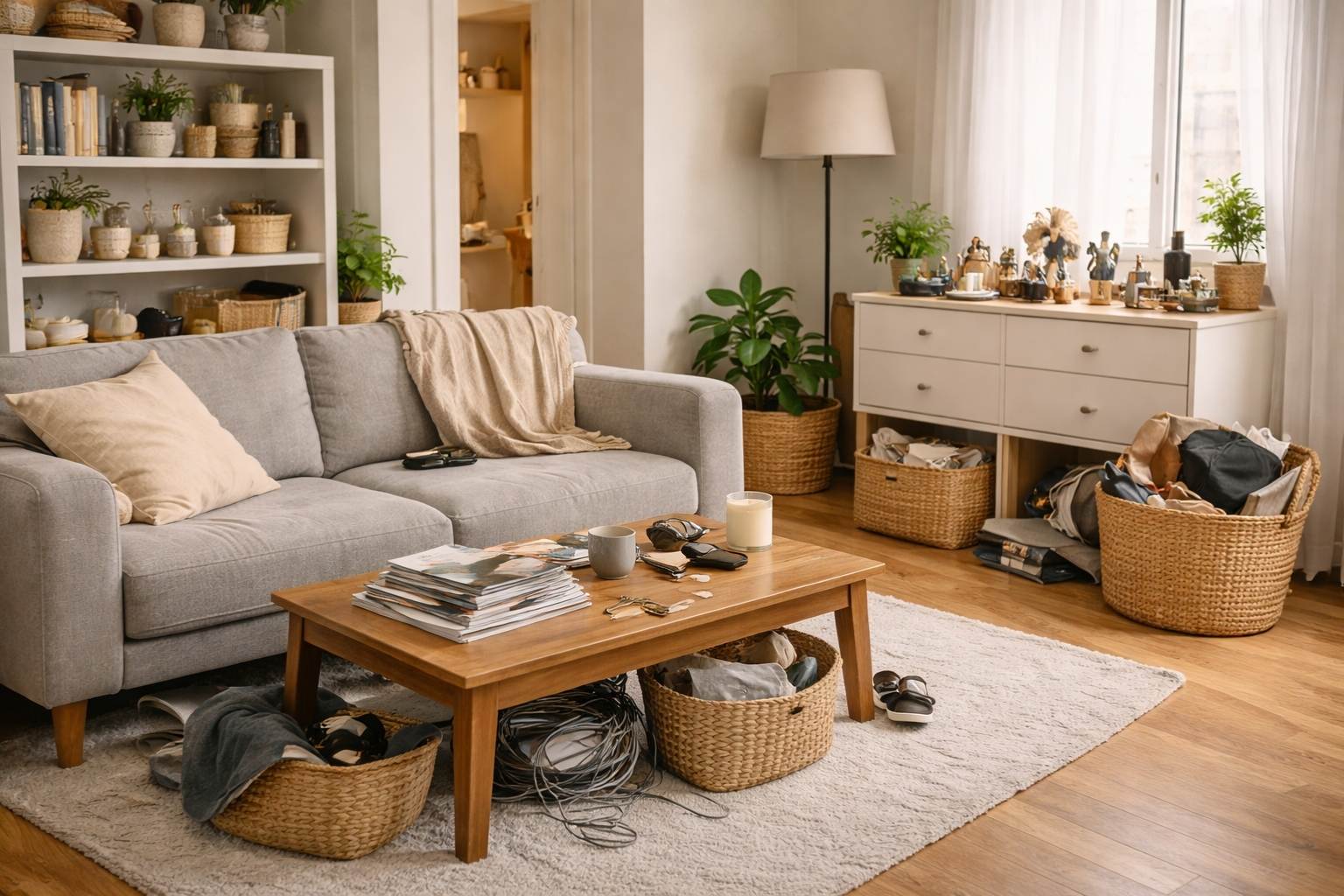
Other mistakes to avoid include:
pushing clutter into closets without sorting it
using every wall and corner for storage
keeping broken or unfinished items too long
displaying too many small decor pieces
holding onto duplicates you do not need
ignoring hidden clutter under beds or furniture
Small spaces benefit from selectivity. A little space is not wasted space. It is what helps the room feel balanced.
How to Maintain Better Flow Every Day
Once your home feels lighter, simple habits can help it stay that way. This is especially important in small spaces, where clutter returns quickly.
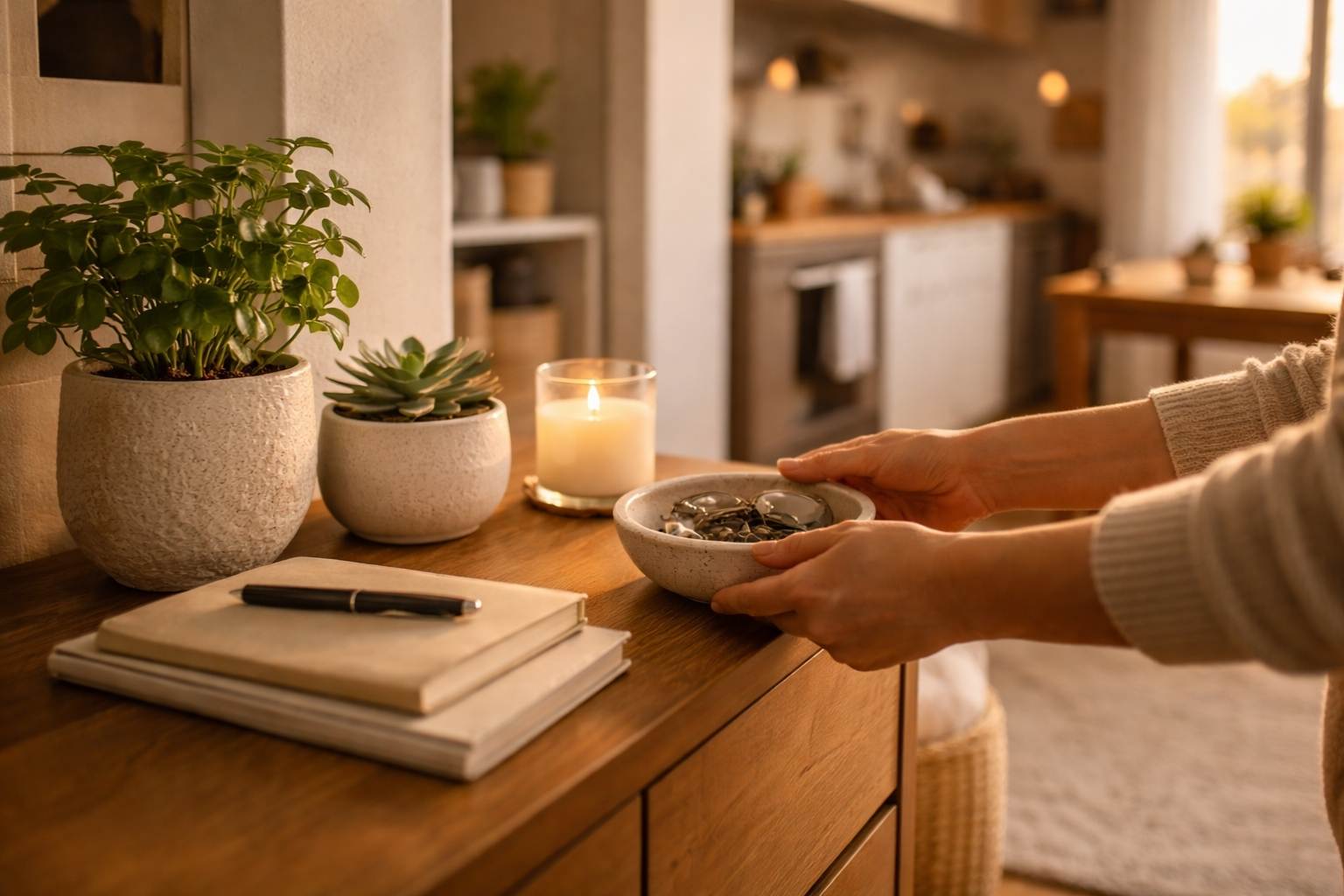
A few routines make a big difference:
Reset one surface each evening
Put items back after use
Keep the floor as clear as possible
Edit one drawer or shelf each month
Bring in new items more intentionally
You do not need a perfect routine. You just need one that makes the space easier to support. In feng shui, consistency often matters more than intensity. A home feels better when it is cared for regularly, even in small ways.
A small space can absolutely feel open, peaceful, and supportive. The key is not owning less for the sake of it, but making sure your home has room to breathe.
Start with what feels heavy, clear one zone at a time, and pay attention to how the space responds. Often, the shift you want begins with removing what no longer needs to be there.
More Feng Shui Tips