
7 Home Office Feng Shui Tips for Focus, Calm, and Better Workflow

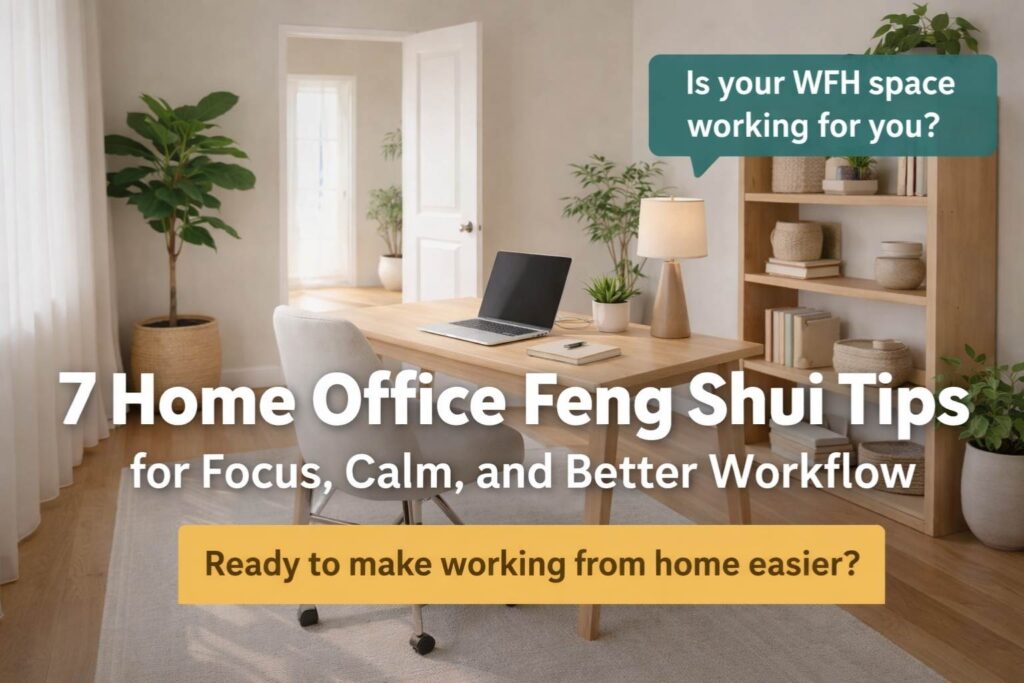
Working from home can be energizing—or completely draining—depending on how your space supports you.
Feng Shui is all about creating flow, reducing friction, and making your environment feel safe and intentional.
If your home office feels distracting, heavy, or hard to focus in, these seven tips will help you reset it quickly without doing a full makeover.
- 1) Start With the “Command Position” (Even If Your Room Is Small)
- 2) Support Your Back, Support Your Career
- 3) Clear Visual Clutter First (Not Everything)
- 4) Create a “Power Corner” for Motivation
- 5) Balance Lighting: One for Focus, One for Mood
- 6) Choose a Calming Color Story (Then Repeat It)
- 7) Add One Living Element (But Keep It Healthy)
- A Quick 10-Minute Home Office Feng Shui Reset
- Make One Change Today
1) Start With the “Command Position” (Even If Your Room Is Small)
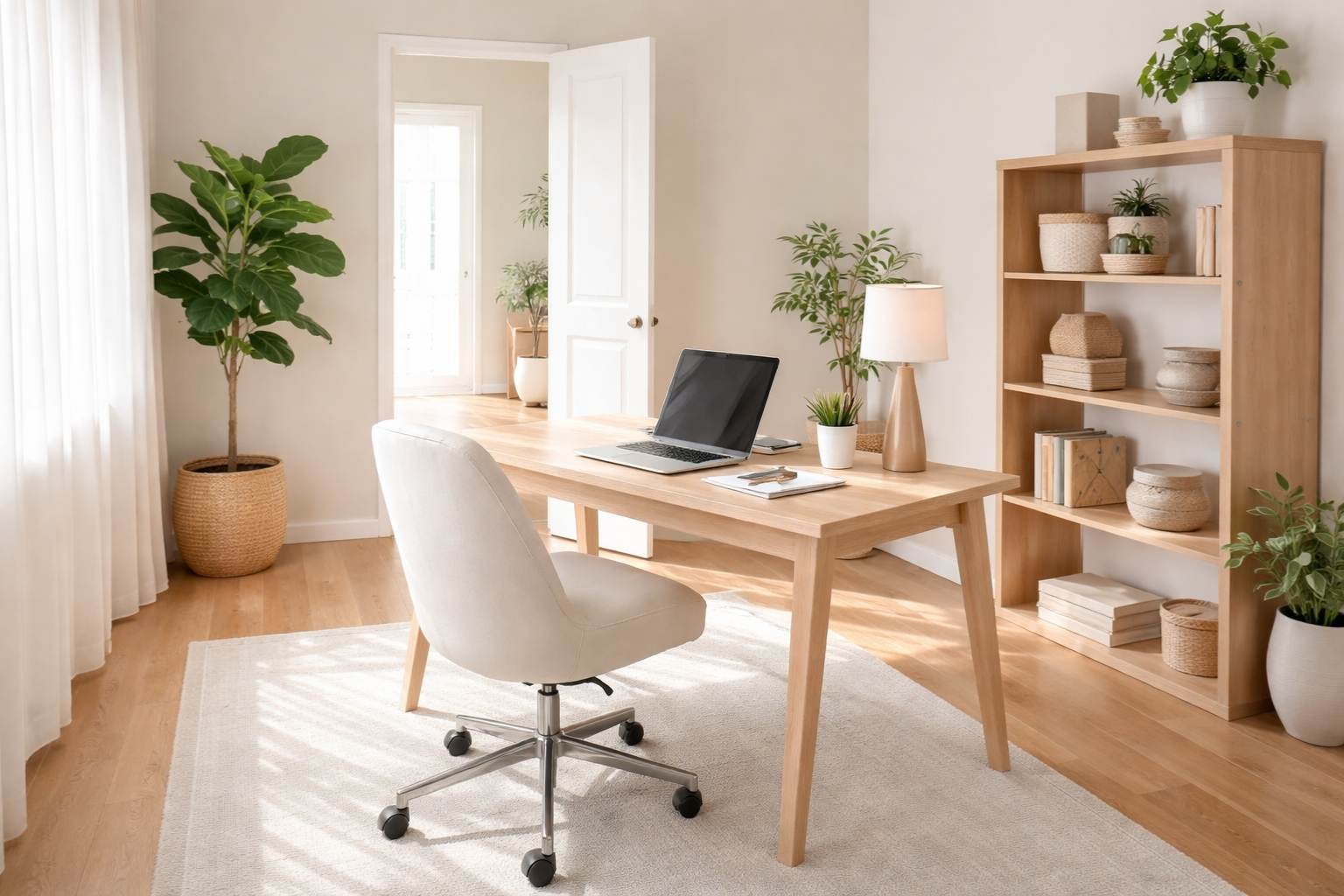
In Feng Shui, the command position means you can see the door while seated, without being directly in line with it. This placement tends to feel more grounded because your brain isn’t constantly “on alert” about what’s behind you.
Try this:
Sit so you can see the door from your chair.
If you can’t face the door, place a small mirror where you can see the door’s reflection.
Avoid having your back fully exposed to an open doorway if possible.
Why it helps: When you feel supported and aware, your focus comes more easily.
2) Support Your Back, Support Your Career
A solid backing behind you is classic Feng Shui for stability. If you sit with your back to a hallway, empty space, or open doorway, it can feel subconsciously unsettled.
Simple fixes:
Use a high-backed chair.
Place a wall or sturdy bookcase behind you when possible.
If you’re in the middle of a room, add a console table or low shelf behind your chair to create “support.”
3) Clear Visual Clutter First (Not Everything)
You don’t need to become a minimalist. The quickest Feng Shui win is removing clutter that constantly grabs your attention—especially anything in your direct line of sight.
Do a 3-minute reset:
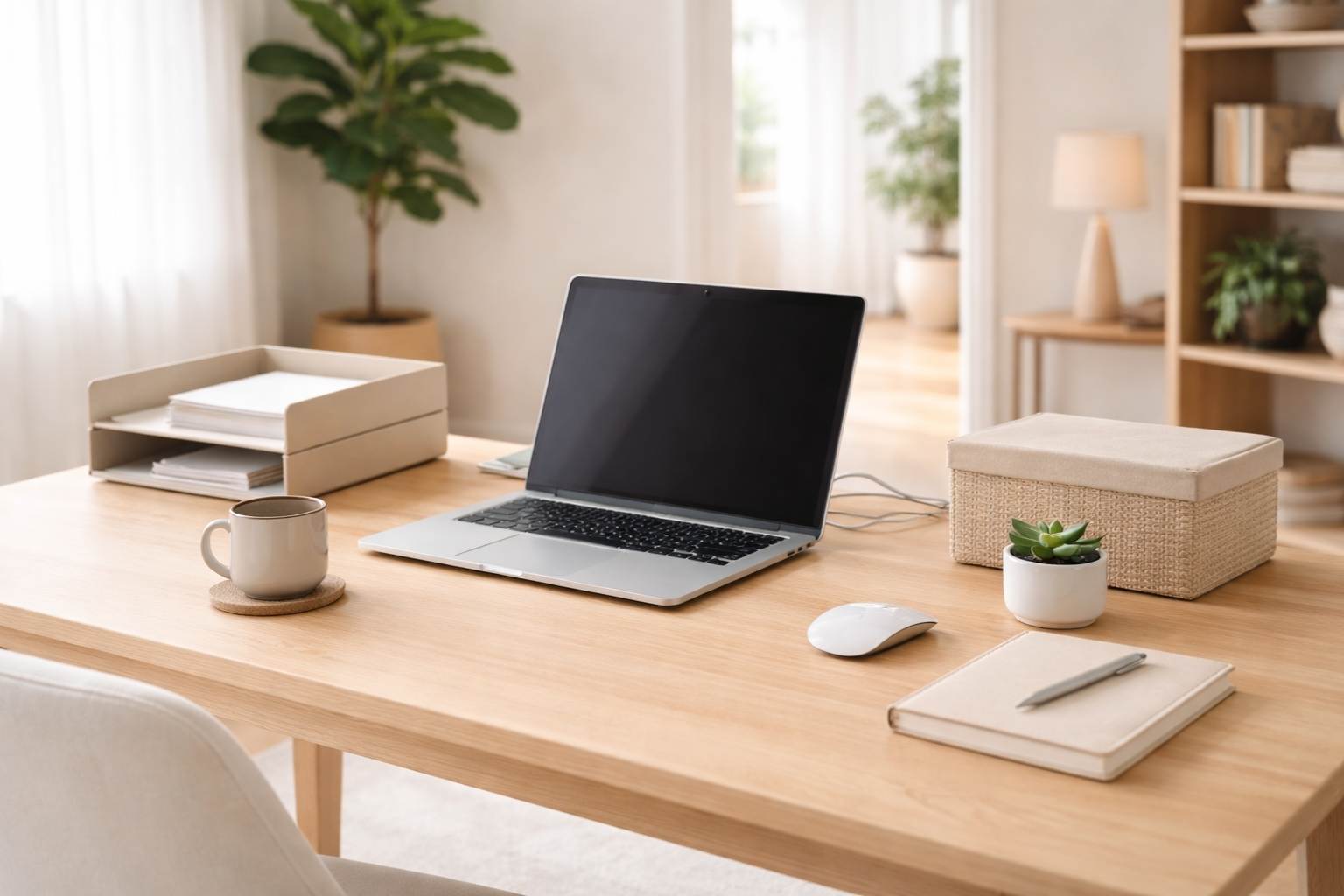
Clear the surface you look at most (desk top + immediate floor area).
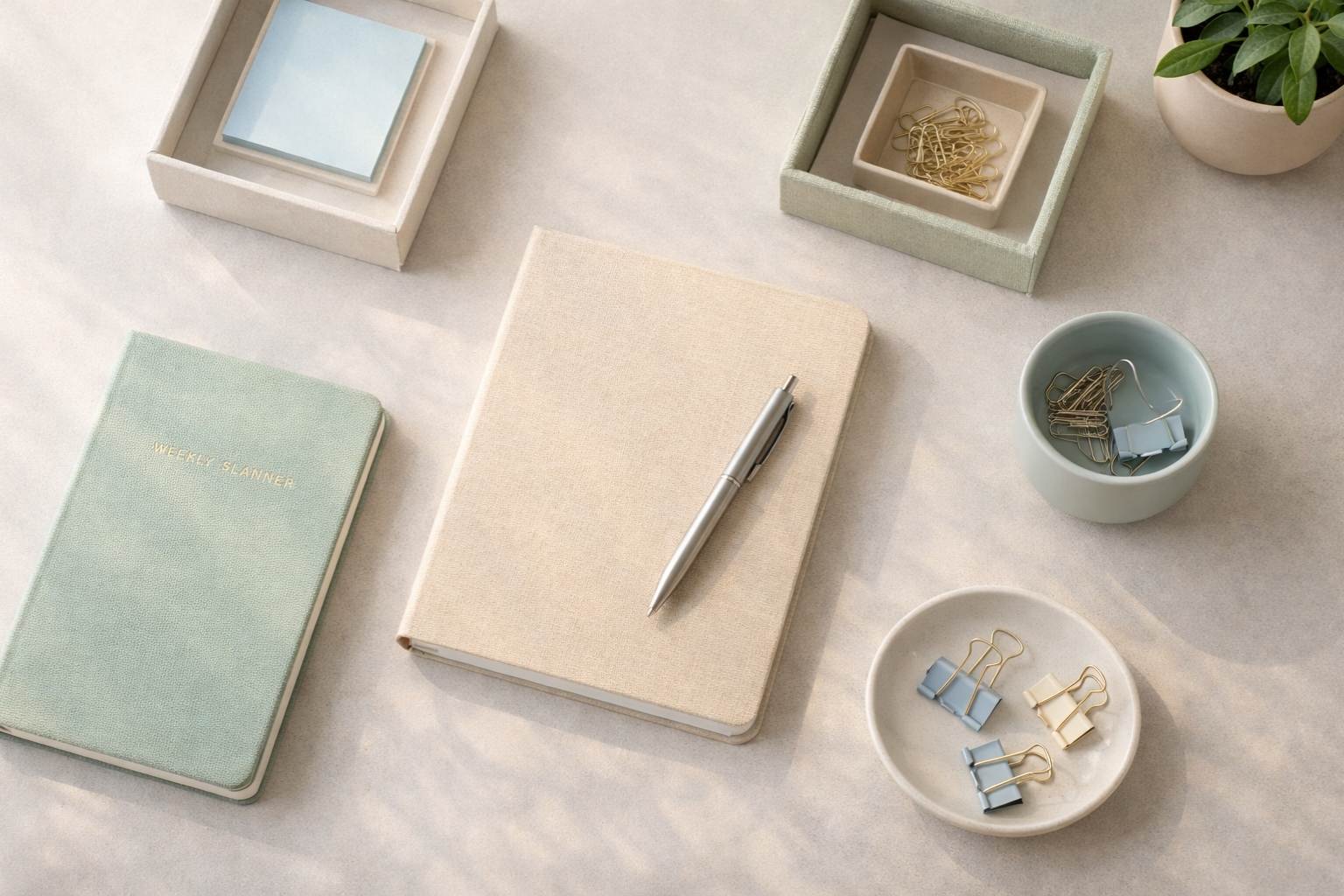
Hide loose papers in a tray, folder, or box.
Put cables into a sleeve or clip them to the desk.
Rule of thumb: if you can see it, your brain is processing it.
4) Create a “Power Corner” for Motivation
Your workspace should have at least one spot that feels inspiring—a visual anchor that pulls you into your work mode.
Ideas for a power corner:
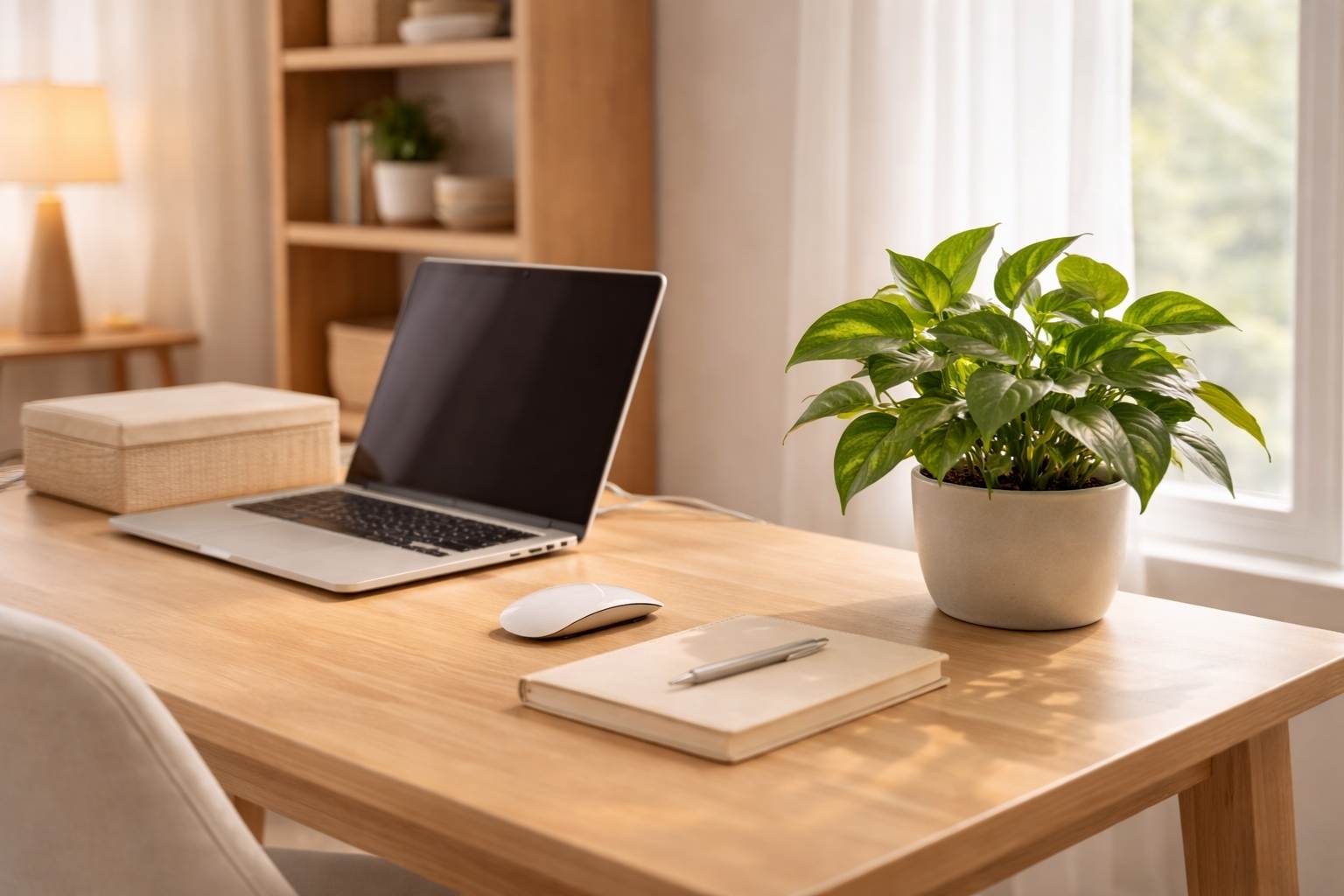
A warm lamp + one plant
A framed print you genuinely like
A small bowl or tray for essentials (so items look “contained”)
Keep it intentional and edited: one strong vibe beats five random objects.
5) Balance Lighting: One for Focus, One for Mood
Harsh overhead lighting can create tension, while dim lighting can lead to sluggishness. Feng Shui-friendly lighting is layered.
Aim for:
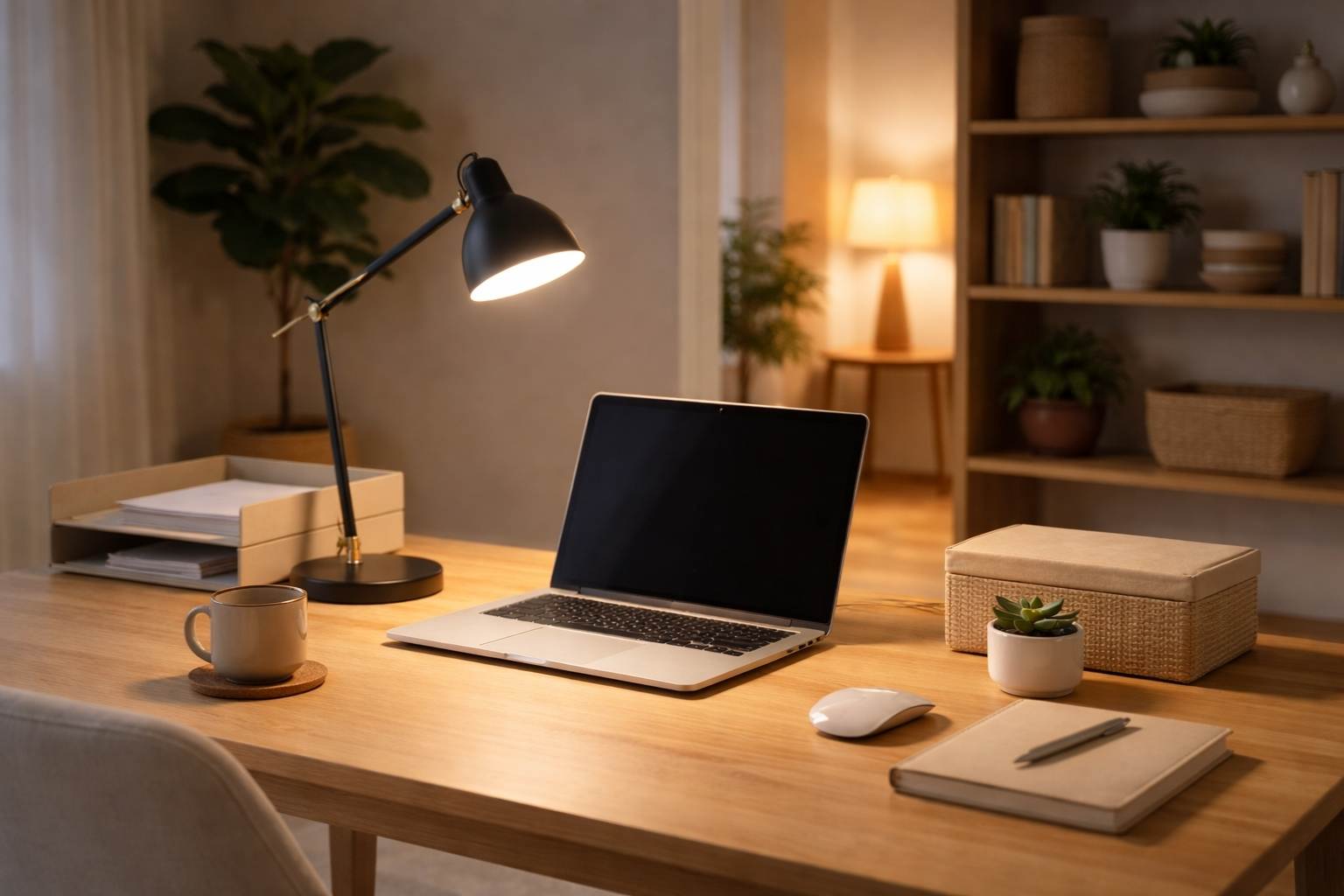
Task lighting (desk lamp) for clarity and focus
Ambient lighting (soft lamp) for calm and steadiness
If you’re near a window, use natural light when possible—but avoid glare on your screen (it’s a sneaky energy drain).
6) Choose a Calming Color Story (Then Repeat It)
Color is a fast way to influence how a room feels. You don’t need to repaint—just repeat a few tones through small items like organizers, notebooks, a rug, or a lamp shade.
Easy color directions:
Soft greens: steady focus, “fresh start” energy
Warm neutrals: grounded, calm, less overstimulating
Light blues: clarity, spaciousness, mental ease
Try not to overdo high-intensity colors in a work zone. A little is fine—but too much can feel mentally loud.
7) Add One Living Element (But Keep It Healthy)
A thriving plant can lift the energy of a home office—especially if your space feels stale. The key is choosing something you can keep alive and placing it where it supports you.
Simple placement ideas:
Near the window to energize the room
On the side of your desk to soften sharp edges
In a “dead” corner that feels empty or heavy
Skip anything that looks droopy or struggling—unhealthy plants can have the opposite effect.
A Quick 10-Minute Home Office Feng Shui Reset
If you want a simple routine you can repeat weekly, do this:
Clear your desk surface (only essentials stay).
Put papers into one tray or folder.
Fix your chair + back support.
Turn on both lights (task + ambient).
Add water (a clean glass or bottle) and one living element (plant).
Small shifts add up—especially when your workspace is where you spend hours of your day.
Things to Avoid (Common Home Office Feng Shui Mistakes)
Sitting with your back to the door with no support
Overflowing trash or recycling near the desk
Random stacks of “to deal with later” papers
Too many decor items are competing for attention
Burnt-out bulbs or lighting that feels harsh
Your goal is simple: a space that helps you feel clear, capable, and steady.
Make One Change Today
Pick just one tip and do it in five minutes—move your chair, clear your line of sight, or add a warm lamp.
Feng Shui works best when it’s practical. When your home office feels supportive, your focus doesn’t have to fight your environment.
More Feng Shui Tips