
Pixiu Statue Feng Shui: Meaning, Placement, and Mistakes to Avoid


The Pixiu (also spelled Pi Yao) is one of the best-known wealth guardians in feng shui. With the body of a lion, a dragon-like head and, in the classic legend, no way to let anything out, it became a symbol of attracting wealth and keeping it. Pixiu statues are popular in homes, shops and offices, and they come with a handful of placement rules worth knowing.
This post contains affiliate links. If you buy through them, we may earn a small commission at no extra cost to you.
This guide covers what the Pixiu means, the difference between single statues and pairs, where to place a Pixiu statue, and the mistakes that people most often make. If you are interested in the bracelet version, see our separate guide to the jade Pixiu bracelet.
What Does the Pixiu Symbolize?
In Chinese tradition the Pixiu is a heavenly creature said to feed on gold, silver and treasure. Because the legend gives it no way to release what it eats, it came to represent wealth that comes in and stays. That is why it is linked to saving, steady income and protecting what you have already built.
The Pixiu is also a guardian. Like Fu Dogs, it was traditionally placed to protect a home or business from harmful energy. Together, these two meanings make it one of the most requested feng shui symbols for wealth and protection.
One Pixiu or a Pair?
Pixiu statues are sold both singly and in pairs. In a traditional pair, one has a single horn and one has two horns, often described as the male and female.
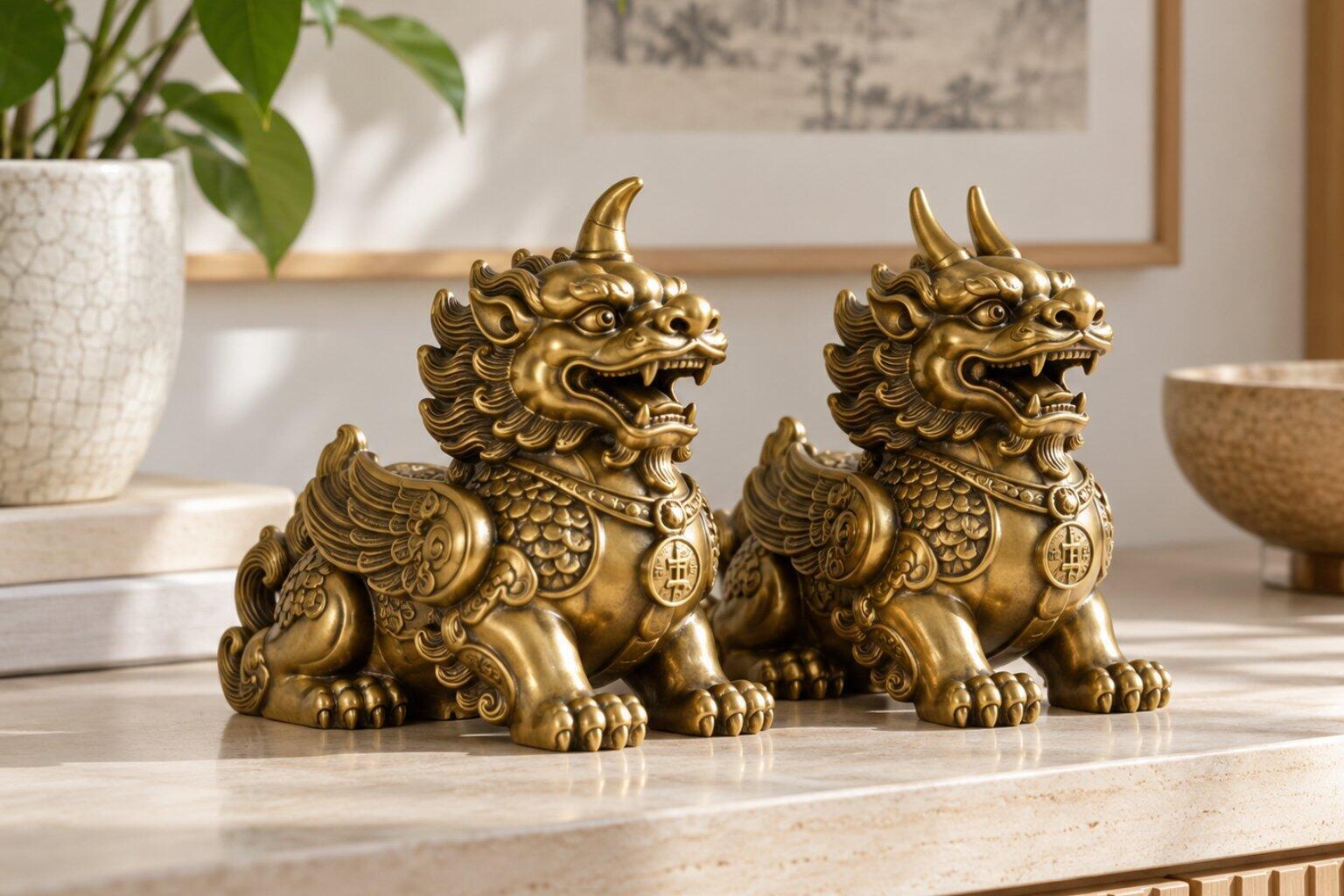
- A single Pixiu is common on a desk, near a cash register or in a small space.
- A pair is popular for homes and businesses, placed together facing the main door or a window with a pleasant view.
Neither option is wrong. Choose based on the space you have and the look you prefer. If you buy a pair, keep the two figures together rather than splitting them between rooms. Materials vary from brass and resin to jade and obsidian. A brass Pixiu pair is the most traditional choice, while jade Pixiu statues have a softer look.
Where to Place a Pixiu Statue
The general rule is that the Pixiu should face outward, toward where wealth and energy come from, never toward a wall or into a corner.
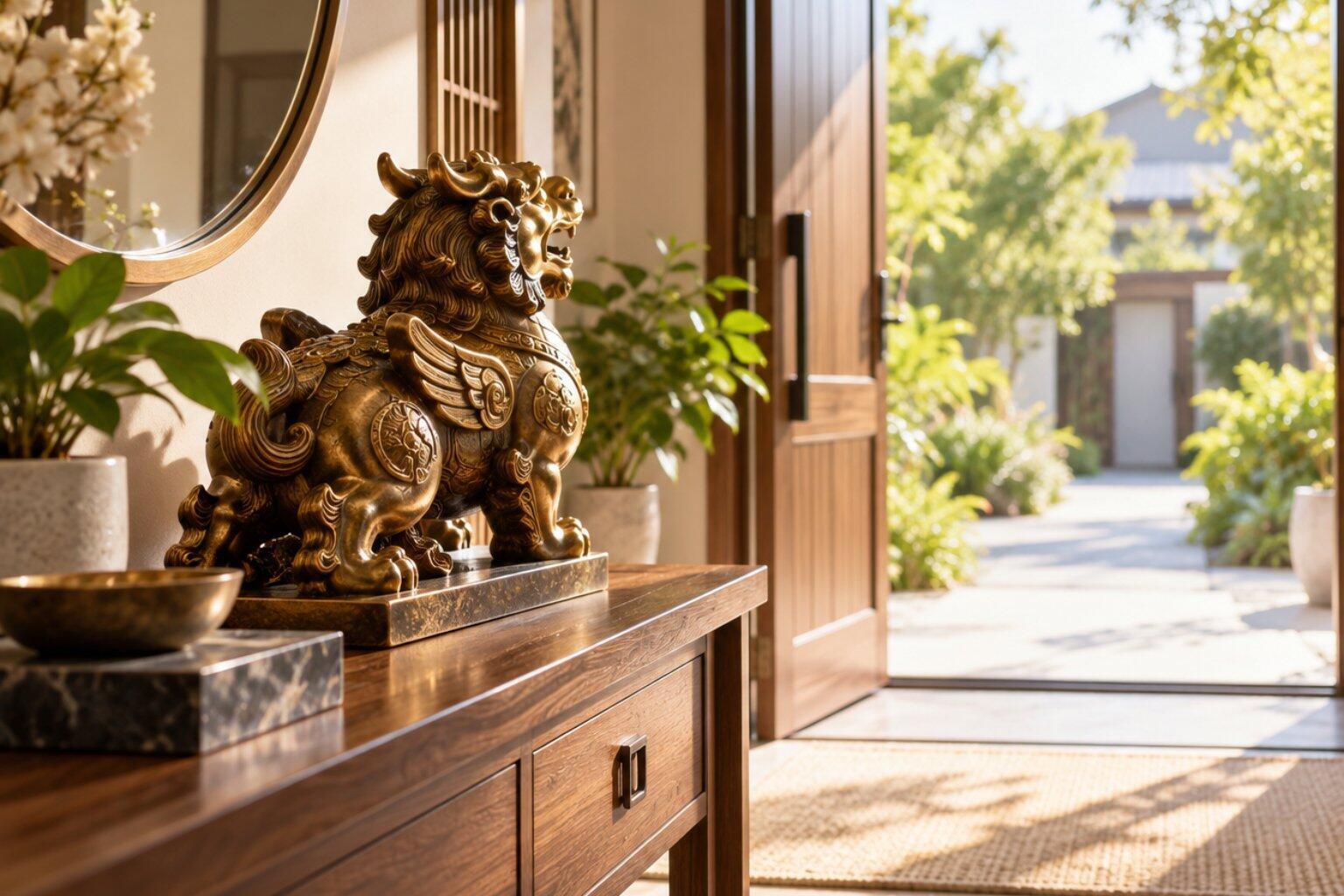
Facing the Front Door or a Window
Placing the Pixiu on a table or shelf so it looks toward the main door or an outside window is the most common choice. It "watches" incoming energy and opportunities. Keep the entrance itself bright and clear, as described in our front door feng shui guide.
On Your Desk or in the Home Office
A Pixiu on your desk, facing the door or the window, is popular with people who run a business or work from home. Keep it at table height and away from clutter. These home office feng shui tips cover the rest of the workspace.
In a Shop or Business
Near the cash register or the entrance, facing the door, is the classic business placement.
In the Wealth Area
The far left corner from the front door, or the southeast, is the wealth area. In 2027 the southeast also holds the 8 wealth star, which makes it a strong choice. See how to find your money corner.
How to Welcome and Care for a Pixiu
Many people like to mark the moment they bring a Pixiu home. There is no strict ritual you must follow, but these simple steps are common:
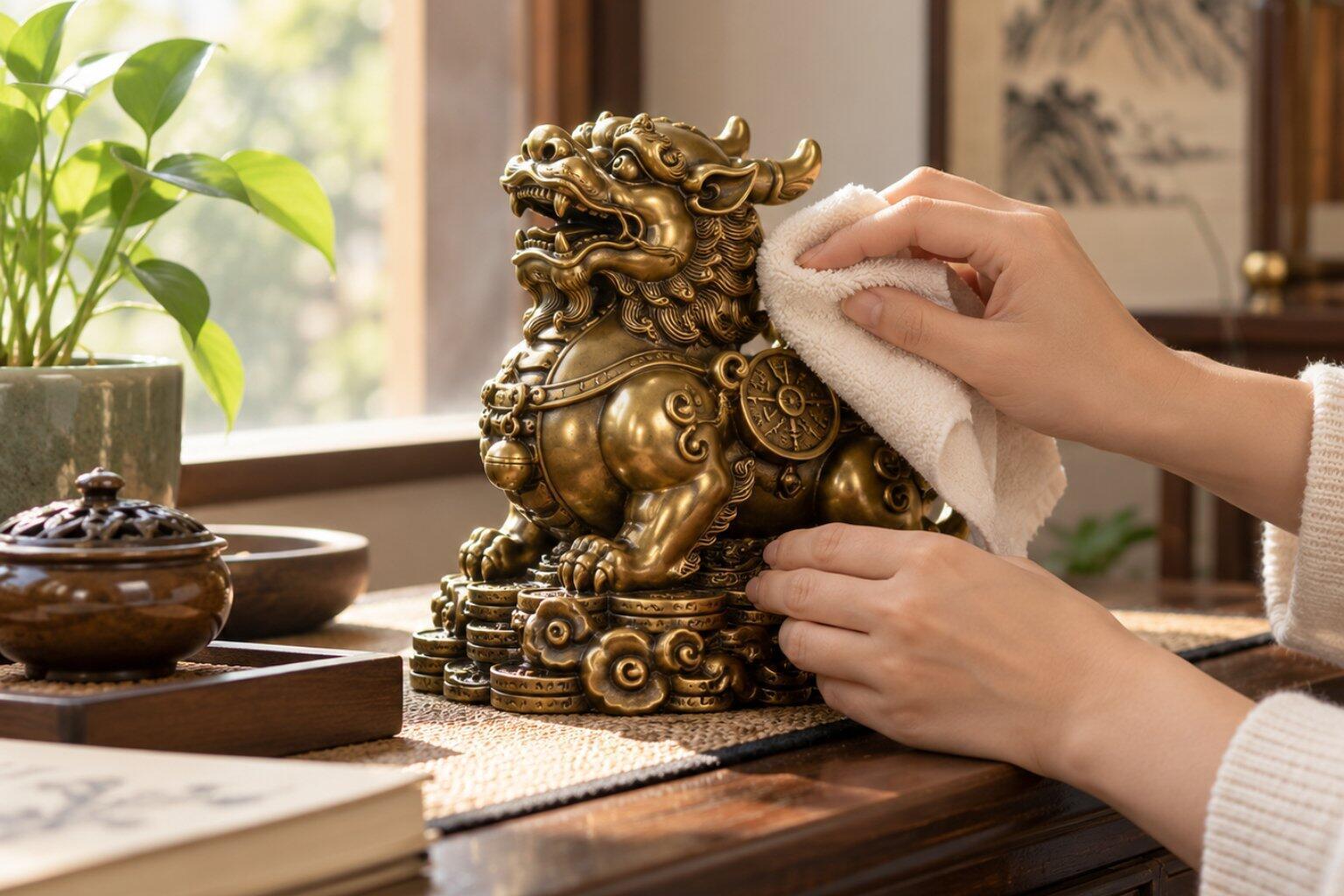
- Cleanse it. Wipe the statue with a soft, damp cloth, or pass it through incense or sage smoke if that is part of your practice.
- Choose its spot first. Decide where it will live before you unwrap it, so it goes straight to a clean, prepared place.
- Set an intention. Some people gently touch the Pixiu's head and say what they hope to build, such as steady income for a new business or savings for a home.
- Keep it clean. Dust it weekly. A cared-for statue reflects the care you give to your finances.
A traditional idea is that the Pixiu should not be handled by many different people, since it is a personal guardian. If a guest wants to look, it is fine to show it; just keep it in its place afterward.
Pixiu, Money Frog or Maneki Neko?
These three wealth symbols are often confused. Each one has a slightly different job:
- Pixiu: attracts wealth and, above all, helps keep it. Good for savings, protection and steady income.
- Money frog: represents wealth arriving, often placed near the entrance facing in.
- Maneki Neko: beckons customers and good luck, especially popular in shops.
You do not need all three. Pick the one whose meaning fits your situation, or combine two in different areas if you have the space. Avoid crowding several wealth symbols on one shelf, which turns intention into clutter.
Pixiu Placement Mistakes to Avoid
- Facing a wall or a corner. The Pixiu should look out toward open space.
- The bedroom. Its active guardian energy does not suit a room meant for rest.
- The bathroom or kitchen. These rooms are linked with draining energy and heat.
- On the floor. Place it at table height or higher, as a sign of respect.
- Facing a person directly. Many practitioners suggest it should not stare straight at you as you sit at your desk; angle it toward the door instead.
- Dust and clutter. A neglected statue loses its meaning. Wipe it regularly.
Pixiu Statue: Frequently Asked Questions
Which direction should a Pixiu face?
Outward, toward the front door, a window or the entrance of a business, so it faces incoming energy.
Can I put a Pixiu in my bedroom?
It is usually avoided. The bedroom should feel restful, and the Pixiu is an active guardian figure.
Is it better to have one Pixiu or two?
Both work. A single Pixiu suits a desk or small space; a pair is common for homes and businesses and should be kept together.
What is the difference between a Pixiu statue and a Pixiu bracelet?
A statue works on the space around it, while a bracelet is a personal talisman you wear. Many people use both.
More Feng Shui Tips