
Mirror in the Bedroom Feng Shui: Good or Bad? Rules You Need to Know


Mirrors are powerful in Feng Shui because they reflect light, movement, and attention.
That can be wonderful in active areas of your home—but in a bedroom, where the goal is rest, softness, and reset, mirrors can be tricky.
The good news: you don’t always need to remove them. With a few practical rules, you can keep the benefits of a mirror without creating a “too awake” bedroom feel.
This guide will help you decide when a mirror is supportive, when it’s better to move it, and what to do if you can’t change the layout.
- Why Mirrors Can Feel “Too Active” in a Bedroom
- The #1 Rule: Avoid a Mirror Directly Facing the Bed
- Best Mirror Placements for Bedroom Feng Shui
- What to Do If You Can’t Move the Mirror
- Bedroom Mirror Feng Shui for Couples
- Common Bedroom Mirror Feng Shui Mistakes to Avoid
- A Quick Bedroom Mirror Feng Shui Checklist
Why Mirrors Can Feel “Too Active” in a Bedroom
In Feng Shui, a bedroom is a yin space: quiet, restorative, and grounded. Mirrors, on the other hand, can add yang energy because they:
Bounce light around the room (stimulating)
Multiply visual activity (more “movement” for the eyes)
Reflect the bed (making the room feel less settled to some people)
Even if you don’t follow Feng Shui strictly, you might notice that a mirror can make a bedroom feel less cozy—especially at night when it reflects shadows, hallway light, or electronics.
The #1 Rule: Avoid a Mirror Directly Facing the Bed
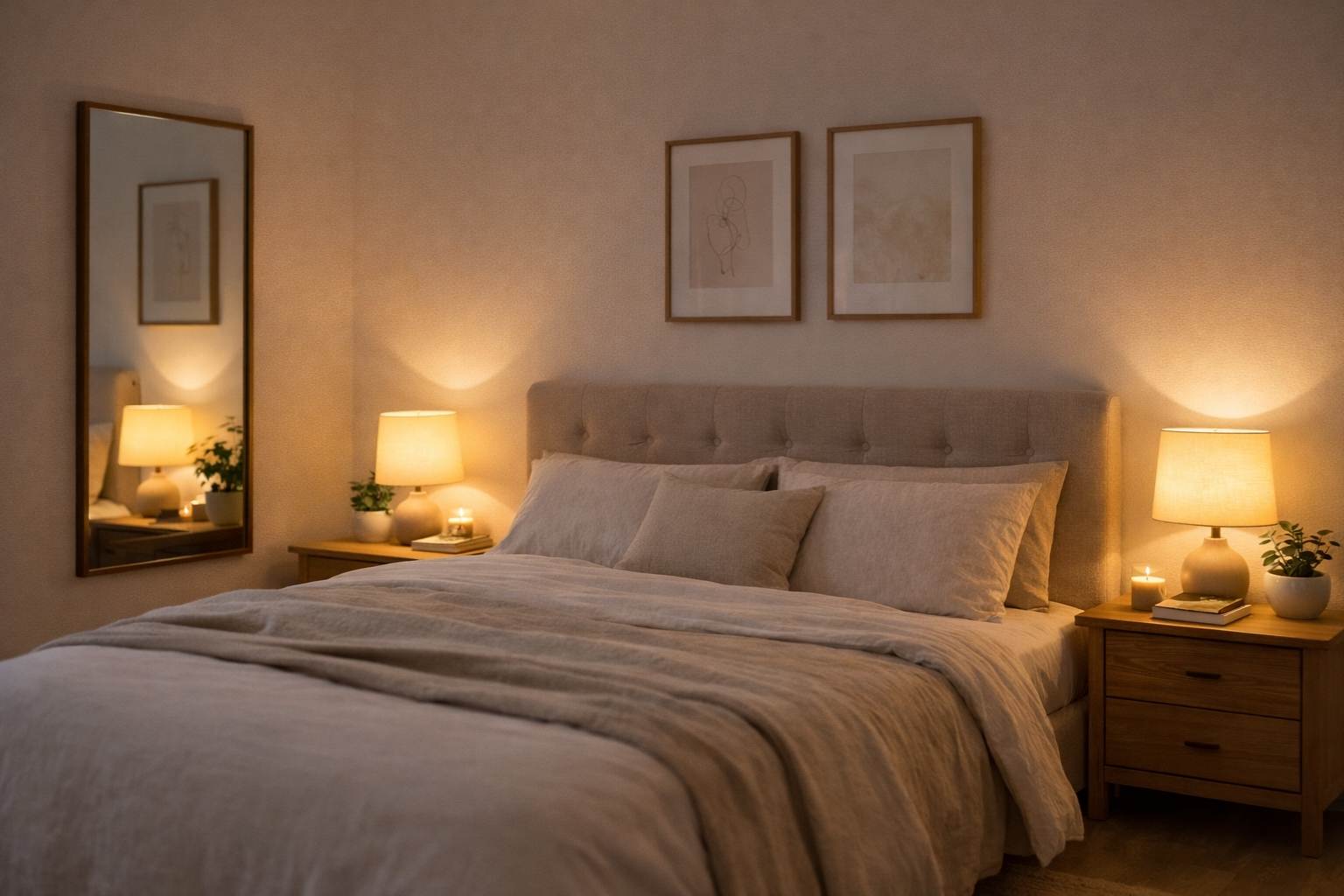
The classic guideline is simple: don’t place a mirror where you can see yourself in bed—especially when lying down. In Feng Shui tradition, a mirror reflecting the bed can feel like it “doubles” energy and attention when you’re trying to unwind.
Practical reasons people avoid this setup:
It can feel visually busy at night
It may reflect light from street lamps, phones, or alarm clocks
It can create a subtle sense of being “observed,” which isn’t relaxing
Quick test: Lie down in your normal sleeping position. If you can see your reflection in the mirror without sitting up, it’s worth adjusting.
Best Mirror Placements for Bedroom Feng Shui
If you want a mirror in your bedroom, aim for placements that support function without overstimulating the bed area.
Better options include:
Inside the closet door (hidden when not in use)
On the back of the bedroom door (as long as it doesn’t reflect the bed)
On a wall that reflects something calm (like a plant, artwork, or a tidy corner)
Near your dressing area, angled so it’s not reflecting the bed
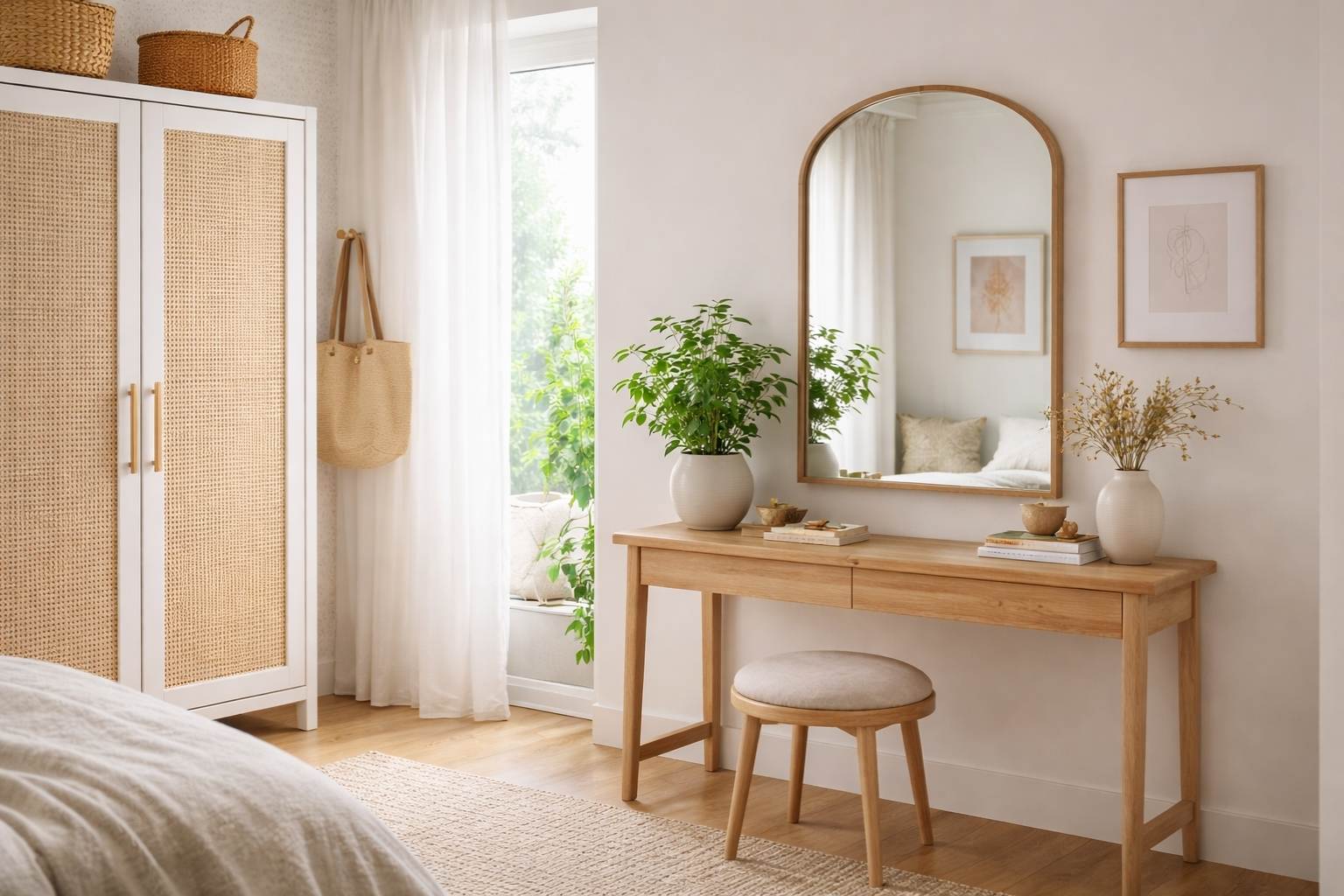
What mirrors should reflect (ideal):
Natural light (without shining into the bed)
A clean, organized space
A soothing image (soft art, neutral textures, a calm vignette)
What mirrors should NOT reflect:
The bed
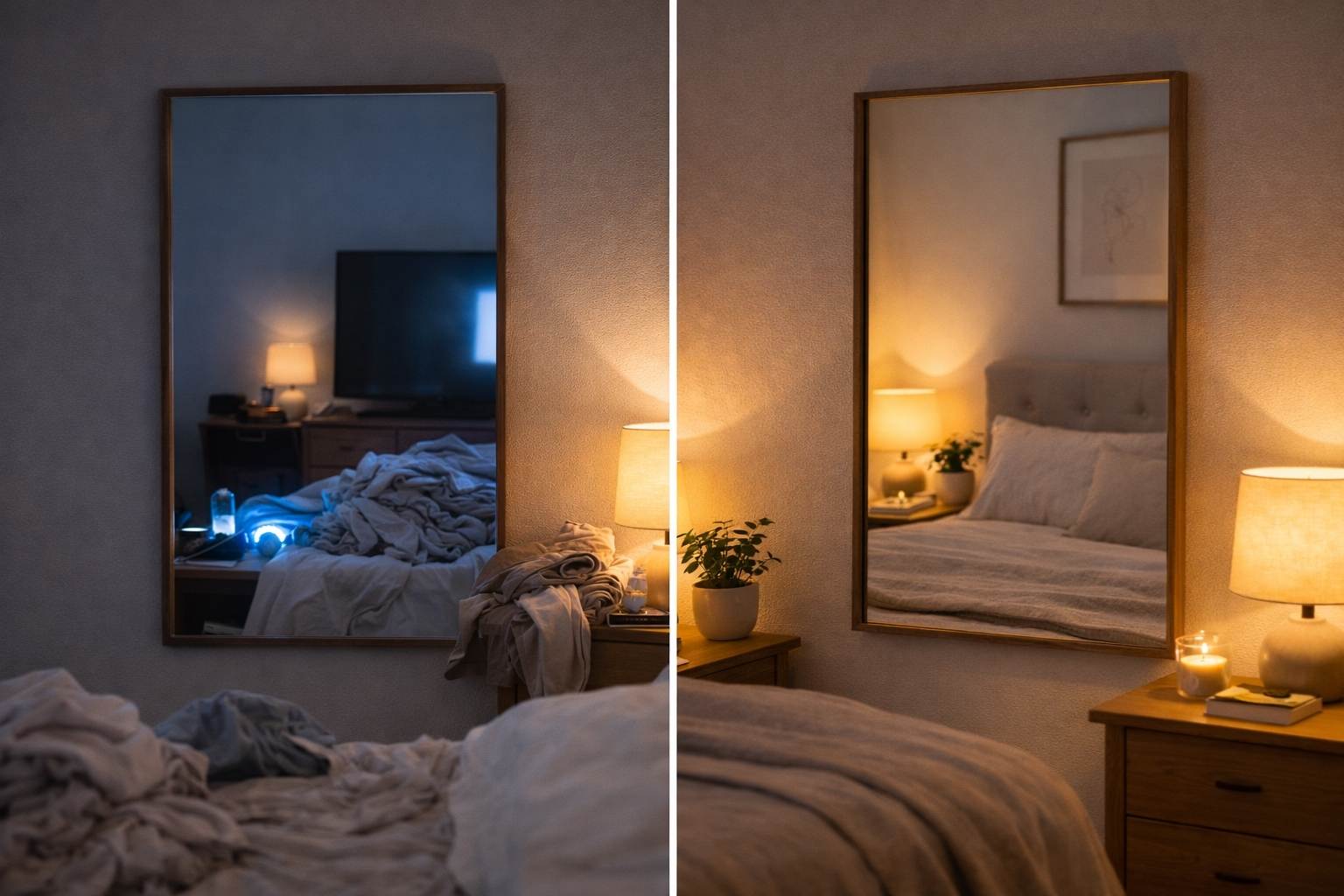
Clutter piles or laundry (it visually “doubles” the mess)
Sharp corners pointing at the bed
Bright screens or blinking electronics
What to Do If You Can’t Move the Mirror
Sometimes the mirror is built-in (closet doors), or you rent and can’t change much. Here are flexible fixes that still align with Feng Shui principles:
Easy cures that don’t require tools:
Cover it at night: Use a scarf, fabric panel, folding screen, or curtain rod with lightweight fabric.
Use a removable window film: Frosted film softens reflections while keeping the mirror functional.
Change the angle: A slight tilt can stop it from reflecting the bed.
Create a visual “buffer”: Place a plant or tall lamp between the bed and the mirror, blocking the line of sight (if it doesn’t crowd the room).
Close closet doors before sleep: If your mirror is on sliding doors, consider adding curtains that pull closed at night.
The goal isn’t perfection—it’s reducing the sense of constant reflection in a space meant for restoration.
Bedroom Mirror Feng Shui for Couples
In some Feng Shui schools, mirrors reflecting the bed are considered especially “busy” for relationship energy—less because of superstition and more because bedrooms benefit from simplicity and emotional ease.
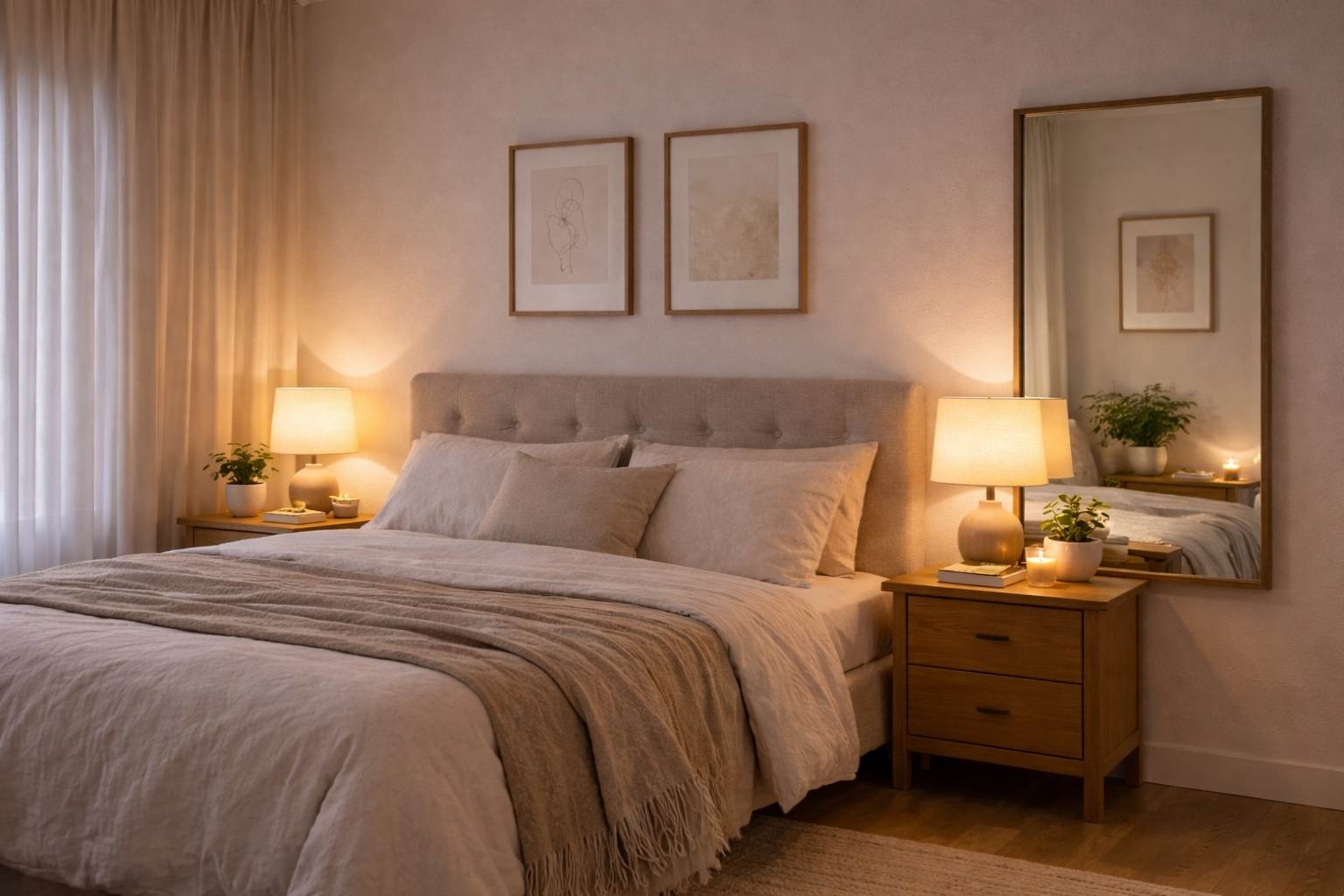
If you share your bedroom:
Prioritize a mirror setup that feels calming to both people
Avoid a mirror reflecting the bed from either side (test both positions)
Keep reflections soft: warm lighting, minimal clutter, and balanced décor
A bedroom can still feel romantic and connected with a mirror—just not one that’s visually “active” at bedtime.
Common Bedroom Mirror Feng Shui Mistakes to Avoid
These are the most common issues that make mirrors feel off in a bedroom (and how to fix them):
Mirror facing the bed
Fix: Move it, angle it, or cover it at night.
Mirror reflecting clutter
Fix: First, declutter the reflected area, or reposition the mirror.
The oversized mirror dominates the room
Fix: Choose a smaller mirror or break up the visual with a frame and calmer placement.
Mirror reflecting the bedroom door
Fix: Rotate it so it reflects a calmer wall or a styled vignette instead.
Multiple mirrors create “infinite reflections.”
Fix: Remove one or reposition so mirrors don’t face each other.
Harsh lighting around the mirror
Fix: Use warm bulbs (soft white) and avoid mirror-facing spotlights in the bedroom.
A Quick Bedroom Mirror Feng Shui Checklist
Use this as a simple reset:
From bed, you can’t see yourself in the mirror
The mirror reflects something calm and tidy
It does not reflect screens, bright lights, or clutter
The mirror size feels supportive, not overwhelming
If needed, you can cover it at night easily
The bedroom still feels soft, quiet, and restful
Mirrors aren’t automatically “bad” Feng Shui in a bedroom—what matters is what they reflect and how they affect the bed zone.
If your mirror feels energizing at night, try one small change: adjust the angle, cover it, or move it to a calmer wall. Your bedroom should feel like a place your nervous system can exhale—mirror included.
More Feng Shui Tips