
Laughing Buddha Meaning: What It Symbolizes in Feng Shui


The Laughing Buddha is one of the most recognizable Feng Shui symbols, but many people are not fully sure what it represents. Beyond the cheerful smile and rounded belly, this figure is associated with abundance, contentment, generosity, and emotional ease. In Feng Shui-inspired decor, it is often used as a reminder to invite lighter energy into the home.
If you have seen Laughing Buddha statues in entryways, living rooms, or offices, you may have wondered whether the meaning changes based on the pose, the objects it carries, or where you place it. This guide breaks down the core symbolism in a simple way, so you can understand what the Laughing Buddha represents and choose a statue that feels aligned with your space.
- Who Is the Laughing Buddha?
- What the Laughing Buddha Symbolizes in Feng Shui
- Do Different Laughing Buddha Poses Have Different Meanings?
- How to Choose a Laughing Buddha Statue for Your Home
- Where Meaning and Placement Work Together
- What to Avoid When Choosing One
- A Simple Way to Use This Symbol at Home
Who Is the Laughing Buddha?
The Laughing Buddha is commonly linked to Budai, a folkloric figure known for his joyful presence, generous spirit, and carefree energy. In Feng Shui contexts, the Laughing Buddha is treated as a symbol of happiness, prosperity, and inner ease rather than as a strict religious object used for ritual.
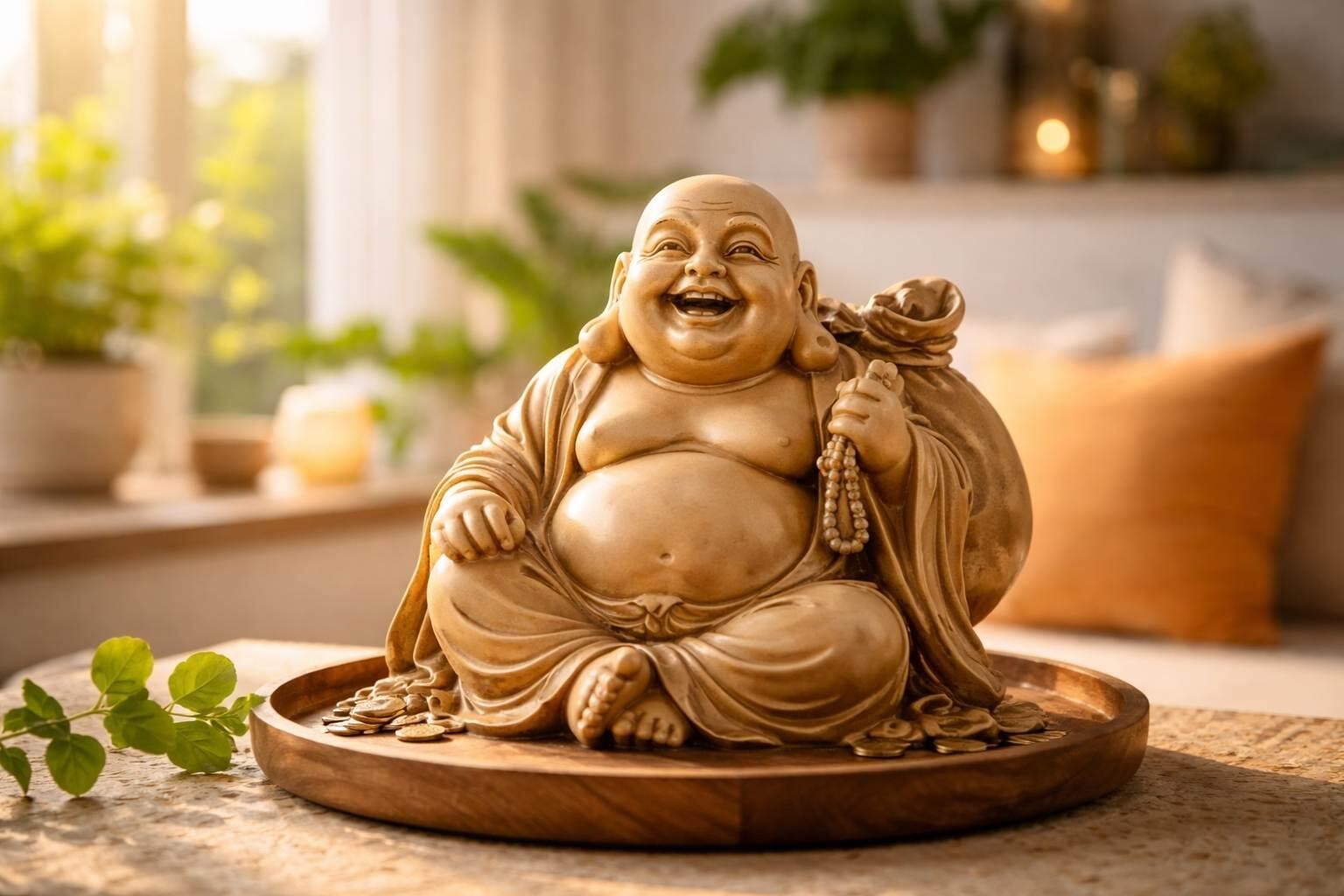
That distinction matters because many people search for a Laughing Buddha statue, thinking only about decor. In practice, the figure is usually appreciated for what it represents: a home filled with warmth, gratitude, and an attitude of abundance instead of lack.
His smiling face and relaxed posture are central to the message. The symbol suggests that prosperity is not only about money, but also about emotional richness, peace of mind, and the ability to enjoy life.
What the Laughing Buddha Symbolizes in Feng Shui
In Feng Shui, symbols are often used to reinforce a desired feeling or intention in a space. The Laughing Buddha is especially connected with positive emotional energy.
Joy and contentment
The most immediate meaning is joy. The statue represents a lighthearted approach to life, emotional balance, and the ability to move through daily stress without carrying unnecessary heaviness into the home.
Abundance and prosperity
The Laughing Buddha is also strongly associated with abundance. This can refer to financial well-being, but it often extends to a broader sense of fullness in life: enough support, enough peace, enough comfort, and enough opportunity.
Generosity and good fortune
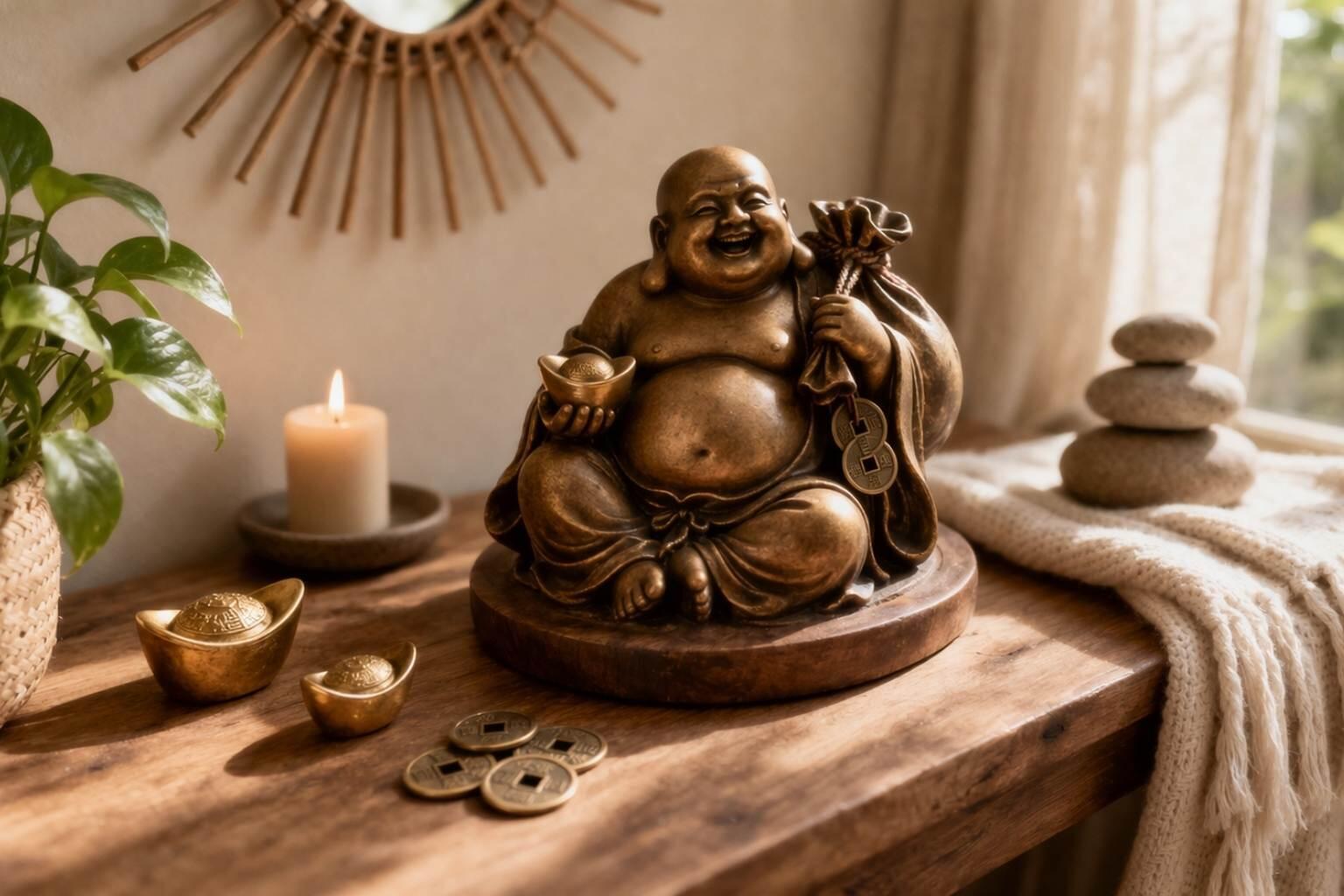
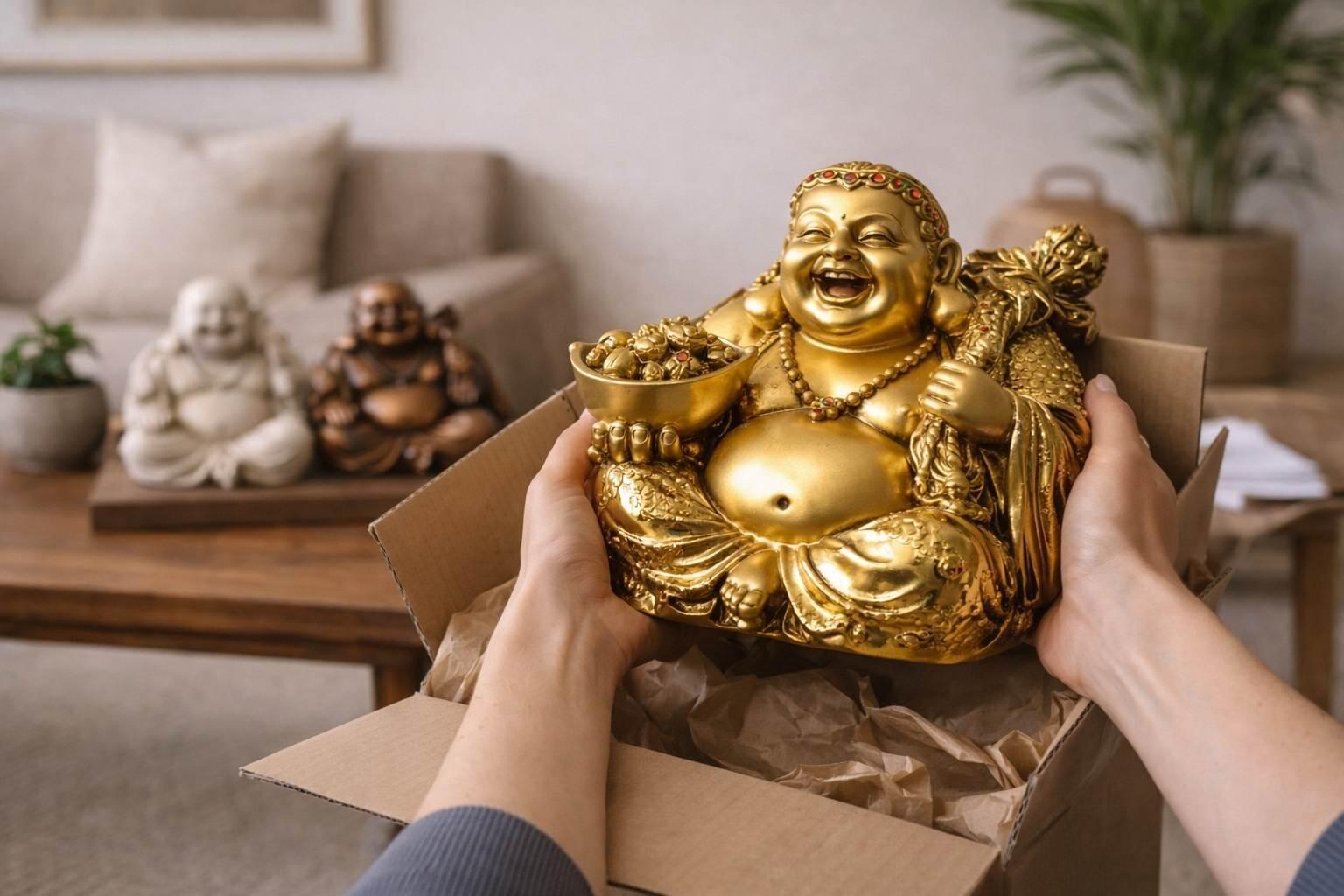
Many depictions show the Laughing Buddha carrying a sack, coins, or gold ingots. These details reinforce the idea of blessings shared freely. Rather than symbolizing greed, the image points to generosity, luck, and the circulation of good energy.
Protection from tense energy
Because the Laughing Buddha carries such uplifting symbolism, many people place it in spaces where they want to soften stress and create a more welcoming atmosphere. It is often seen as a visual anchor for optimism and emotional relief.
Do Different Laughing Buddha Poses Have Different Meanings?
Yes. While the overall symbolism stays similar, certain poses and objects can highlight different themes.
Laughing Buddha with gold or coins
This style is usually associated with wealth, prosperity, and financial growth. It works well in content where you explain abundance symbolism and want to link to statues that visually reflect that theme.
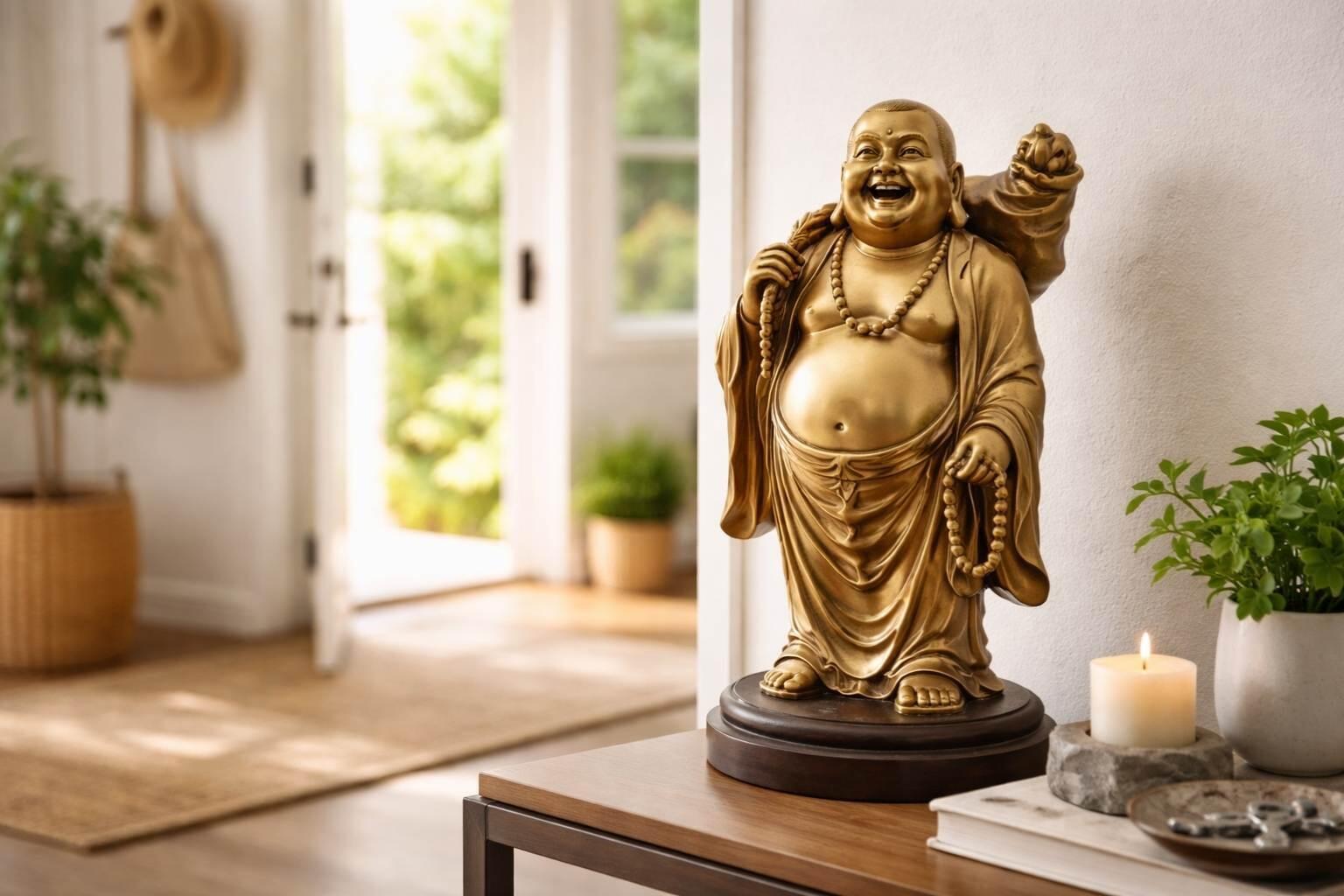
Standing Laughing Buddha
A standing figure tends to feel more active and expansive. Some readers prefer this style for entryways or home offices because it gives a more open and welcoming impression.
Laughing Buddha with a sack
A sack often symbolizes blessings, support, and the carrying away of burdens. This version is a good fit for readers who want a statue that feels comforting and generous rather than purely wealth-focused.
Seated Laughing Buddha
A seated pose often feels calmer and more grounded. It can be a natural recommendation for living rooms, reading corners, or anyone wanting a softer, more peaceful visual presence.
If you’re choosing a statue based on symbolism, these Laughing Buddha styles are a good place to start.
How to Choose a Laughing Buddha Statue for Your Home
Choosing the right Laughing Buddha statue is not about finding a perfect formula, but about selecting a piece that reflects the energy you want your home to hold.
A statue can symbolize joy, abundance, generosity, or emotional ease, and the best option is usually one that feels visually harmonious with your space. When the style, size, and finish fit naturally into the room, the symbol tends to feel more meaningful and inviting.
Choose the meaning first
Start with the symbolism you want to emphasize. If your goal is to create a more abundant feeling, a statue with coins or gold details may feel fitting. If you want the space to feel lighter and more emotionally supportive, a simple smiling or seated version may be a better match.
Consider size and scale
The statue should feel proportionate to the room. A very large piece can feel overwhelming in a small apartment, while a tiny figure may get visually lost in a large open area. Choosing the right size helps the symbol feel intentional rather than random.
Look at the material and finish
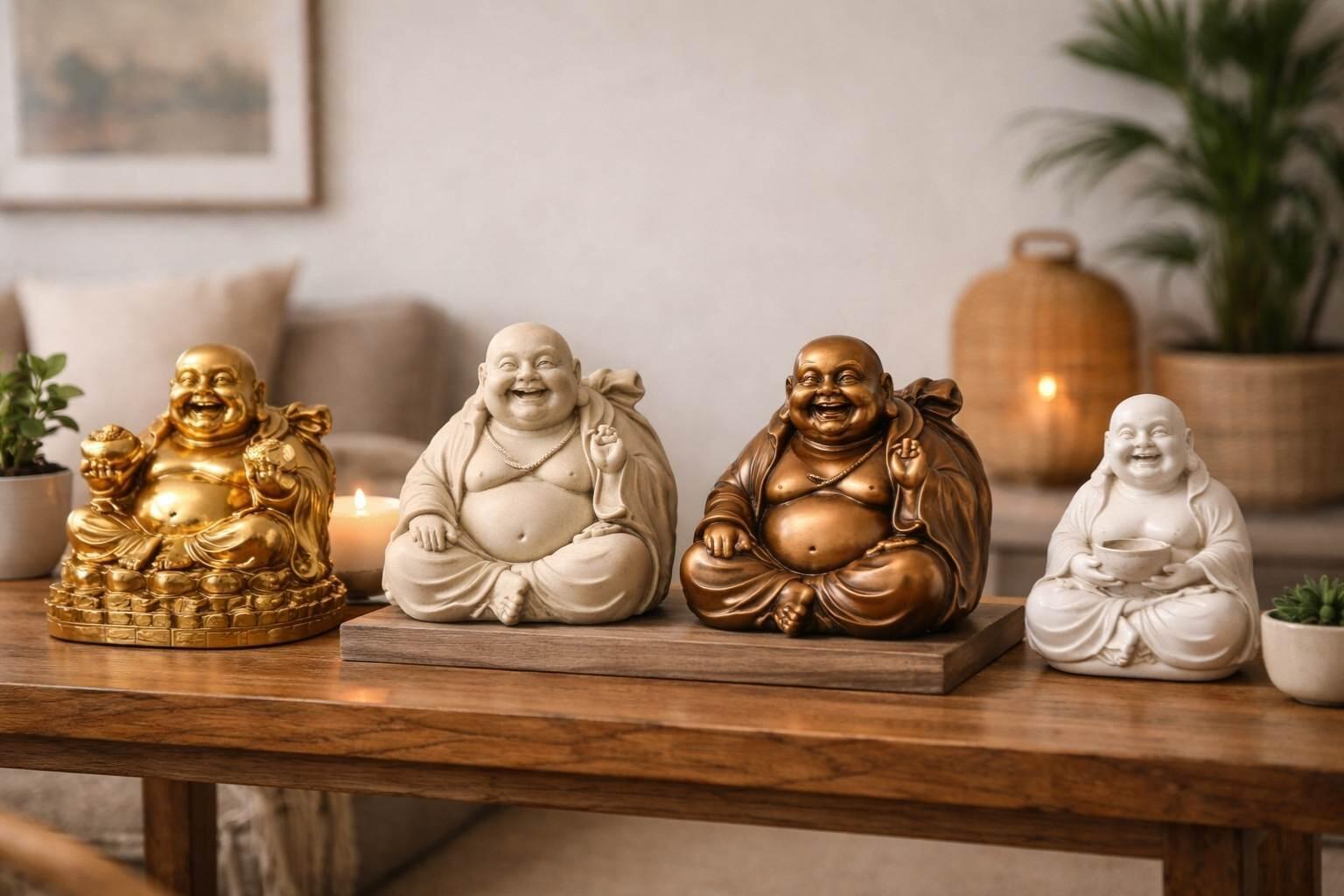
Resin, ceramic, metal, and wood-inspired finishes all create different moods. A gold-toned statue often feels more traditional and prosperity-focused, while neutral or stone-look finishes can feel calmer and easier to blend into modern interiors.
Pick a style that matches your decor
A Laughing Buddha statue does not need to clash with your home style. There are ornate options, minimalist designs, and soft neutral finishes that work well in contemporary spaces.
Recommended Laughing Buddha Statue Styles:
- Gold finish for abundance-focused decor
- Neutral ceramic look for modern homes
- Small tabletop statues for apartments
- Larger statement pieces for entryways
Where Meaning and Placement Work Together
Although this post is focused on symbolism, placement still affects how the statue is experienced in the home. The meaning becomes more tangible when the figure is displayed in a visible, respectful area.
Common spots include living rooms, entry consoles, and home offices. These are places where the uplifting symbolism can be seen and appreciated regularly. Many people like using the Laughing Buddha near the entrance because it sets a welcoming tone from the moment someone walks in.
What to Avoid When Choosing One
The most important thing is not to overcomplicate the symbol. You do not need the “perfect” statue for the meaning to work in a decorative Feng Shui context. A piece that feels warm, respectful, and visually harmonious in your home is usually the best choice.
It also helps to avoid buying based only on trend or price. A statue that looks out of place, feels too flashy for your taste, or does not match the room may end up stored away instead of being enjoyed.
A Simple Way to Use This Symbol at Home
If you are new to Feng Shui decor, the easiest approach is to choose a Laughing Buddha statue that genuinely makes your space feel lighter and more welcoming. Focus on the core meaning: joy, abundance, generosity, and emotional ease.
You do not need an elaborate setup. A well-chosen statue placed thoughtfully can work as a daily visual reminder of the energy you want to cultivate in your home. Start with the symbolism that speaks to you most, then choose a style that fits naturally into your space.
More Feng Shui Tips