
Feng Shui Kitchen Layout: How to Arrange Your Space for Abundance and Good Energy


The
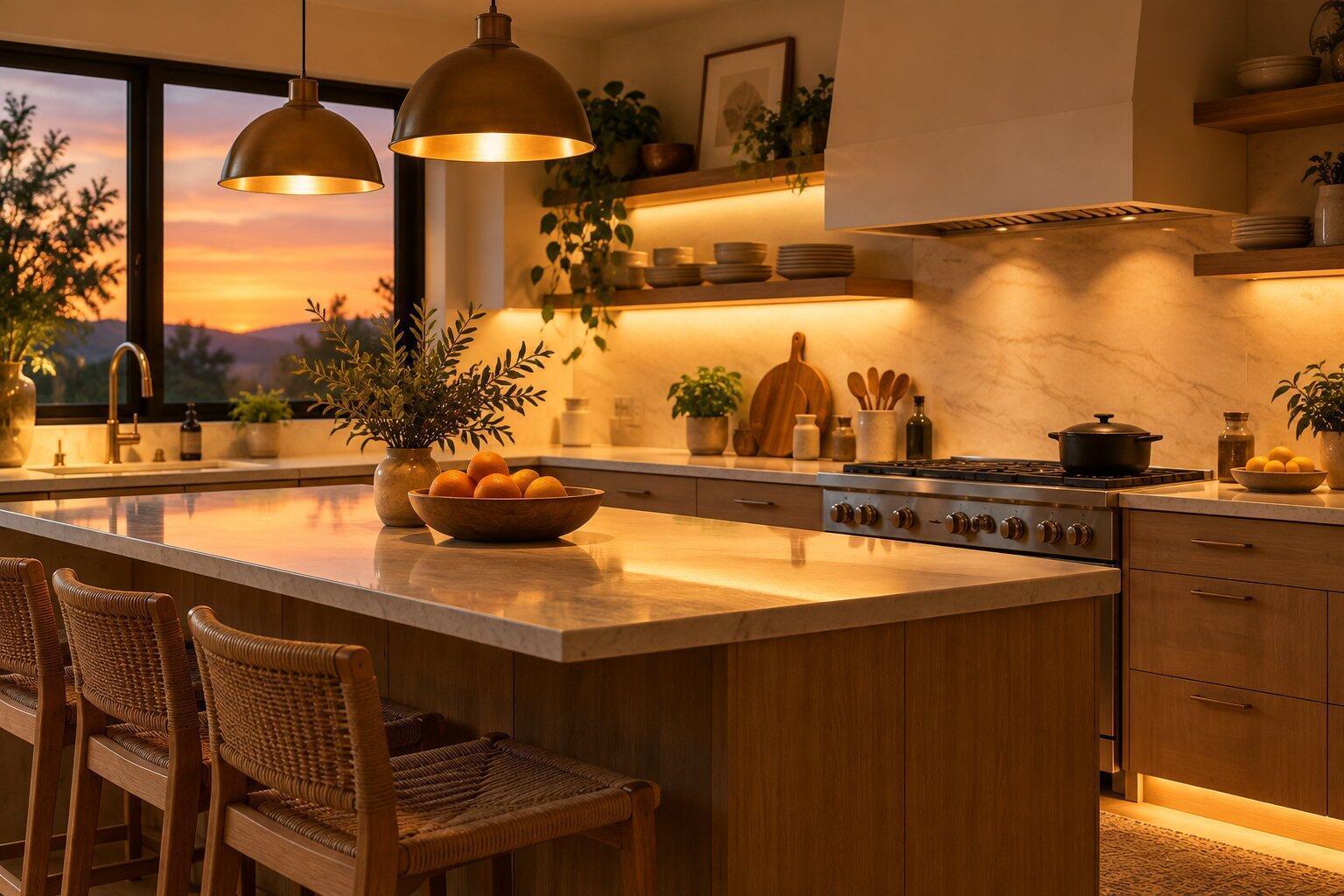
Warm under-cabinet LED lights are an easy upgrade for dark counters and work in rentals too.
kitchen is one of the most energetically loaded rooms in any home. In feng shui, it represents nourishment, abundance, and the fire element — the force that transforms raw ingredients into sustenance and raw potential into real prosperity.
Yet most people spend time obsessing over bedroom or living room feng shui and completely overlook the room where so much of life actually happens. If your kitchen feels chaotic, cramped, or just off, your energy — and your finances — may be feeling it too.
The good news is that you don't need to renovate to shift the energy in your kitchen. Small, intentional changes in how you arrange your space can have a noticeable impact. This guide walks you through the core feng shui kitchen layout principles, from stove placement to color choices to what you should never keep on your countertops.
Think of feng shui kitchen layout not as a rigid rulebook but as a framework for creating a space that feels calm, abundant, and alive. When the kitchen works with you rather than against you, the whole house tends to feel more balanced.
The Commanding Position: Where You Stand Matters
In feng shui, the commanding position is the principle that the person using a key piece of furniture or appliance should be able to see the door without being directly in line with it. In the kitchen, this applies primarily to the cook. Ideally, you should be able to glance toward the entrance while cooking, not have your back fully exposed to it.
If your stove is positioned so you face a wall with your back to the door, energy can feel unsettled. A practical fix: place a small mirror or reflective surface behind the stove at eye level. This creates the visual effect of being able to see behind you, which settles the nervous system and, in feng shui terms, restores the commanding position. Some people use stainless steel backsplashes or mirrored tiles to accomplish this elegantly.
The Stove as a Wealth Symbol
The stove is arguably the most important feng shui element in the entire kitchen. It represents the fire element and is directly associated with financial nourishment and family prosperity. A stove with multiple working burners is considered auspicious — try rotating which burners you use rather than always defaulting to the same one or two. This activates all the wealth channels available to you.
Keep the stove clean and in good working order. A broken burner, stained grates, or a malfunctioning knob signals blocked abundance. Fix what's broken. Clean what's dirty.
The Work Triangle and Element Balance
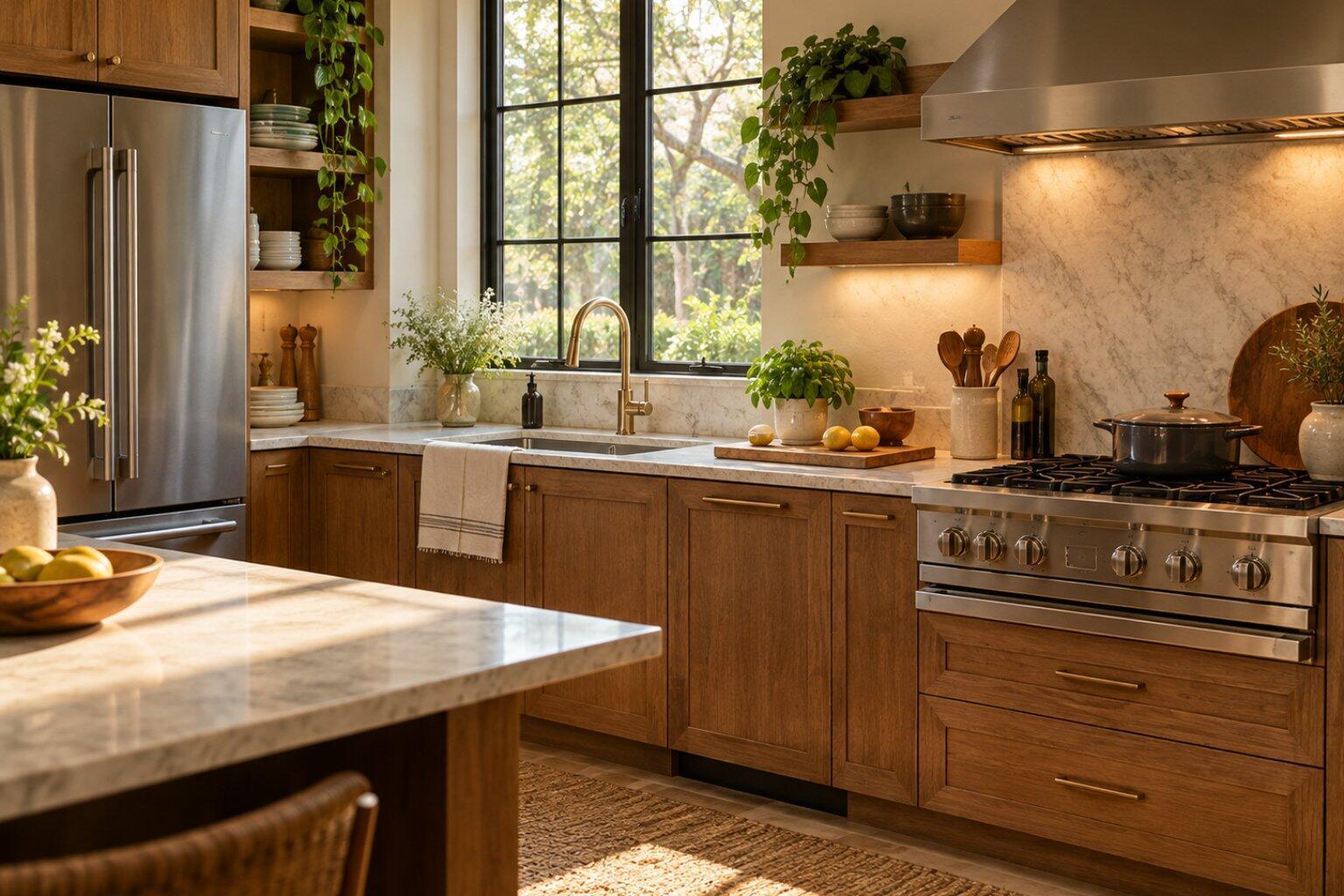
The classic kitchen work triangle — the invisible line connecting the stove, sink, and refrigerator — is a concept from both interior design and feng shui. These three points represent fire (stove), water (sink), and storage/earth (refrigerator). In feng shui, fire and water are opposing elements, so the ideal arrangement keeps them from directly facing each other.
If your sink and stove are directly across from each other, you can buffer the conflict by placing a small plant, a wooden cutting board, or a green element between them. Wood is the mediating element between water and fire in the five-element cycle. A potted herb, a wooden trivet, or a bamboo dish rack can work beautifully here.
The Refrigerator's Role in Kitchen Feng Shui
The refrigerator represents storage, abundance, and what you're holding in reserve. A cluttered, overflowing fridge where nothing is visible can signal a scarcity mindset rather than abundance. Aim to keep it organized: older items in front, fresh food visible, and nothing expired hiding in the back. A well-organized refrigerator signals that you honor what you have.
🔗 AFFILIATE LINK → Amazon: "bamboo kitchen organizer"💬 CTA sugerido: "Switching to a bamboo drawer organizer like this keeps the kitchen tidy while adding a natural, grounded material to the space."
New to the elements? Start with our simple guide to the five elements.
The stove is also behind several of the most common kitchen feng shui mistakes, so it is worth checking first.
This post contains affiliate links. If you buy through them, we may earn a small commission at no extra cost to you.
Countertops: Less Is More
Clutter on kitchen countertops blocks the flow of chi more directly than almost any other factor in the kitchen. In feng shui, the countertop represents your capacity — what you can create and hold. When it's covered in appliances, mail, and random objects, it signals overwhelm and restriction.
The practical goal: keep only the items you use daily on the countertop. Everything else finds a cabinet or drawer. A clean counter signals spaciousness, readiness, and possibility.
What to Display vs. What to Store
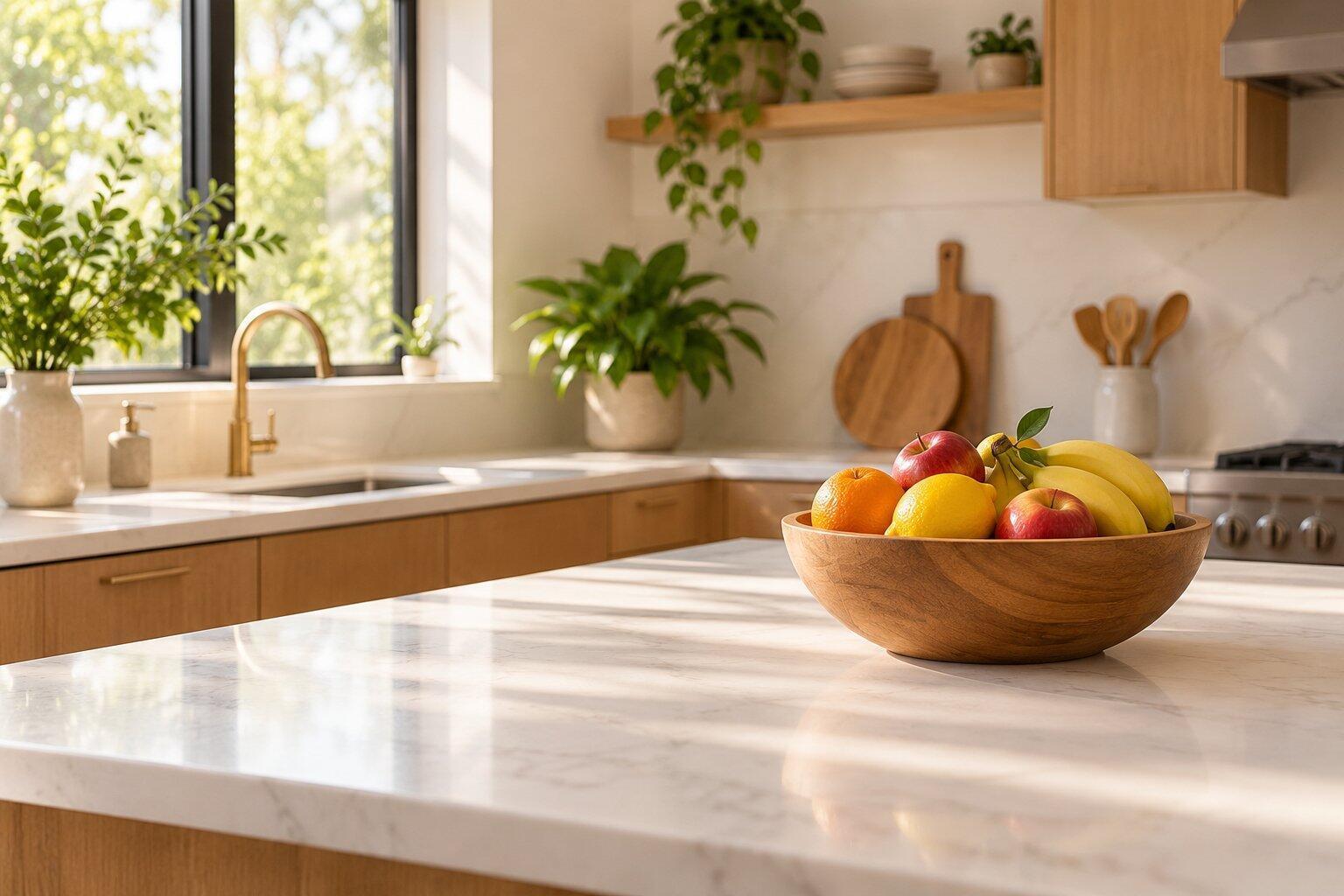
A few items are genuinely good to keep visible in a feng shui kitchen. A bowl of fresh fruit — especially oranges, which are traditionally associated with wealth in Chinese culture — is a classic abundance symbol. A small herb garden in terracotta pots brings the wood element and living chi into the space. A clean, beautiful cutting board signals craftsmanship and intention.
What to store away: broken appliances, expired pantry items that migrated to the counter, recyclables, and anything that doesn't belong in a kitchen. If it's not helping you cook or enjoy meals, it probably doesn't belong on the counter.
Kitchen Colors and the Five Elements
Color plays a subtle but meaningful role in kitchen feng shui. Since the kitchen already contains strong fire energy (stove) and water energy (sink), choose colors that feel balanced rather than amplifying one element excessively.
Earth tones — warm creams, terracotta, soft yellows — are grounding and supportive of nourishment. White kitchens (metal element) are clean and spacious, but benefit from warm accents to soften the energy. Avoid heavy dark walls or excessive black and navy, as these are water-dominant and can suppress the fire of the stove.
Green accents — plants, dish towels, a small piece of art — bring the wood element, which feeds fire and softens water. A touch of green in the kitchen is almost always a good feng shui choice.
🔗 AFFILIATE LINK → Amazon: "terracotta herb pot kitchen"💬 CTA sugerido: "A set of terracotta herb pots like this on the windowsill brings earth energy and keeps fresh ingredients within arm's reach while you cook."
See the full palette in our guide to feng shui kitchen colors.
A wooden fruit bowl kept full of fresh fruit is one of the few things worth leaving out on the counter. For the rest, try this decluttering method for busy people.
Lighting in the Kitchen
Good lighting is essential for both practical cooking and feng shui energy. Dark kitchens feel stagnant. If your kitchen lacks windows, maximize artificial lighting with warm-toned bulbs rather than harsh fluorescent lighting. Under-cabinet lighting is a simple addition that dramatically brightens work surfaces and makes the kitchen feel more alive.
If you have a window in your kitchen, keep it clean and unblocked. Natural light is living chi, and blocking it with heavy curtains cuts off one of the easiest sources of fresh energy in the space.
Small Adjustments, Big Impact
You don't need to gut your kitchen to improve its feng shui. Start with one area: clear the counters, clean the stove, and add a bowl of fruit. Notice how the space — and your mood — shifts. Then work your way through the layout principles: stove position, element balance, lighting, and color.
The kitchen is where daily nourishment happens, both physical and energetic. When it's arranged with intention and care, every meal prepared there carries that energy. In feng shui, the simple act of cooking in a clean, organized, thoughtfully arranged kitchen is itself a powerful practice — one that feeds not just your body but the whole energy field of your home.
Kitchen Layout Feng Shui: Frequently Asked Questions
Should you see the door from the stove?
Ideally yes. The cook should be able to see the kitchen door without standing directly in line with it.
Is a sink next to the stove bad feng shui?
Water and fire side by side create tension. Add a wood or earth element between them, such as a cutting board, a plant or earth-toned tiles.
What should I keep on my kitchen counters?
As little as possible: daily-use items and perhaps a bowl of fresh fruit. Store everything else out of sight.
What is the best lighting for a feng shui kitchen?
Bright, warm light that reaches the work surfaces, with no dark corners over the stove or counters.
More Feng Shui Tips