
The Most Common Feng Shui Symbols for Wealth, Protection, and Luck

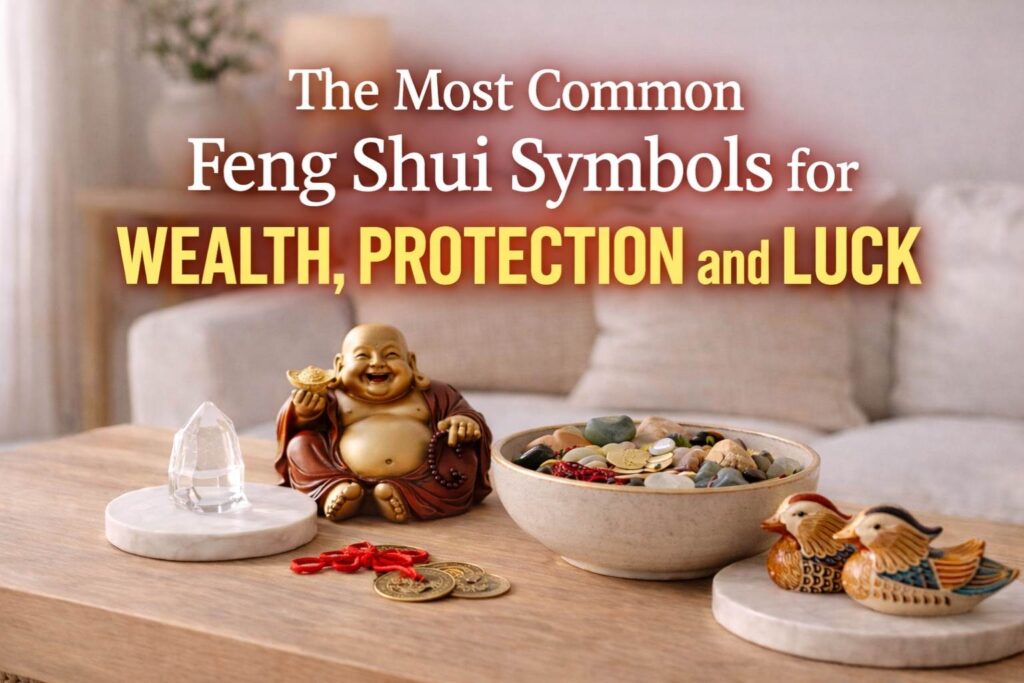
Feng Shui symbols are one of the most recognizable parts of Feng Shui, but they can also feel confusing at first. You may see coins, bamboo, crystals, mirrors, or guardian figures and wonder what they actually represent and whether you need all of them.
The good news is that you do not need to fill your home with random objects to create a more intentional space. In this guide, you’ll learn the most common Feng Shui symbols for wealth, protection, and luck, what they generally represent, and how to use them in a simple, balanced way.
- What Feng Shui Symbols and Cures Actually Do
- Common Feng Shui Symbols for Wealth
- Common Feng Shui Symbols for Protection
- Common Feng Shui Symbols for Luck
- How to Use Feng Shui Symbols in a Balanced Way
- Common Mistakes to Avoid With Feng Shui Cures
- How to Choose the Right Feng Shui Symbols for Your Home
What Feng Shui Symbols and Cures Actually Do
In Feng Shui, people typically use symbols and cures as intentional tools. They are meant to support the energy of a space by reinforcing a specific goal, such as inviting abundance, creating a sense of safety, or encouraging smoother flow in daily life.
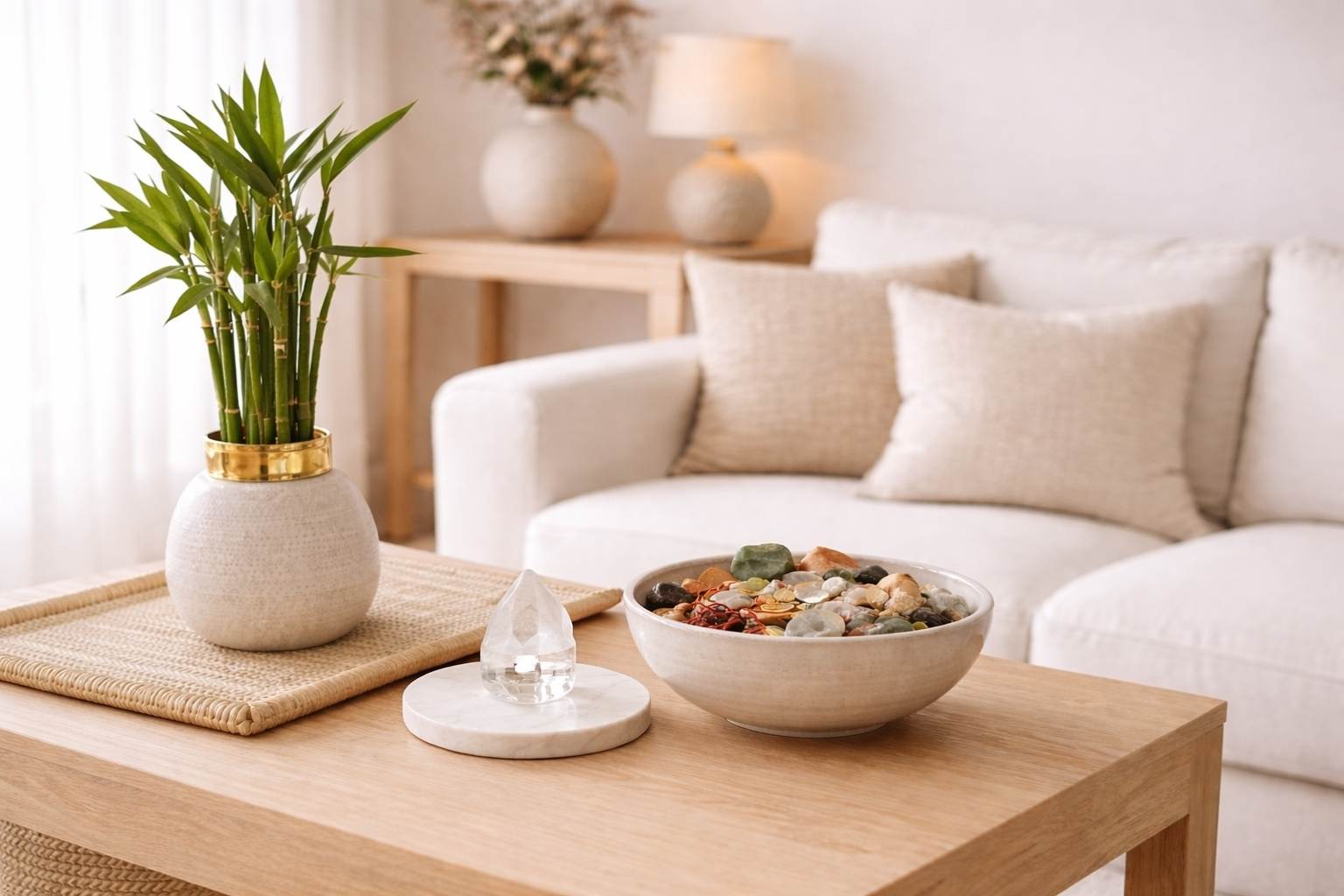
A Feng Shui symbol usually carries a meaning based on tradition, cultural association, or visual representation. A cure is the practical use of an object, color, material, or placement adjustment to help balance the energy in a space.
For example:
You can place a wealth symbol in an area connected with prosperity or personal growth
You can use a protection symbol near the entryway
You can add a luck symbol to support harmony, opportunity, or positive momentum
The most important thing to remember is this: a symbol works best when it feels meaningful, intentional, and appropriate for your space. More is not always better.
Common Feng Shui Symbols for Wealth
Wealth symbols are often used to represent abundance, stability, opportunity, and the ability to hold resources well. They are not magic shortcuts. Instead, they are visual reminders of the energy you want to cultivate.
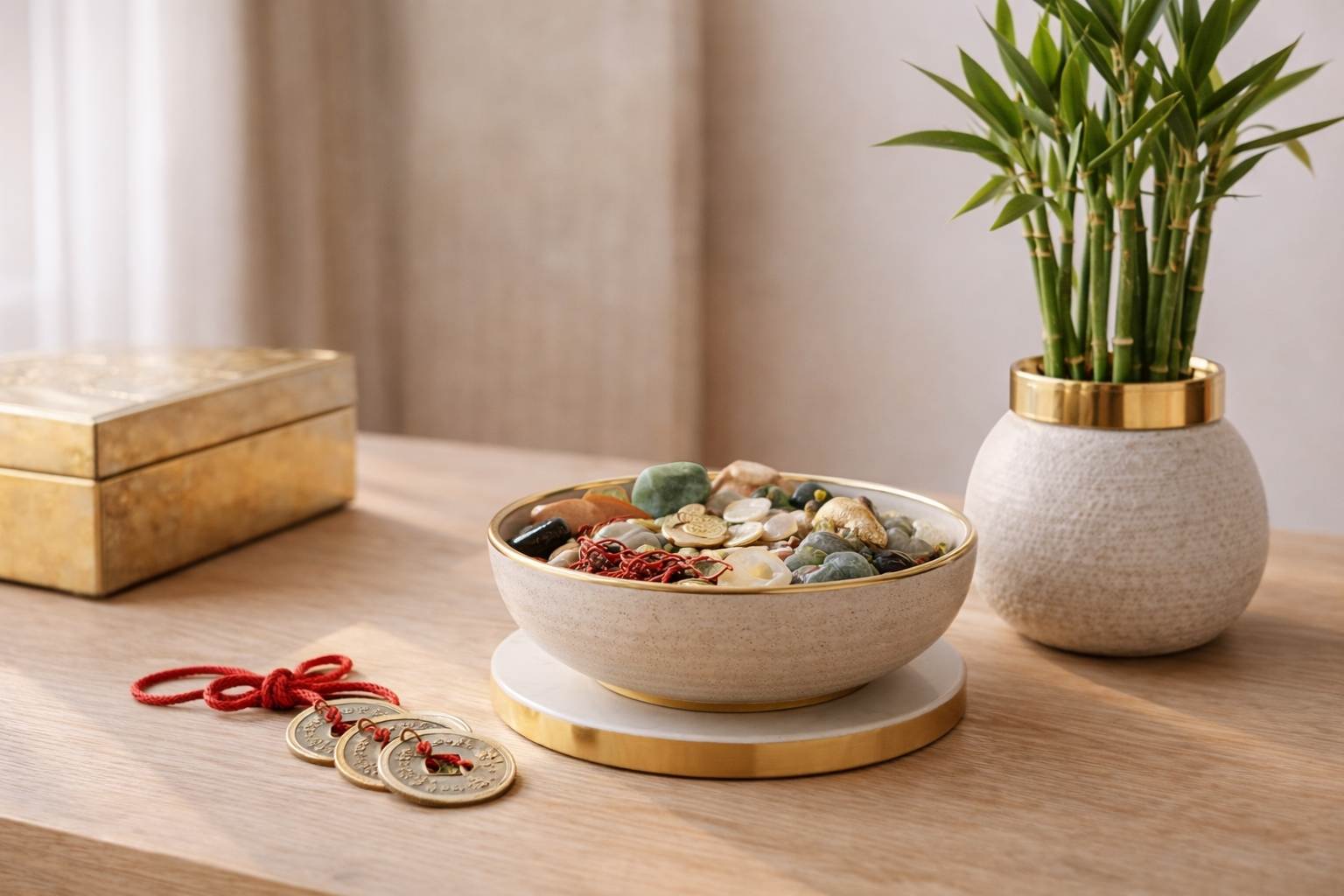
Chinese Coins
Chinese coins are one of the best-known Feng Shui wealth symbols. They are often tied together with a red string and used to symbolize prosperity, financial flow, and protection of resources.
People commonly place them:
Near a home office
In a wallet or financial drawer
In an area associated with money goals
Wealth Bowl
A wealth bowl is a decorative bowl filled with symbolic items such as crystals, coins, or other abundance-related objects. It is often used to represent the idea of gathering and holding wealth.
A wealth bowl works best when it looks intentional and clean, not overcrowded or random.
Citrine and Other Abundance Crystals
Many people use crystals in modern Feng Shui-inspired spaces. Citrine often symbolizes abundance and optimism, while pyrite represents confidence and material success.
Many people place these on a desk, bookshelf, or in a workspace where they can serve as a visual anchor for financial focus.
Lucky Bamboo
Lucky bamboo is often connected with growth, resilience, and steady progress. It is a popular symbol because it feels both meaningful and easy to incorporate into home decor.
A healthy plant also adds a living wood element, which can help a space feel more active and fresh.
Common Feng Shui Symbols for Protection
People usually use protection symbols to create a sense of grounding, boundaries, and support. In many homes, people place these symbols close to the entrance because the front door is seen as the main point where energy enters.
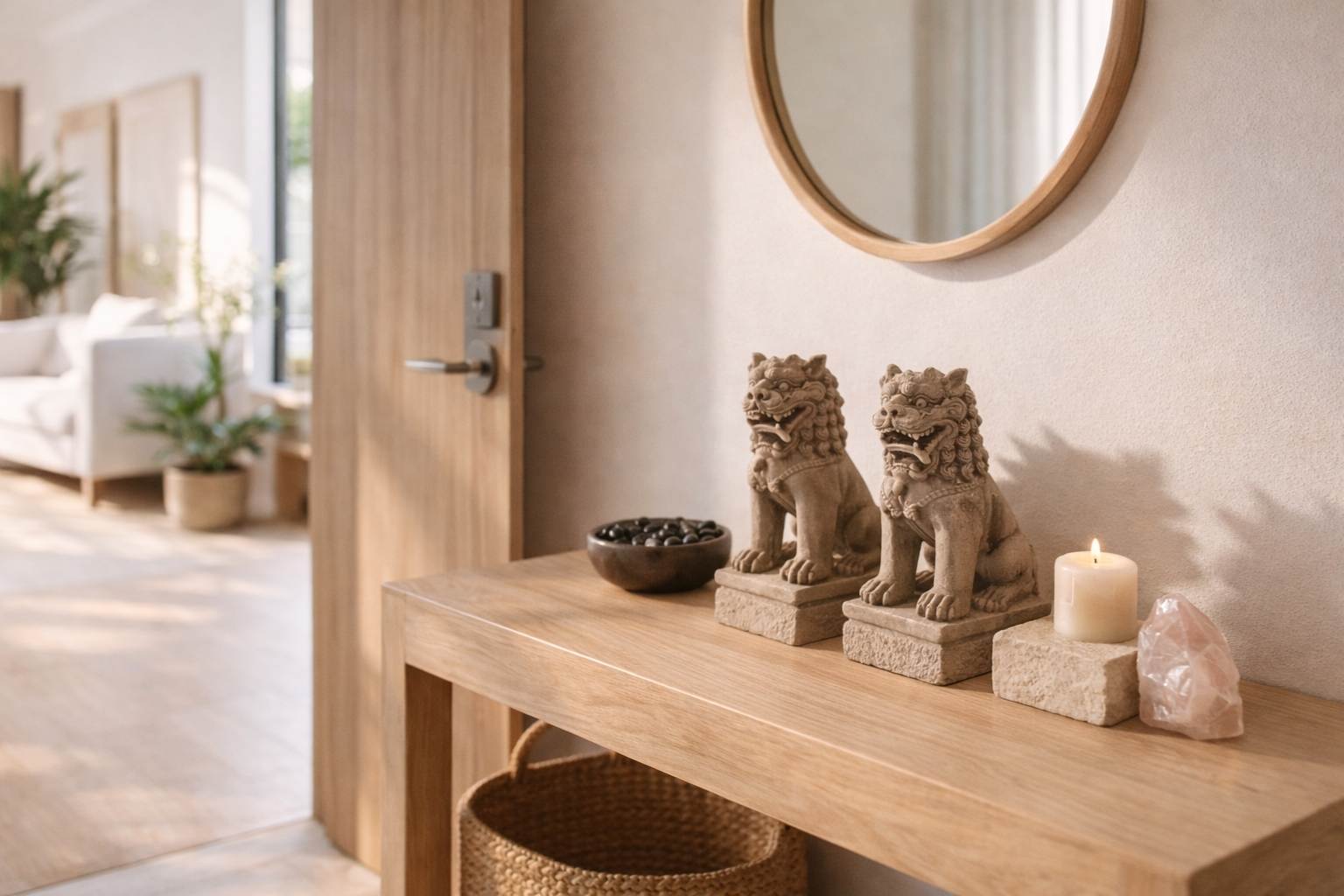
Fu Dogs or Guardian Lions
Fu Dogs, also known as guardian lions, are traditional protective symbols. They are often used in pairs to represent guarding and stability.
They are usually associated with entry points and are meant to symbolize protection rather than decoration alone.
Bagua Mirror
A Bagua mirror is one of the most well-known Feng Shui protection tools, but it is also one of the most misunderstood. Traditionally, it is used on the outside of a home in specific situations, not as a casual indoor decor piece.
Because many practitioners consider it a stronger traditional cure, it should be used thoughtfully and not simply because it looks interesting.
Wu Lou
The Wu Lou, also called the gourd symbol, is often associated with health, support, and protective energy. It is commonly used in spaces where rest, recovery, or well-being is a focus.
This symbol is especially popular for bedrooms or calm areas of the home when the goal is to support a more restorative atmosphere.
Protective Crystals and Natural Materials
In modern homes, many people use black tourmaline, obsidian, salt lamps, or grounding natural materials as symbolic protection tools. Even though these choices may be more contemporary, the core intention is similar: creating a space that feels safe, steady, and less energetically chaotic.
Common Feng Shui Symbols for Luck
Luck in Feng Shui is not only about sudden good fortune. It is often connected with flow, timing, support, harmony, and being open to opportunities.
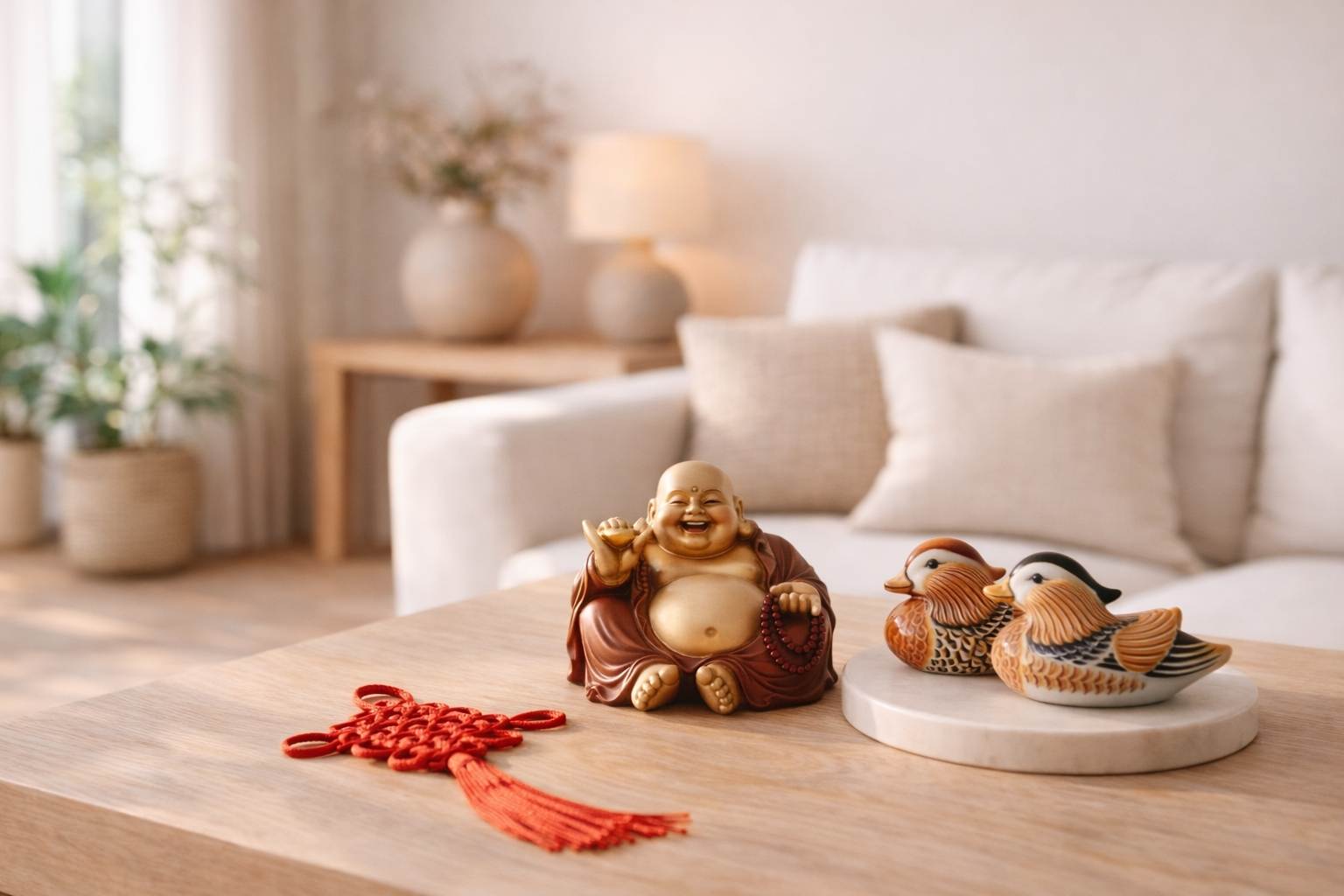
Mystic Knot
The mystic knot represents continuity, harmony, and enduring good fortune. Its repeating form suggests an unbroken flow of beneficial energy. Many people include it in decorative accents, charms, or small home details.
Mandarin Ducks
Mandarin ducks represent love, partnership, and relationship harmony. In Feng Shui-inspired decor, people often use them as symbols of connection and devotion. Although they strongly symbolize romantic energy, they also represent the broader idea of supportive partnership and mutual balance.
Laughing Buddha
The Laughing Buddha is often linked with joy, ease, and abundance. Many people use this symbol to encourage a lighter, more welcoming atmosphere in the home. It is usually placed in a visible area where it can contribute to an uplifting mood rather than being tucked away in a forgotten corner.
Bells and Gentle Sound Symbols
Some people use soft sound-based objects, such as bells, to represent movement and help clear stagnant energy. In many spaces, people choose them not only for their meaning but also for the calming sensory quality they bring.
How to Use Feng Shui Symbols in a Balanced Way
It is easy to overdo Feng Shui symbols, especially when you start learning about them. A better approach is to choose a few that align with your goals and work naturally with your home.
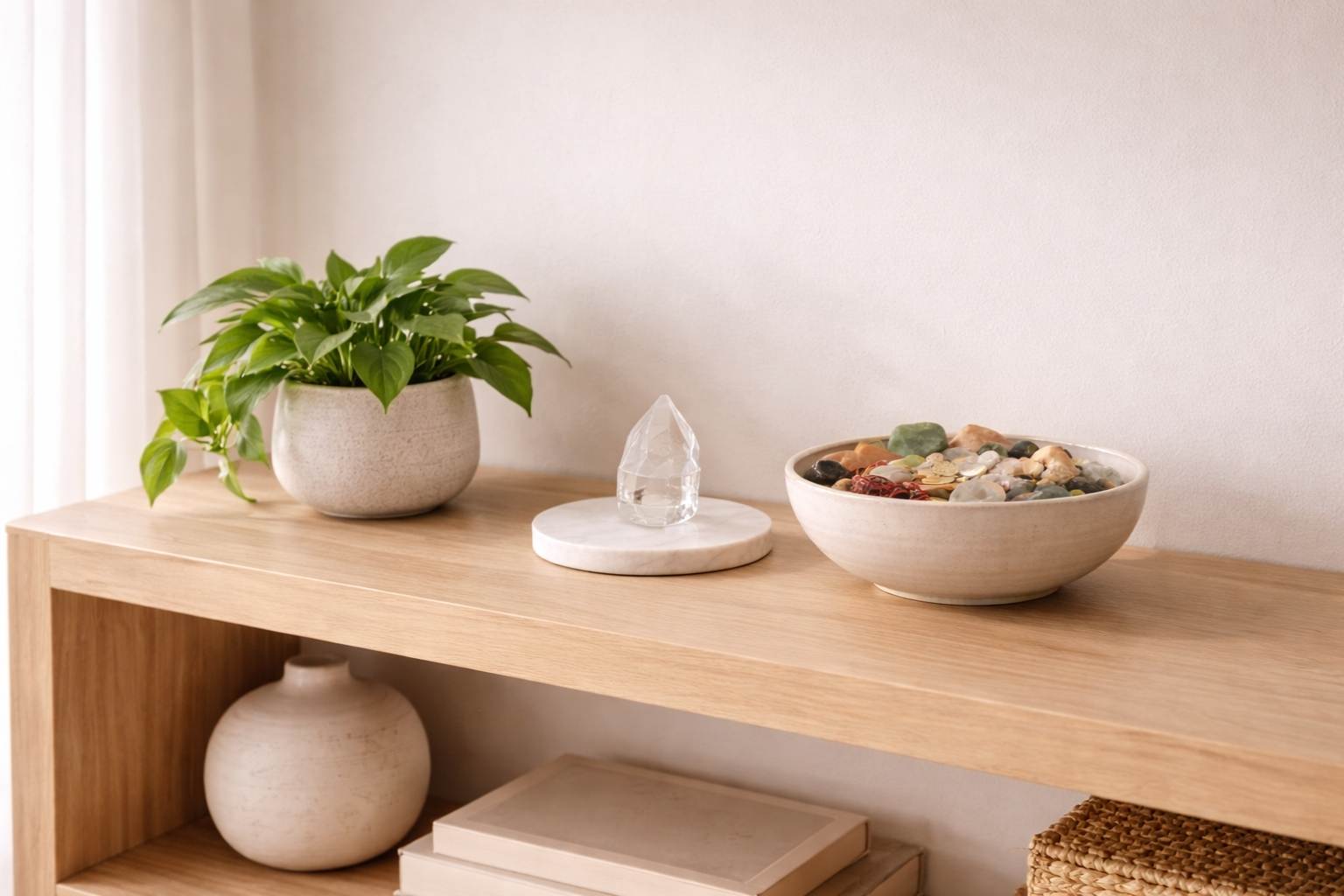
Here is a simple step-by-step approach:
1. Start With One Intention
Choose one focus first:
Wealth
Protection
Luck
Health
Harmony
This helps you avoid collecting objects with no clear purpose.
2. Match the Symbol to the Space
Think about where the symbol makes sense. A protective item may feel natural near the entryway, while a wealth-related object may fit better in a workspace or area connected to personal growth.
3. Keep It Visually Calm
A symbol should support the room, not overwhelm it. One well-placed object often feels stronger than five unrelated ones grouped together.
4. Use What Feels Meaningful
If a traditional symbol does not resonate with you, choose a more subtle representation with similar intent. A healthy plant, a grounding stone, or a carefully chosen decorative object may feel more authentic in your home.
5. Maintain the Space Around It
A Feng Shui symbol placed in clutter or neglect loses its sense of intention. Keep the surrounding area clean, functional, and respected.
Common Mistakes to Avoid With Feng Shui Cures
Many people use symbols in ways that create more visual noise than energetic support. These are some of the most common mistakes to avoid.
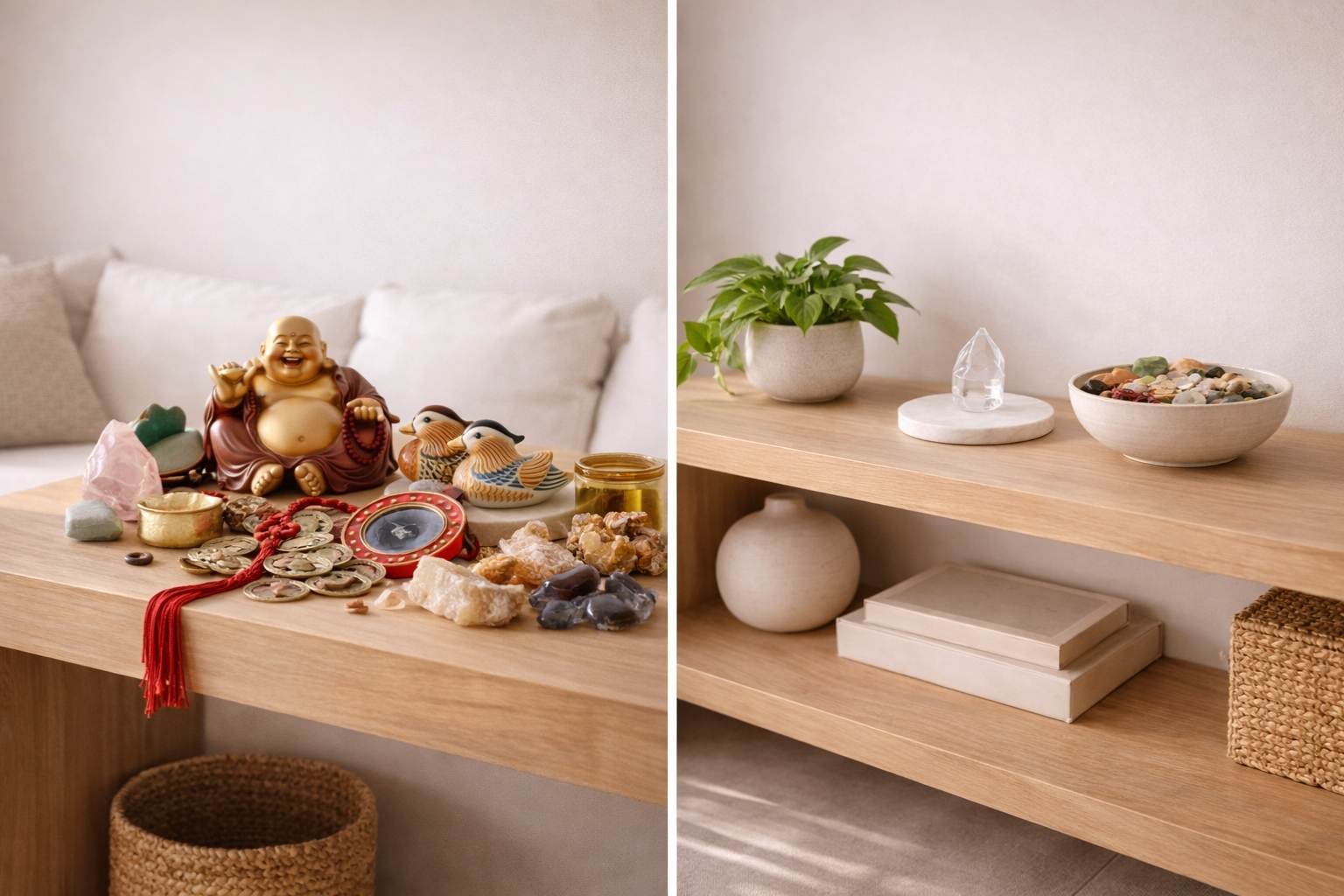
Using Too Many Symbols at Once
A home full of unrelated cures can start to feel heavy and chaotic. Feng Shui is about flow and balance, not crowding every surface with symbolic objects.
Choosing Symbols Only Because They Are “Popular”
Not every famous Feng Shui item belongs in every home. A symbol should have a purpose and feel appropriate to the room.
Ignoring Condition and Placement
Broken, dusty, or poorly placed items can work against the feeling you are trying to create. Treat symbols with care and place them thoughtfully.
Treating Symbols Like Instant Fixes
Think of Feng Shui symbols as supportive tools, not guarantees. They work alongside your habits, environment, and overall home energy.
Forgetting the Basics
Before adding cures, check the fundamentals:
Is the room cluttered?
Is the lighting supportive?
Does the layout feel functional?
Does the space feel calm and welcoming?
These basics often matter just as much as any symbol.
How to Choose the Right Feng Shui Symbols for Your Home
The best Feng Shui symbols are not necessarily the most traditional or the most expensive. They are the ones that fit your space, your style, and your intention.
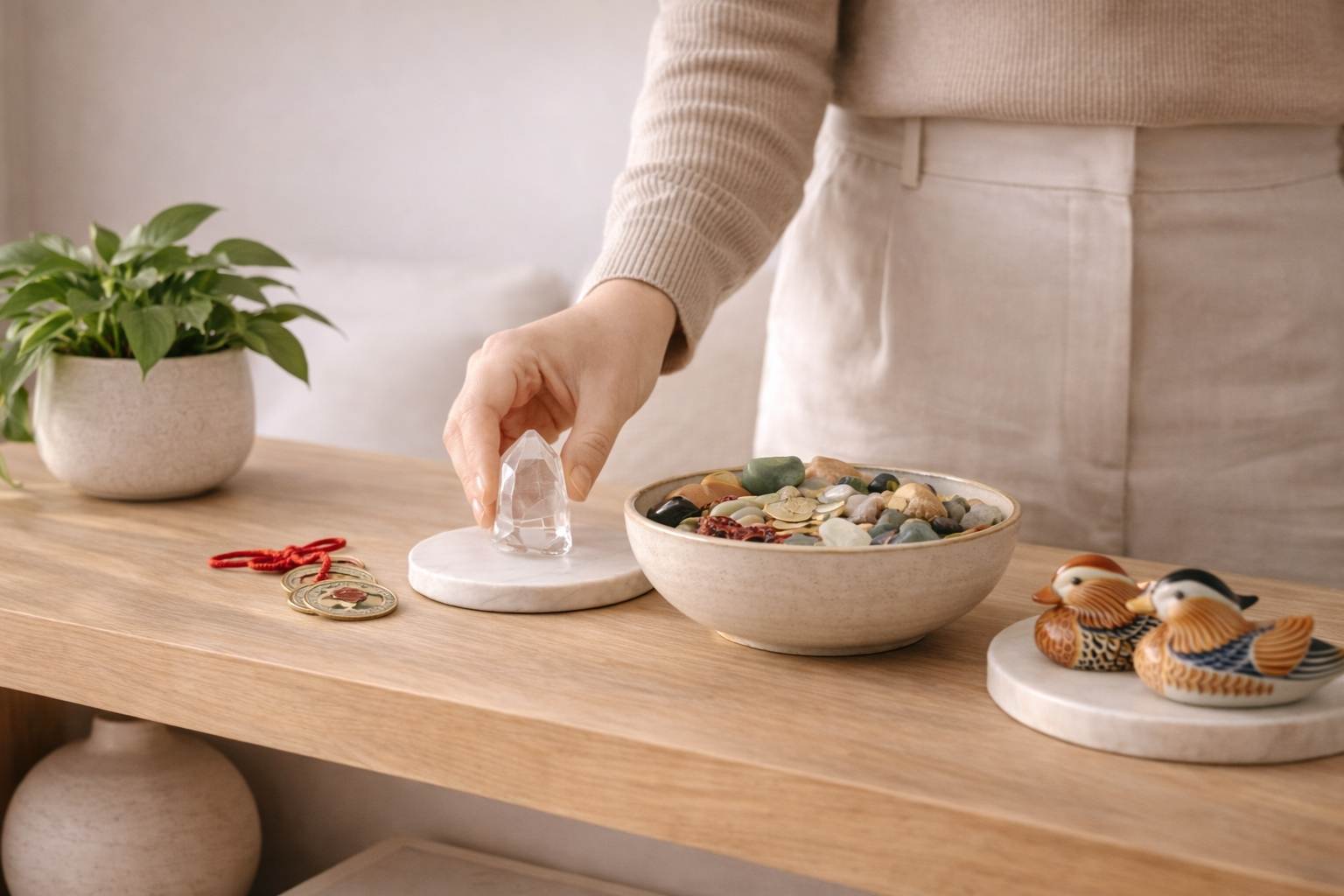
A good place to begin is by asking:
What kind of energy do I want more of here?
Does this symbol feel supportive or forced?
Does it improve the feeling of the room?
Can I maintain it with care and consistency?
For many people, the most effective approach is a mix of traditional inspiration and modern simplicity. You can honor the meaning behind Feng Shui symbols without turning your home into a themed display.
When chosen thoughtfully, Feng Shui symbols for wealth, protection, and luck can make your space feel more intentional, supportive, and aligned with the way you want to live. Start small, keep your choices meaningful, and focus on balance over quantity. The goal is not to add more things. The goal is to create a home that feels better, supports your priorities, and reflects clear intention.
More Feng Shui Tips