
Guan Yin Feng Shui: Meaning, Benefits, and Best Placement in Your Home


If you've spent any time exploring Feng Shui, you've almost certainly come across the figure of Guan Yin — a serene, robed woman often depicted holding a vase, a willow branch, or a lotus flower.
She's one of the most beloved figures in Chinese culture, and her presence in Feng Shui goes well beyond decoration. In many homes across Asia and increasingly around the world, a Guan Yin statue is considered one of the most powerful and protective additions you can make to a space.
Guan Yin (also spelled Guanyin or Kuan Yin) is the bodhisattva of compassion in Buddhist and Taoist traditions. In Feng Shui, she represents protection, healing, peace, and the flow of positive energy into a home.
Unlike symbols tied specifically to wealth or career, Guan Yin has a broader, more nurturing quality — she's associated with clearing away negativity, supporting wellbeing, and creating a sense of calm that allows other good energies to flourish.
This guide explains what Guan Yin represents in Feng Shui, the different forms she takes, and exactly where to place her in your home for the best results.
Who Is Guan Yin and Why She Matters in Feng Shui
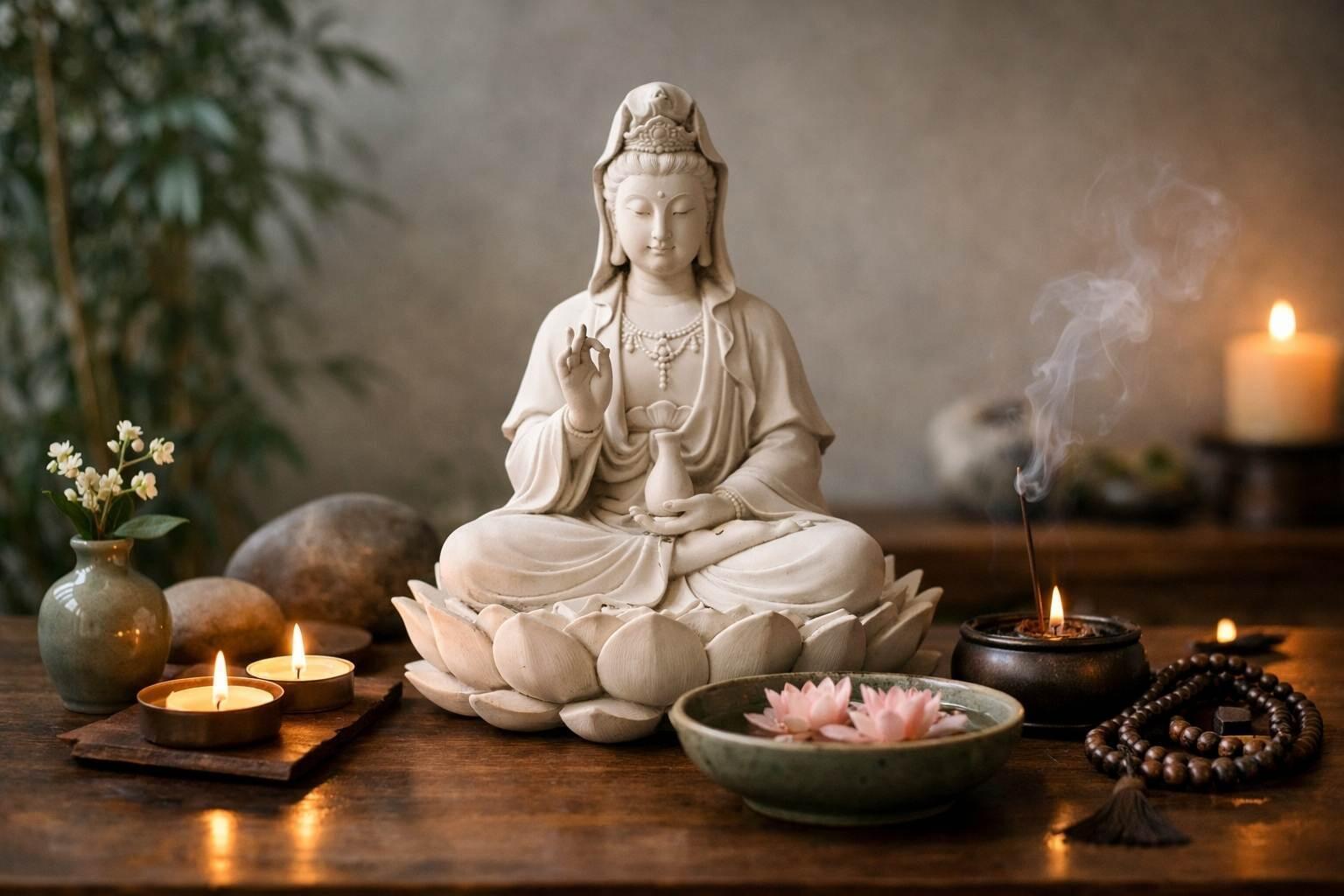
In Chinese Buddhist tradition, Guan Yin is the bodhisattva who "hears the cries of the world" — a being of infinite compassion who chose to remain accessible to humans rather than passing into nirvana.
In Taoist practice, she's revered as a goddess of mercy and healing.
In both traditions, her energy is associated with protection from harm, emotional healing, and the relief of suffering.
In Feng Shui terms, Guan Yin functions as a powerful purifier of chi. She doesn't activate a specific life area the way a wealth symbol might — instead, her presence is thought to elevate the overall quality of energy in a space. Homes with significant emotional tension, recent illness, or a history of conflict often benefit particularly from her placement.
Guan Yin's Core Qualities in Feng Shui Practice
The qualities Guan Yin brings to a space are often described as yin in nature — soft, receptive, healing, and protective rather than aggressive or expansive. This makes her particularly well-suited to spaces where rest, recovery, and emotional ease are priorities. She balances out environments that feel too harsh, too transactional, or too energetically heavy, and she supports the kind of peaceful chi that allows family harmony, health, and personal wellbeing to develop naturally.
Guan Yin Forms and What Each One Signifies
Guan Yin statues and figurines come in a wide variety of forms, and the details of each form carry meaning in Feng Shui practice. While all forms are considered beneficial, choosing one that matches your intention is worthwhile.
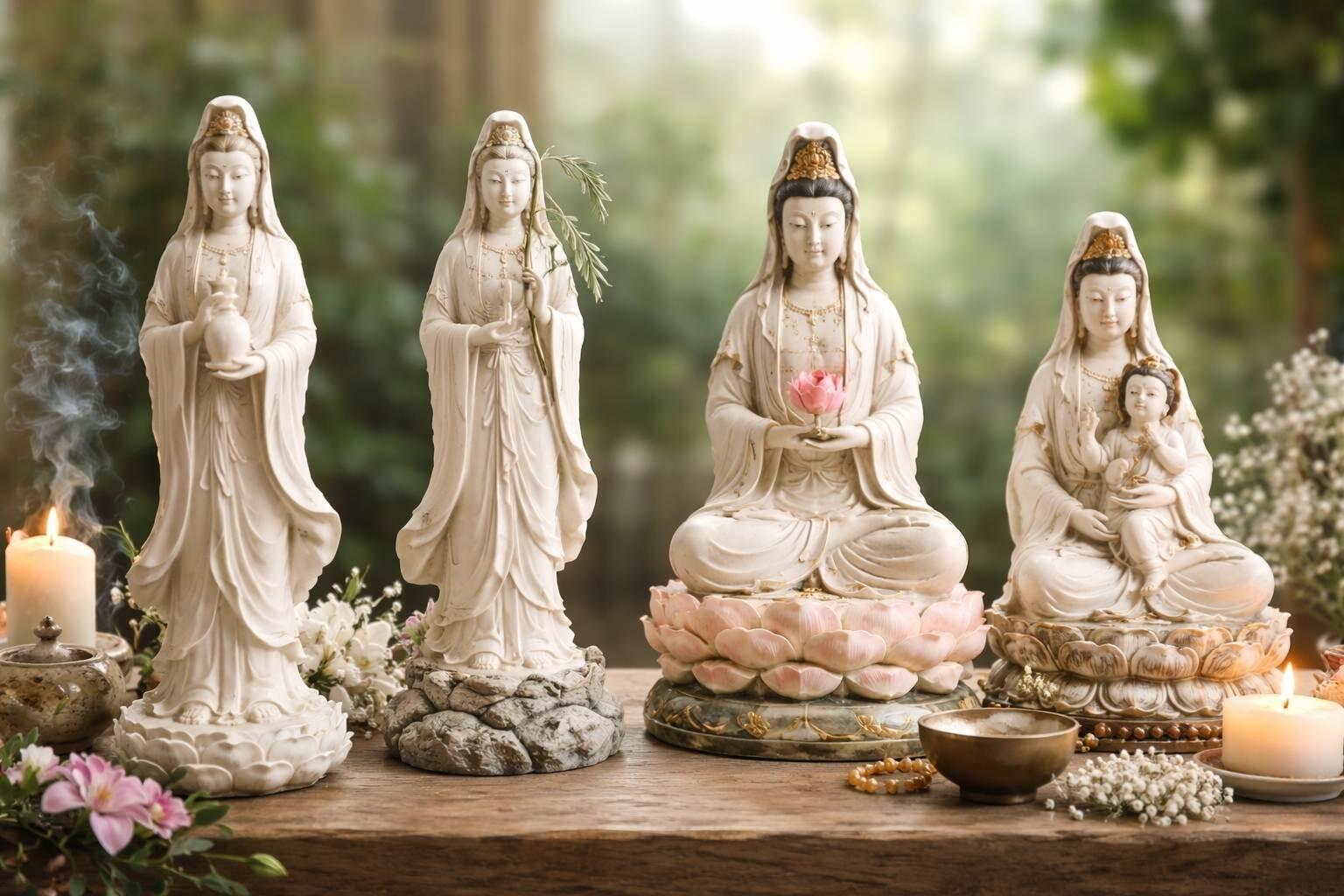
Guan Yin holding a vase (kundika): The vase contains the "sweet dew of compassion" — healing water that cleanses and purifies. This is one of the most common forms and is excellent for promoting health, emotional healing, and clearing negative energy.
Guan Yin holding a willow branch: The willow branch represents flexibility and the ability to bend without breaking. This form is associated with resilience, adaptability, and releasing what no longer serves you — making it a thoughtful choice for spaces where personal transformation is a goal.
Guan Yin holding a lotus: The lotus represents purity and spiritual development. This form supports meditation spaces, personal growth, and any environment where inner work or learning takes place.
Guan Yin with a child: This form is specifically associated with fertility, protection of children, and family harmony. It's a traditional choice for families hoping to welcome children or protect young ones already in the home.
Standing vs. seated Guan Yin: A standing Guan Yin is considered more active and protective — she's "on watch." A seated Guan Yin is more meditative, associated with peace and inner calm. Either is appropriate; the choice depends on the energy you want to invite.
A white porcelain Guan Yin like this one is one of the most classic choices — the white color aligns with purity and clarity, and porcelain has a calm, refined quality that suits most interior styles.
Best Placement for Guan Yin in Your Home
Placement is arguably the most important factor when working with any Feng Shui symbol, and Guan Yin has specific guidelines that differ somewhat from standard wealth symbols. Because her energy is sacred and protective, she requires thoughtful positioning.
The Living Room
The living room is one of the most recommended placements for Guan Yin. It's the central gathering space of the home, and a Guan Yin figure here extends her protective and harmonizing influence to the entire household. Position her facing the main entrance — this is considered the most powerful protective orientation, as she greets and filters the energy entering the home. A shelf or console table at eye level or above is ideal; she should never be placed on the floor.
The Entryway
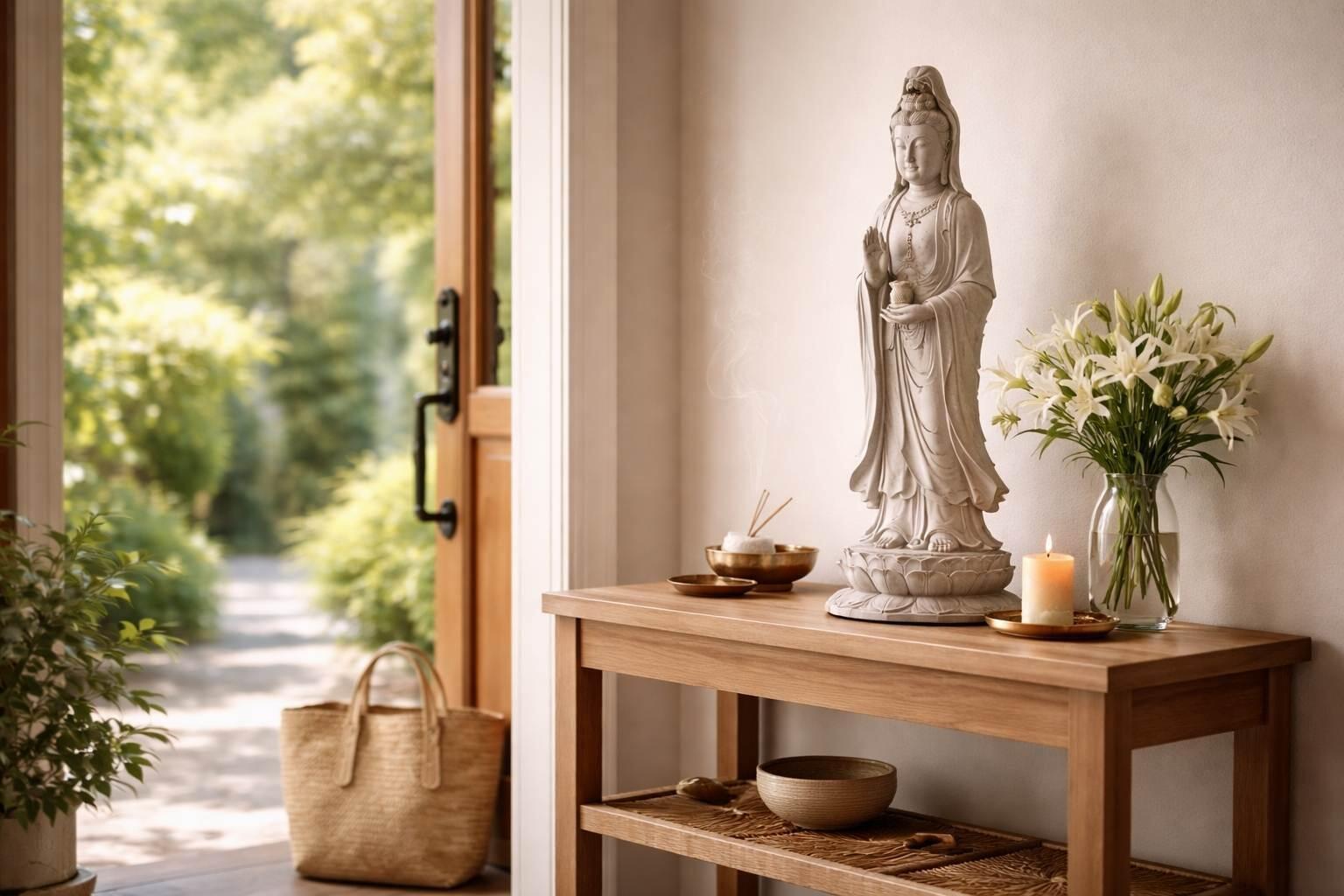
Placing Guan Yin near the front door, facing outward or toward the entrance, is a traditional protective arrangement. She acts as a guardian of the threshold, blessing those who enter and deflecting negative energy. If space permits, a small Guan Yin on a dedicated shelf or altar table near the entryway is highly effective.
A Dedicated Altar or Meditation Space
For those who maintain a meditation practice or a dedicated sacred space in the home, Guan Yin is a natural centerpiece. Pair her with fresh flowers, candles, incense, or a small offering bowl. The key is consistency — a space that's tended regularly carries stronger energy than one that's set up and forgotten.
The Garden
Outdoor Guan Yin statues are common throughout Asia and increasingly popular in Western gardens. A garden Guan Yin is traditionally associated with peace, protection of the property, and harmony with the natural environment. Choose a weatherproof material and place her in a spot that feels calm and intentional — not tucked away or obstructed.
Where to Avoid Placing Guan Yin
There are a few locations that are considered disrespectful or energetically counterproductive for Guan Yin placement.
The bathroom is the most important place to avoid. This applies to all sacred or protective figures, not just Guan Yin — bathrooms are associated with drainage and waste energy, which is the opposite of the uplifting, purifying presence Guan Yin embodies.
The kitchen near the stove is also not recommended, as the stove generates intense fire energy that conflicts with Guan Yin's gentle, compassionate nature.
The bedroom is debated. Some practitioners place a small Guan Yin figure in the bedroom for protection and peaceful sleep, while others prefer to keep sacred figures out of spaces associated with sleep and intimacy. If you do place her in a bedroom, ensure she's not directly facing the bed.
Avoid placing Guan Yin at floor level or in cluttered, dark corners. She should always have a position of dignity — elevated, well-lit, and in a clean, intentional space.
Choosing the Right Guan Yin for Your Home
Material, size, and color all influence the energy of a Guan Yin figure, though no single choice is definitively "correct." Some general guidance:
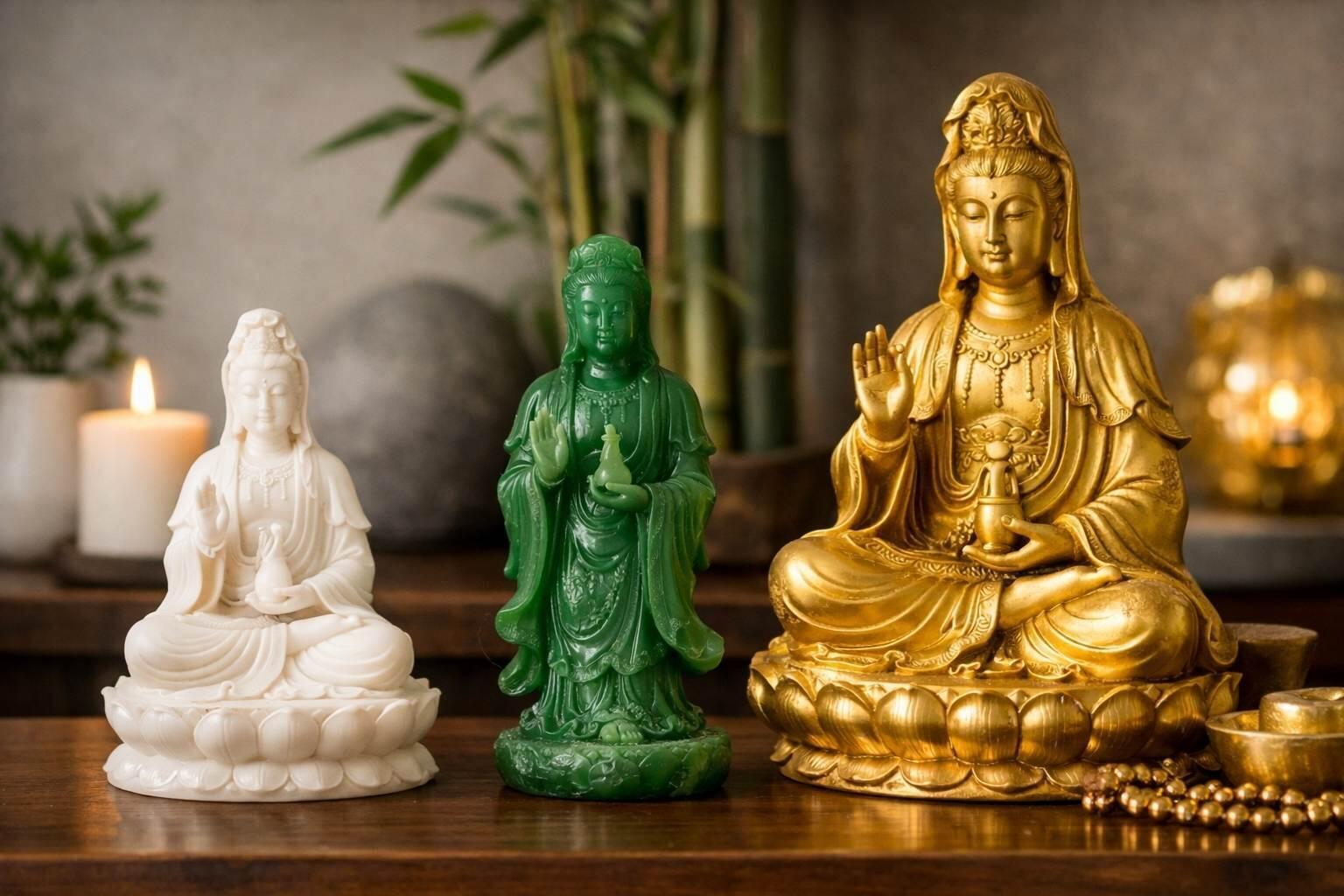
White or ivory: The most traditional color, associated with purity, clarity, and the metal element. White Guan Yin figures are the most common in Feng Shui contexts and suit almost any space.
Jade or green: Green connects to the wood element and to health, growth, and healing. A jade Guan Yin is particularly well-suited to spaces where physical or emotional healing is a focus.
Gold: Gold connects to the metal element and to abundance. A gold Guan Yin in the wealth corner adds a layer of protective energy to financial intentions.
In terms of size, she should be proportionate to the space — a small figurine on a shelf works differently than a large statement piece as a room's focal point, but both are equally valid. The most important factor is that her presence feels respectful and intentional, not like an afterthought.
For a health or healing focus, a jade Guan Yin figurine is a natural fit — the green tone reinforces the wood element associated with growth and recovery.
Caring for Your Guan Yin Figure
In Feng Shui, the condition of your sacred objects reflects and affects the energy they carry. A dusty, damaged, or carelessly placed Guan Yin will not generate the same quality of energy as one that is tended with care. Practical steps are straightforward: dust her regularly, keep her space clean and free from clutter, and replace any figure that becomes chipped or broken — a damaged Guan Yin is traditionally considered inauspicious and should be retired respectfully (wrapped in white cloth and returned to the earth or water, rather than simply thrown in the trash).
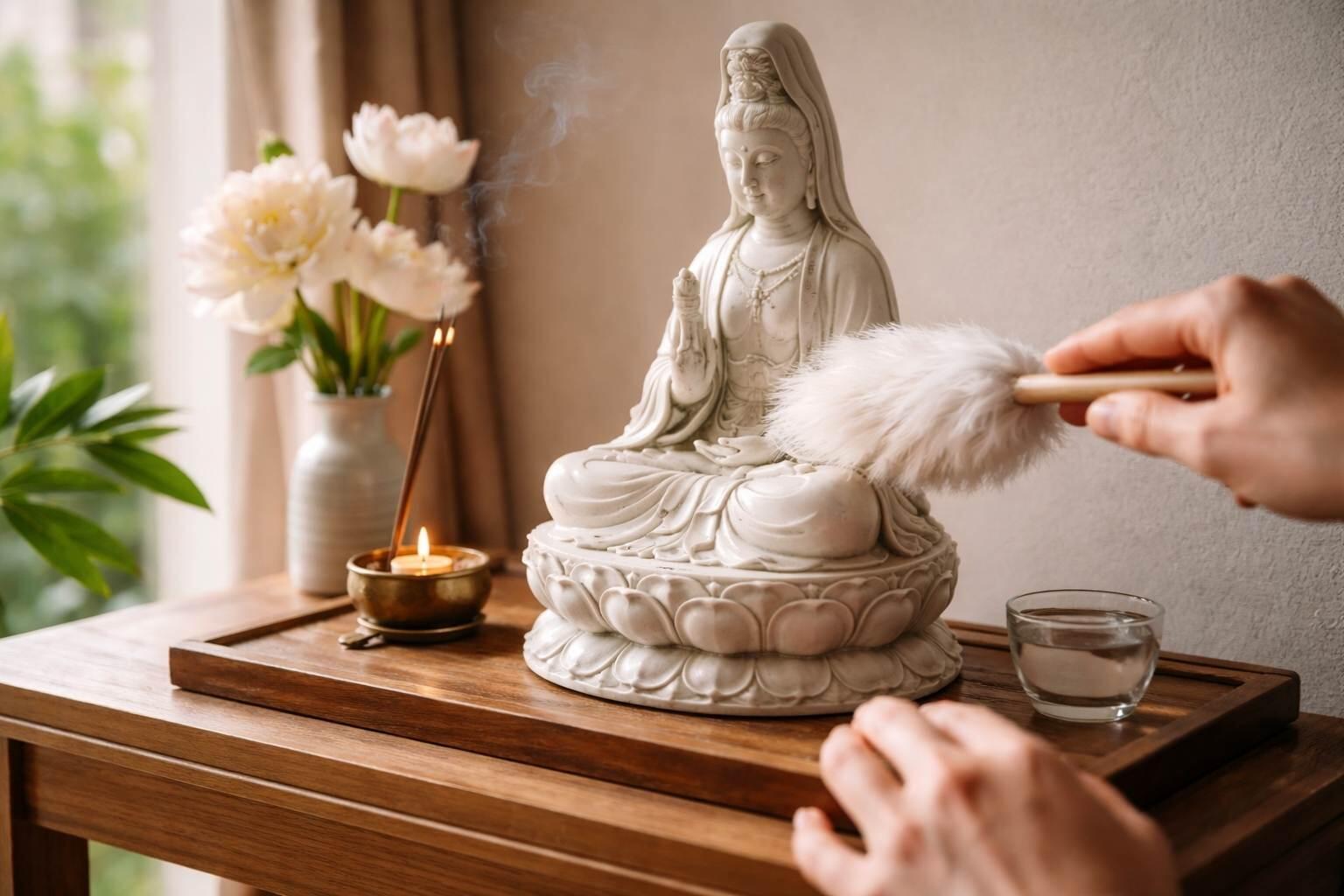
Occasional offerings — a small cup of clean water, fresh flowers, or incense — are part of traditional practice but not required for Feng Shui purposes. What matters most is conscious intention and consistent care.
One Figure, Broad Impact
What makes Guan Yin distinctive among Feng Shui symbols is her versatility. Most symbols target a specific life area — wealth, love, career, health.
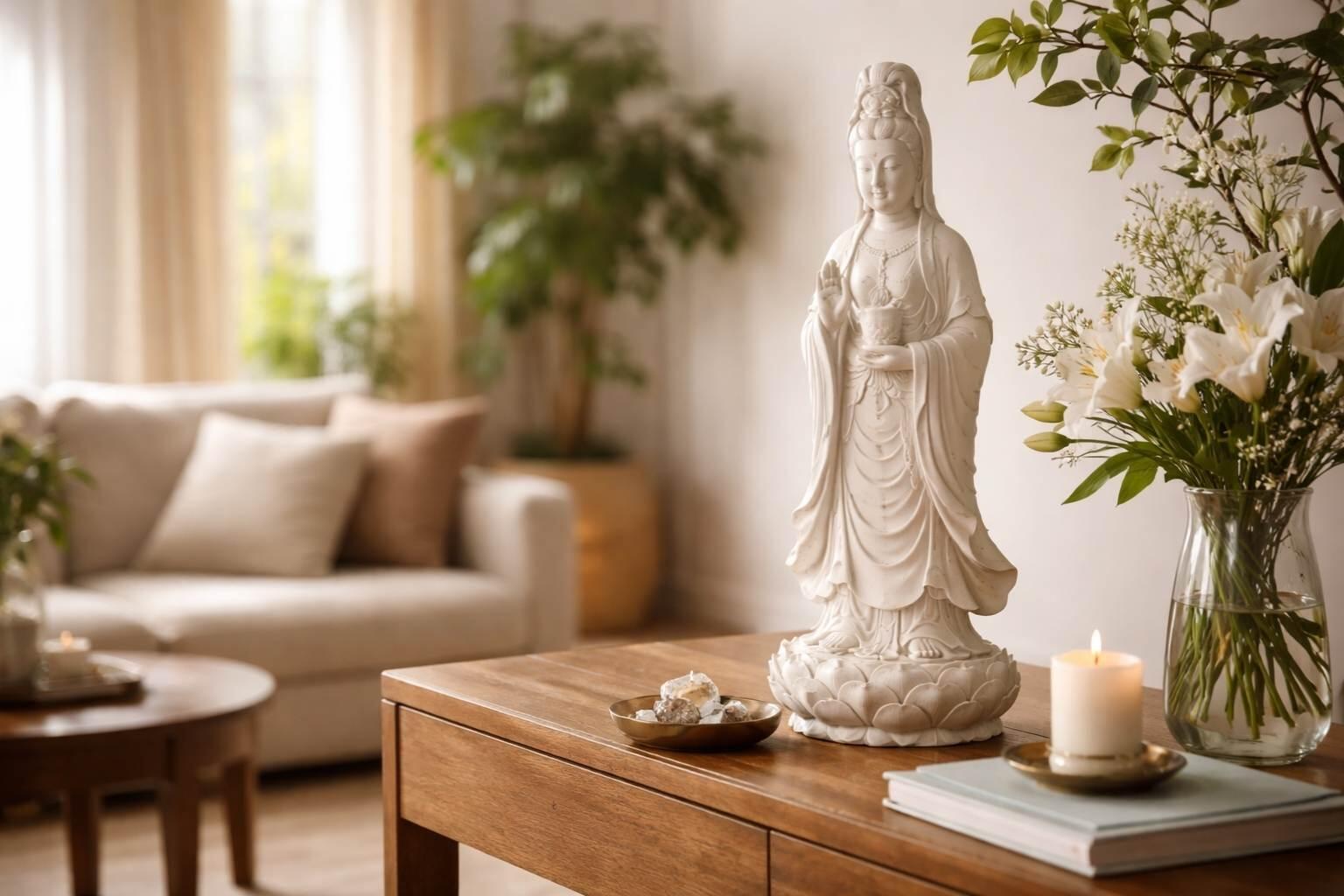
Guan Yin improves the overall quality of chi in a space, which in turn supports every area of life.
If your home feels energetically heavy, tense, or stagnant, introducing her presence is one of the gentler and more aesthetically pleasing interventions available in Feng Shui practice. Place her with intention, maintain her space with care, and let her do the rest.
More Feng Shui Tips