
7 Kitchen Feng Shui Mistakes That May Be Blocking Good Energy

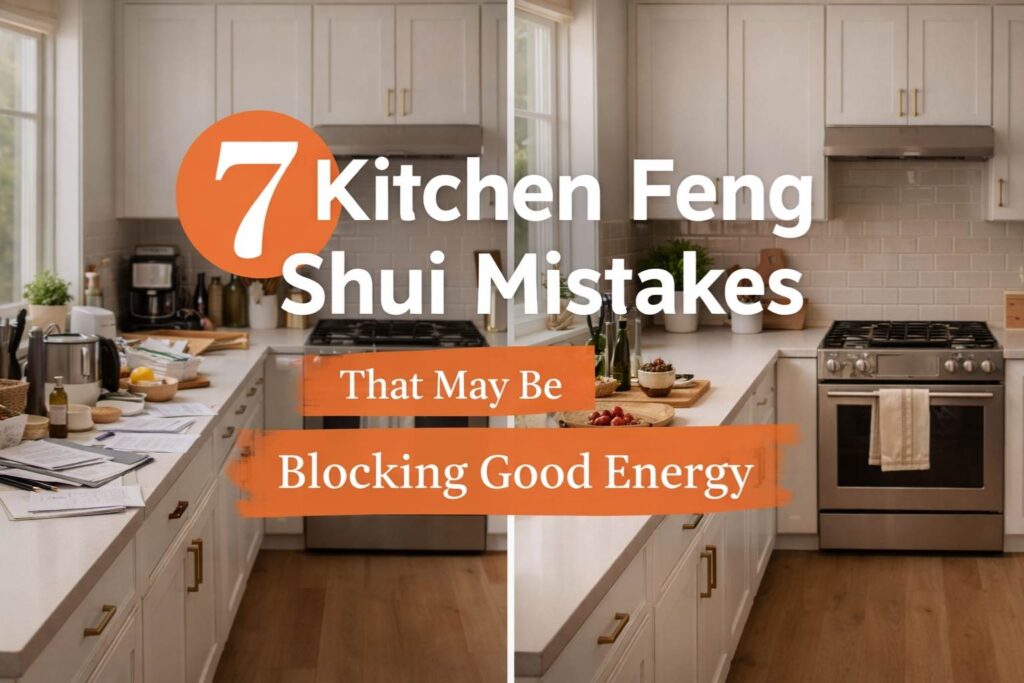
Your kitchen is more than a place to cook. In feng shui, it represents nourishment, abundance, and the way energy supports daily life. When the kitchen feels chaotic, cramped, or visually heavy, it can affect how the entire home feels.
The good news is that you do not need a full renovation to improve the energy of your space. Often, a few thoughtful changes can make the kitchen feel more balanced, functional, and inviting. In this guide, you will learn 7 common kitchen feng shui mistakes and simple ways to fix them.
- 1. Letting Clutter Take Over the Counters
- 2. Ignoring the Condition of the Stove
- 3. Creating a Strong Conflict Between Fire and Water
- 4. Using Poor Lighting That Makes the Kitchen Feel Heavy
- 5. Overlooking Broken, Worn-Out, or Neglected Items
- 6. Choosing Colors That Feel Too Extreme for the Space
- 7. Forgetting to Make the Kitchen Feel Welcoming
- A Simple Kitchen Feng Shui Reset Checklist
1. Letting Clutter Take Over the Counters
One of the biggest feng shui mistakes in any kitchen is keeping too much on display. Crowded counters can make the room feel busy and stagnant, even if the items are useful.
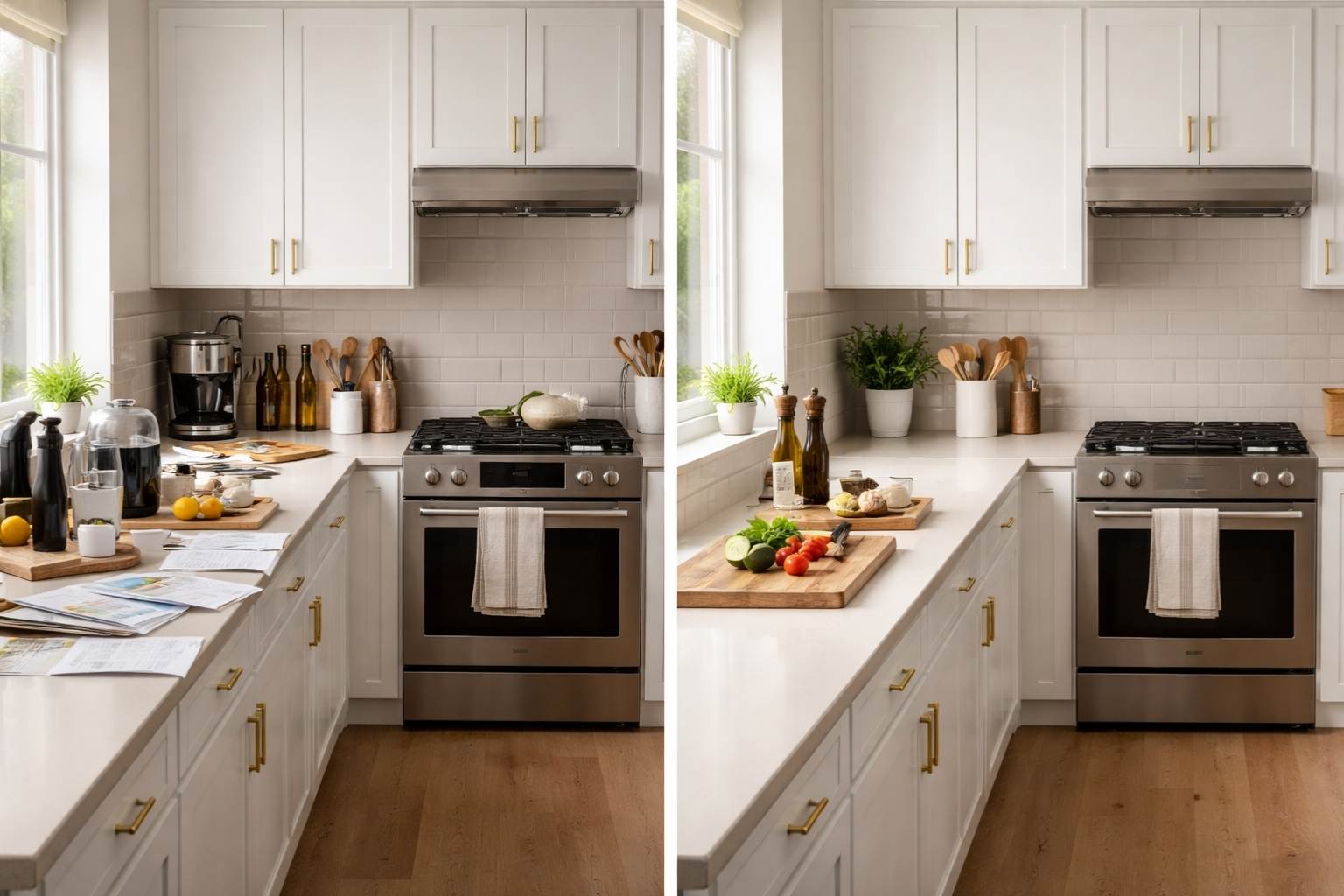
In feng shui, clear surfaces help energy move more smoothly. When every inch is filled with appliances, papers, jars, and random objects, the space may start to feel draining rather than supportive.
What to do instead
Keep only your most-used items on the counter
Store duplicates and rarely used tools out of sight
Clear expired food, old mail, and miscellaneous objects
Leave at least one area visually open
A kitchen does not need to look empty. It just needs enough breathing room to feel calm and intentional.
2. Ignoring the Condition of the Stove
The stove is one of the most important areas in kitchen feng shui because it is closely linked to prosperity and nourishment. When burners are dirty, broken, or rarely used, it can symbolically reflect neglected energy in the home.
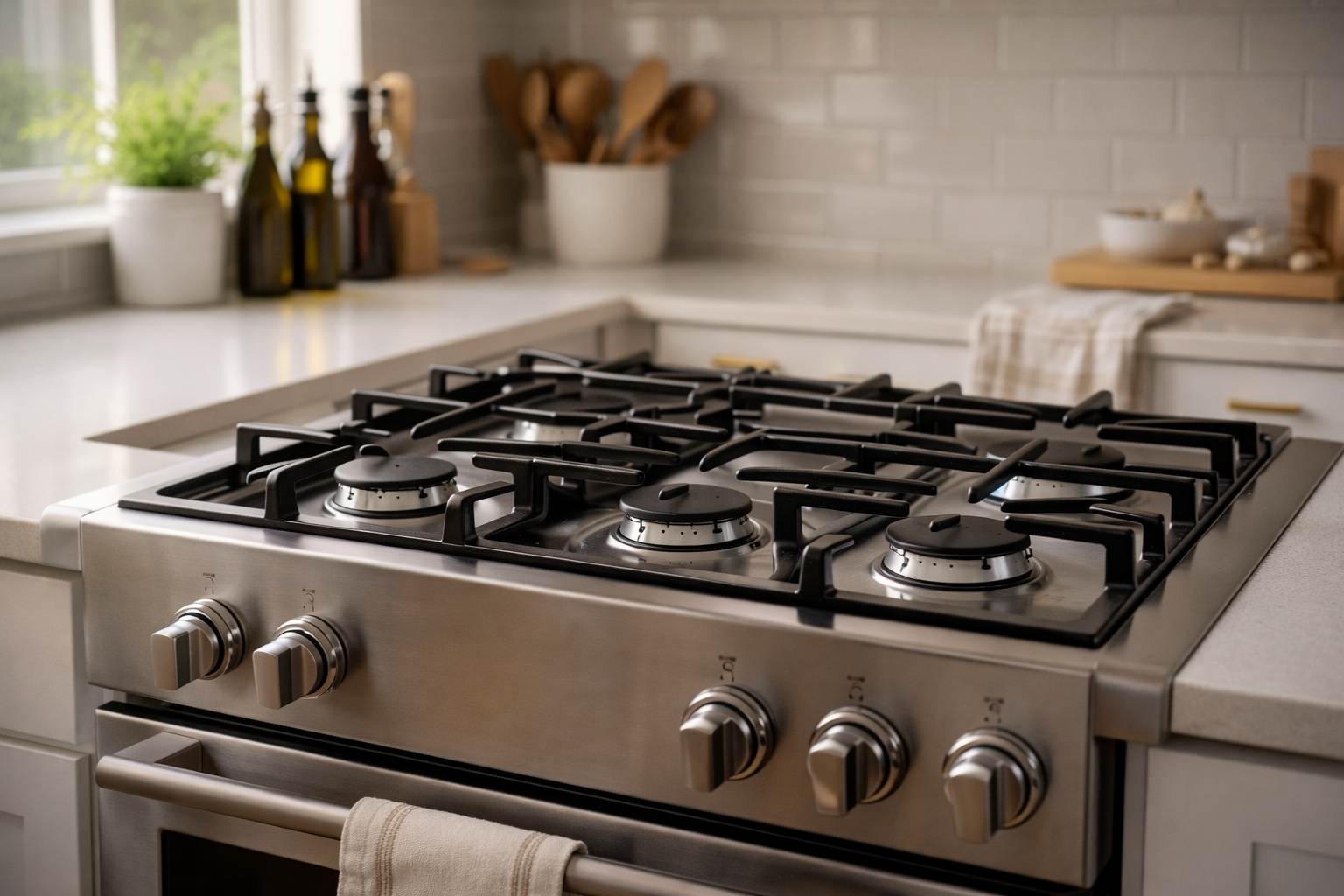
A stove in poor condition can also make the kitchen feel less cared for overall.
What to do instead
Clean the stovetop and burners regularly
Repair anything that is not working properly
Use all burners from time to time instead of relying on just one
Keep the area around the stove clean and uncluttered
Even a small habit, like rotating which burner you use, can make the kitchen feel more balanced and active.
3. Creating a Strong Conflict Between Fire and Water
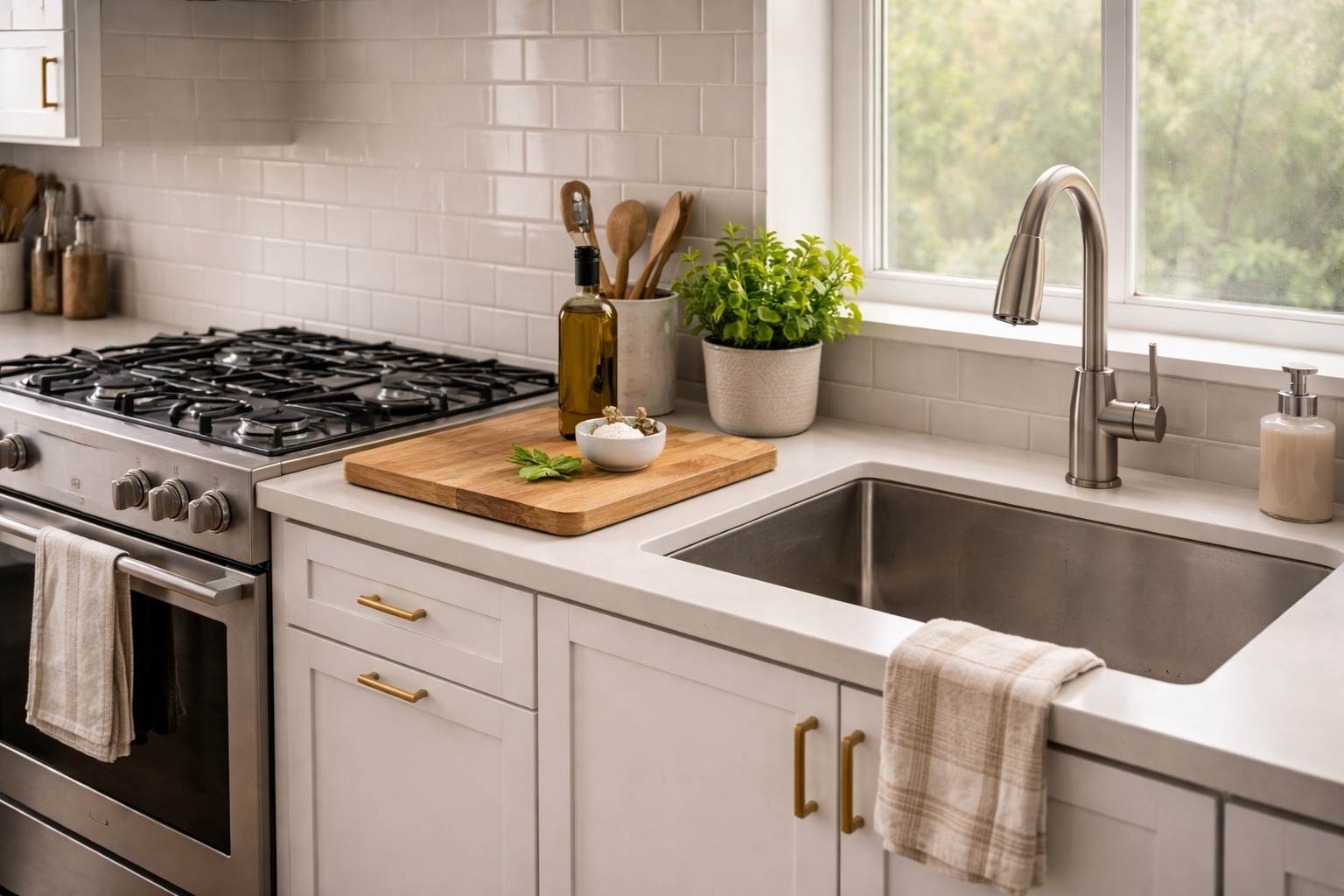
In feng shui, the stove represents fire, and the sink or refrigerator represents water. When these elements are directly clashing, the kitchen can feel energetically off-balance.
This does not mean your kitchen is “bad.” It simply means the fire-water relationship may need a little softening, especially if the stove and sink are directly next to each other or harshly facing each other.
What to do instead
Try adding a balancing element between them, such as:
A wooden cutting board
A green plant
Earthy tones in decor or accessories
A small rug in a natural texture
These details can help visually and energetically soften the contrast between fire and water.
4. Using Poor Lighting That Makes the Kitchen Feel Heavy
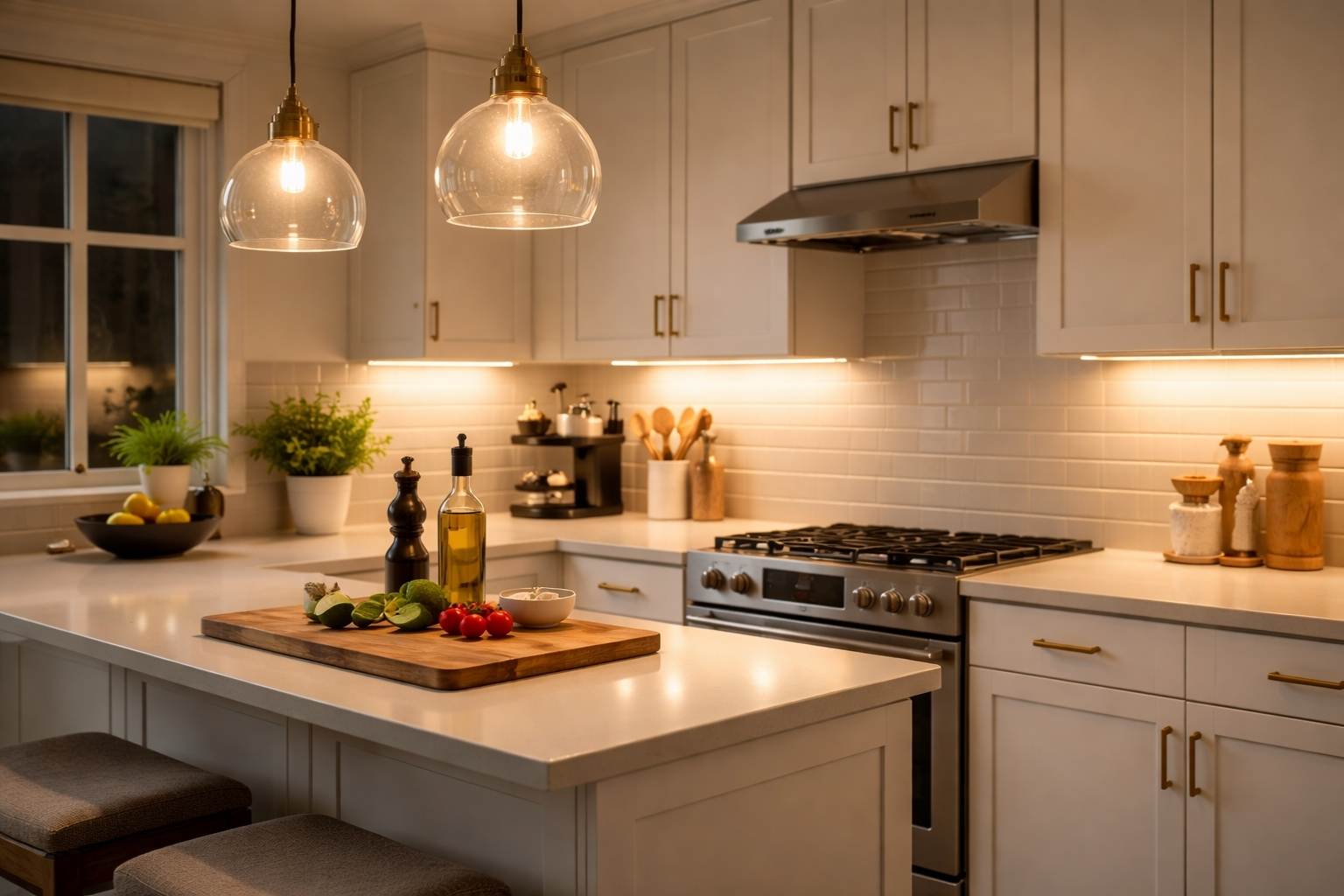
A dim kitchen can feel flat, tired, and less welcoming. In feng shui, lighting plays an important role because it affects how alive and open a space feels.
If the room is too dark, especially in work areas, the energy may feel sluggish. This is often overlooked, but it can make a surprising difference.
What to do instead
Maximize natural light whenever possible
Add warm, practical lighting over prep areas
Replace burnt-out bulbs quickly
Avoid making the kitchen feel gloomy or shadowy
The goal is not harsh brightness. It is a kitchen that feels fresh, usable, and uplifting.
5. Overlooking Broken, Worn-Out, or Neglected Items
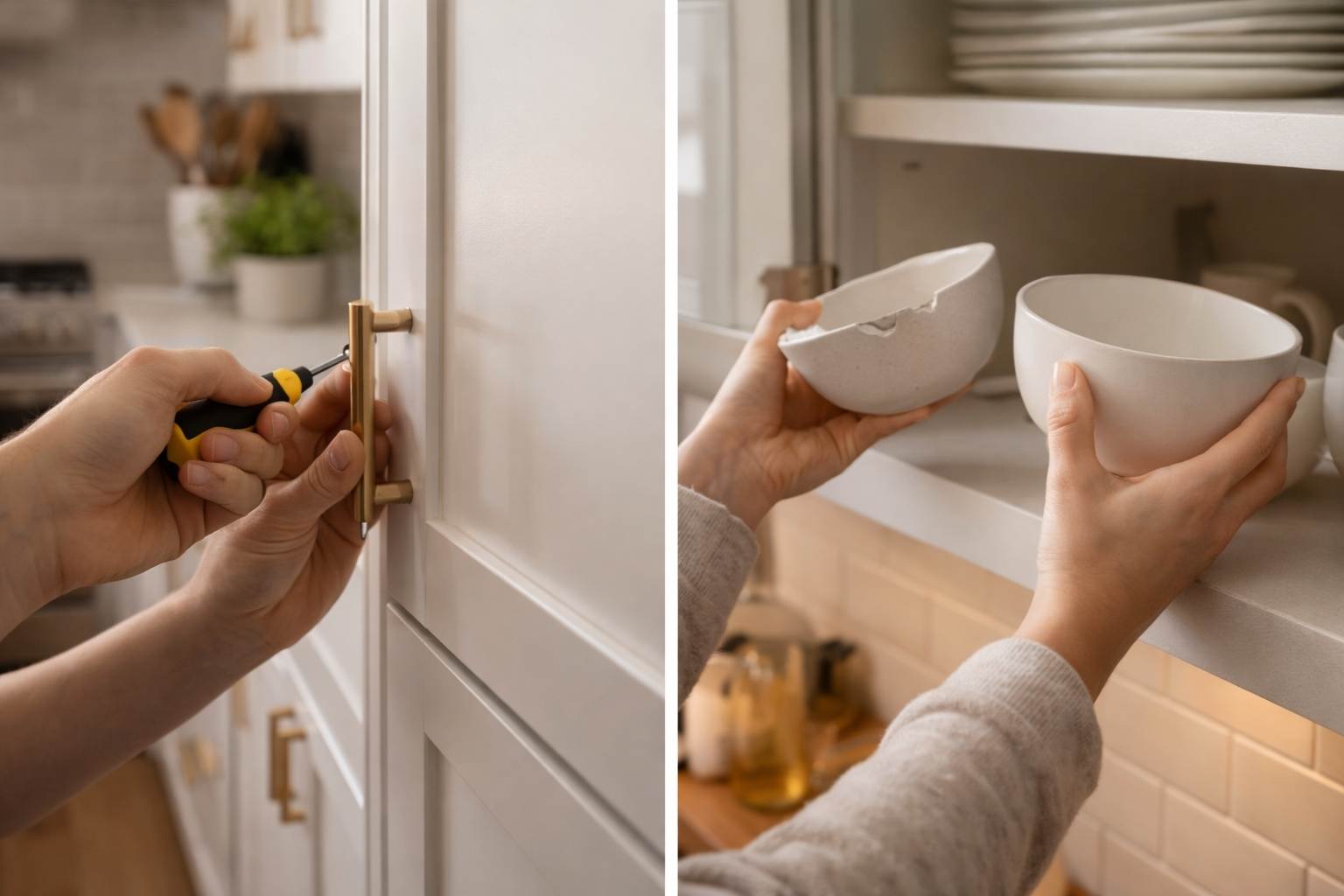
A chipped bowl, a cabinet door that never closes properly, or a drawer handle that keeps falling off may seem minor. But in feng shui, neglected items can subtly reinforce the feeling that the space is not fully supported.
The kitchen benefits from a sense of care. Small damage adds visual stress and can weaken the feeling of harmony.
What to do instead
Walk through your kitchen and notice:
What is broken
What is stained or overly worn
What no longer works well
What you keep “meaning to fix.”
Then choose a few simple repairs or replacements. Small fixes can shift the energy of a room quickly.
6. Choosing Colors That Feel Too Extreme for the Space
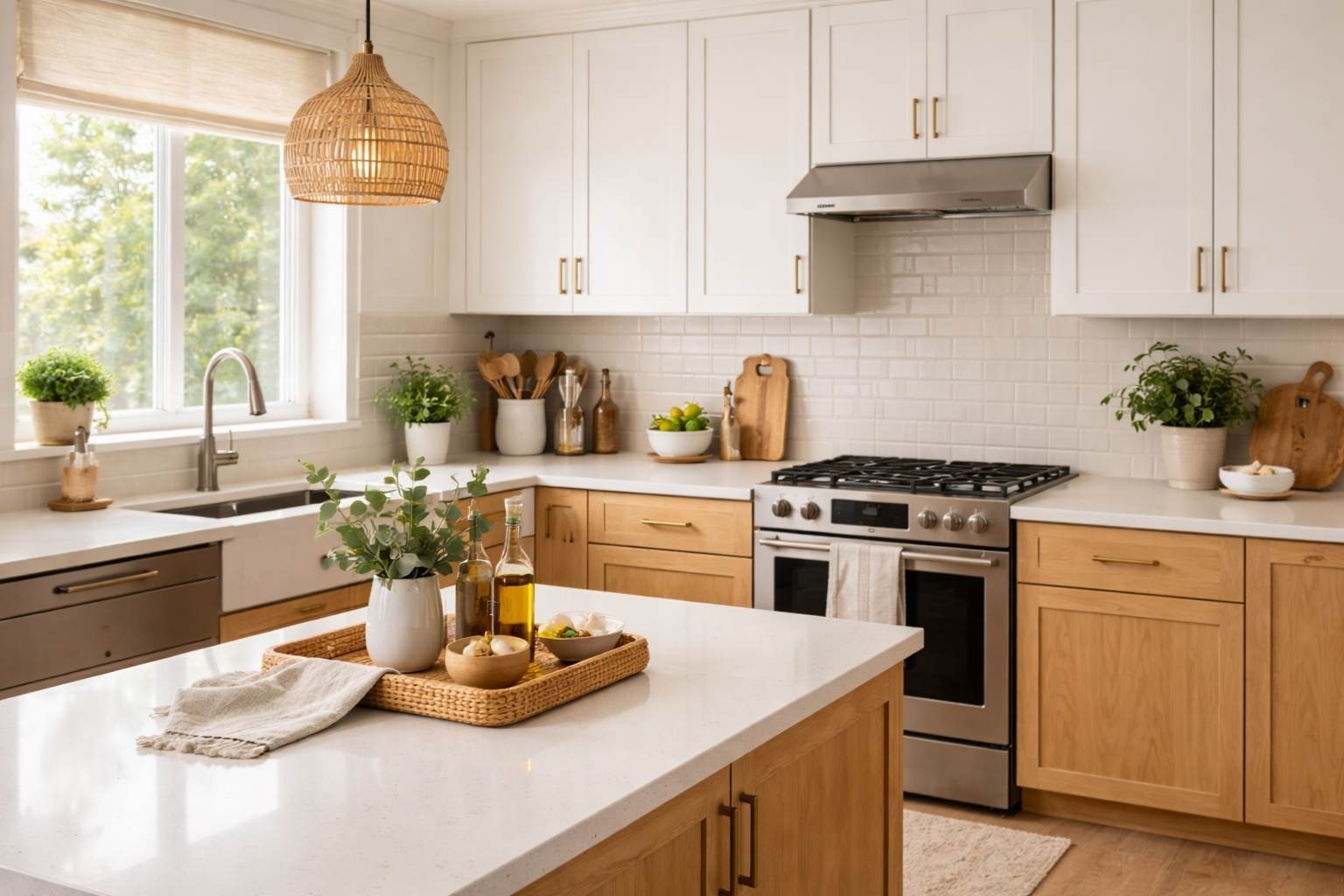
Color influences the mood of a kitchen. In feng shui, the best choice is usually not about following strict rules but creating a sense of balance.
A kitchen with too much intense red, stark black, or overly cold tones may feel visually overwhelming or emotionally disconnected. On the other hand, a completely dull space may feel lifeless.
What to do instead
Aim for colors that support comfort and steadiness, such as:
Soft neutrals
Warm whites
Gentle greens
Earthy beiges
Natural wood tones
You can still include bold accents, but it helps when the overall palette feels grounded and easy to live with.
7. Forgetting to Make the Kitchen Feel Welcoming
A functional kitchen is important, but feng shui also values how the space feels. If your kitchen is technically organized but still feels cold, rushed, or impersonal, it may be missing warmth.
This does not require adding clutter or buying more decor. It is about creating a space that feels nourishing to be in.
What to do instead
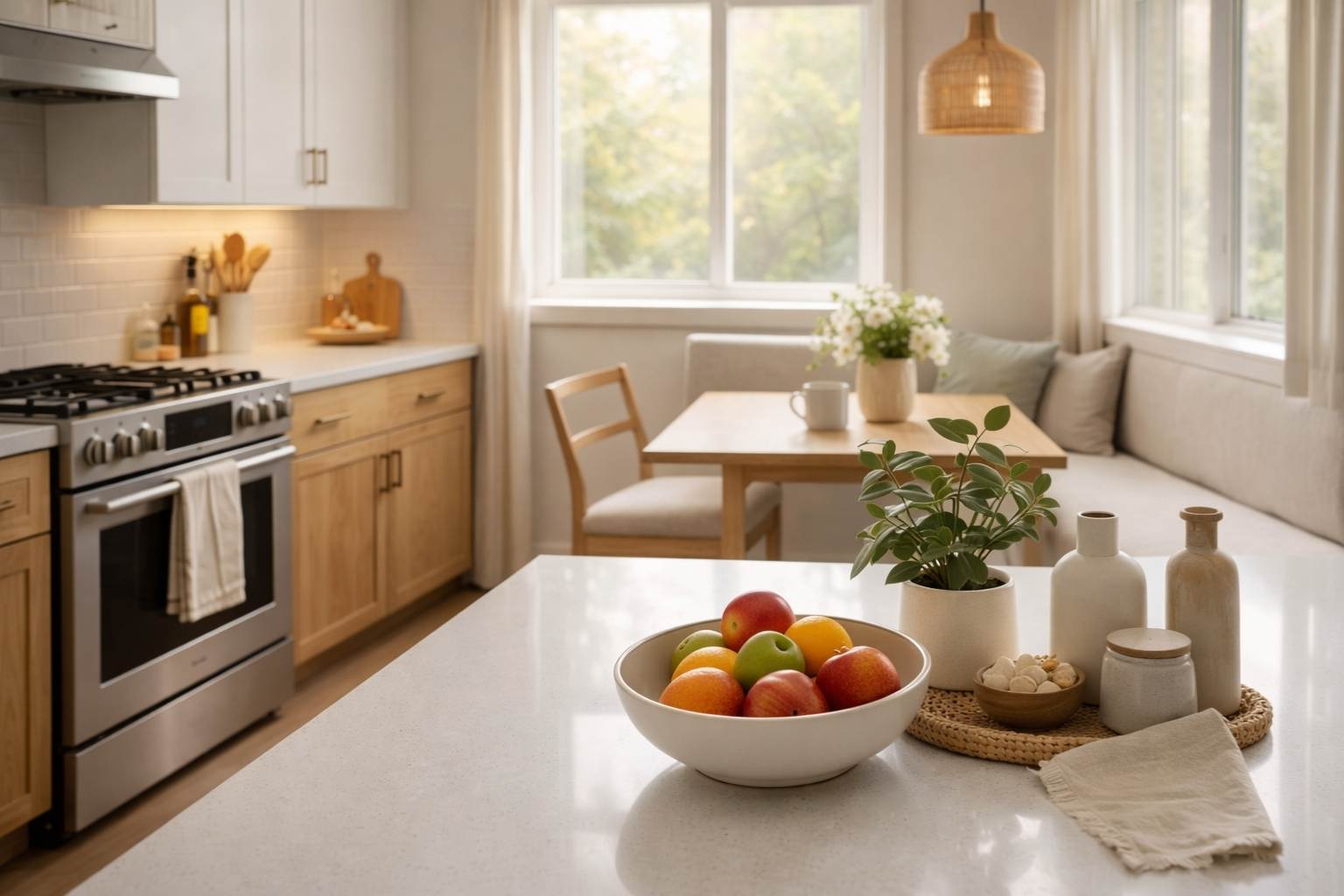
Bring in a few intentional touches, such as:
A bowl of fresh fruit
A healthy plant
Natural materials like wood or ceramic
A clean and inviting dining nook
Artwork that feels calm and supportive
The best feng shui kitchens are not perfect. They feel lived-in, cared for, and balanced.
A Simple Kitchen Feng Shui Reset Checklist
If you want a practical starting point, use this quick reset:
Clear one countertop completely
Clean the stove and check all burners
Remove broken or unused kitchen items
Add better lighting where needed
Soften fire-water tension with wood or earth elements
Refresh the color palette with warm or natural tones
Add one welcoming touch, like fruit, flowers, or a plant
This kind of reset can help your kitchen feel lighter without making the process overwhelming.
Your kitchen does not need to be perfect to have better energy. A few thoughtful adjustments can help the space feel cleaner, calmer, and more supportive of everyday life. Start with the easiest fix, build from there, and let the room become more intentional over time.
More Feng Shui Tips