
Feng Shui Dining Room Decor: Colors, Lighting, and Symbols for Abundance


The dining room is one of the most symbolically rich spaces in a home. It's where the family gathers, where meals are shared, where guests are welcomed — and in feng shui, it carries strong associations with abundance, nourishment, and social harmony. A dining room that feels warm, beautiful, and well-organized isn't just pleasant to eat in; it actively supports the energy of prosperity and connection that feng shui associates with this space.
Most feng shui guides focus on the dining table itself — its shape, its placement, how many chairs it has. But the full picture of dining room feng shui includes color, lighting, symbolic decor, and the overall atmosphere the room creates. When all these elements work together, the dining room becomes one of the most powerful spaces for activating abundance in the home.
Here's a practical guide to dining room decor from a feng shui perspective — what to add, what to change, and a few things that are quietly working against you right now.
Replacing a flat ceiling fixture with a warm-toned chandelier like these is one of the most impactful single changes you can make to a dining room's energy.
Color: Setting the Energetic Tone
Color is the fastest way to shift the energy of a dining room, and feng shui has clear guidance on what works and what doesn't in this space. The dining room's primary functions are nourishment and gathering, which align with the earth element's energy — grounding, supportive, and generous. Earth element colors — warm yellows, terracotta, sandy beige, and deep orange — are naturally appetite-stimulating and socially warming. They make people feel comfortable staying at the table longer, which is exactly the energy you want.
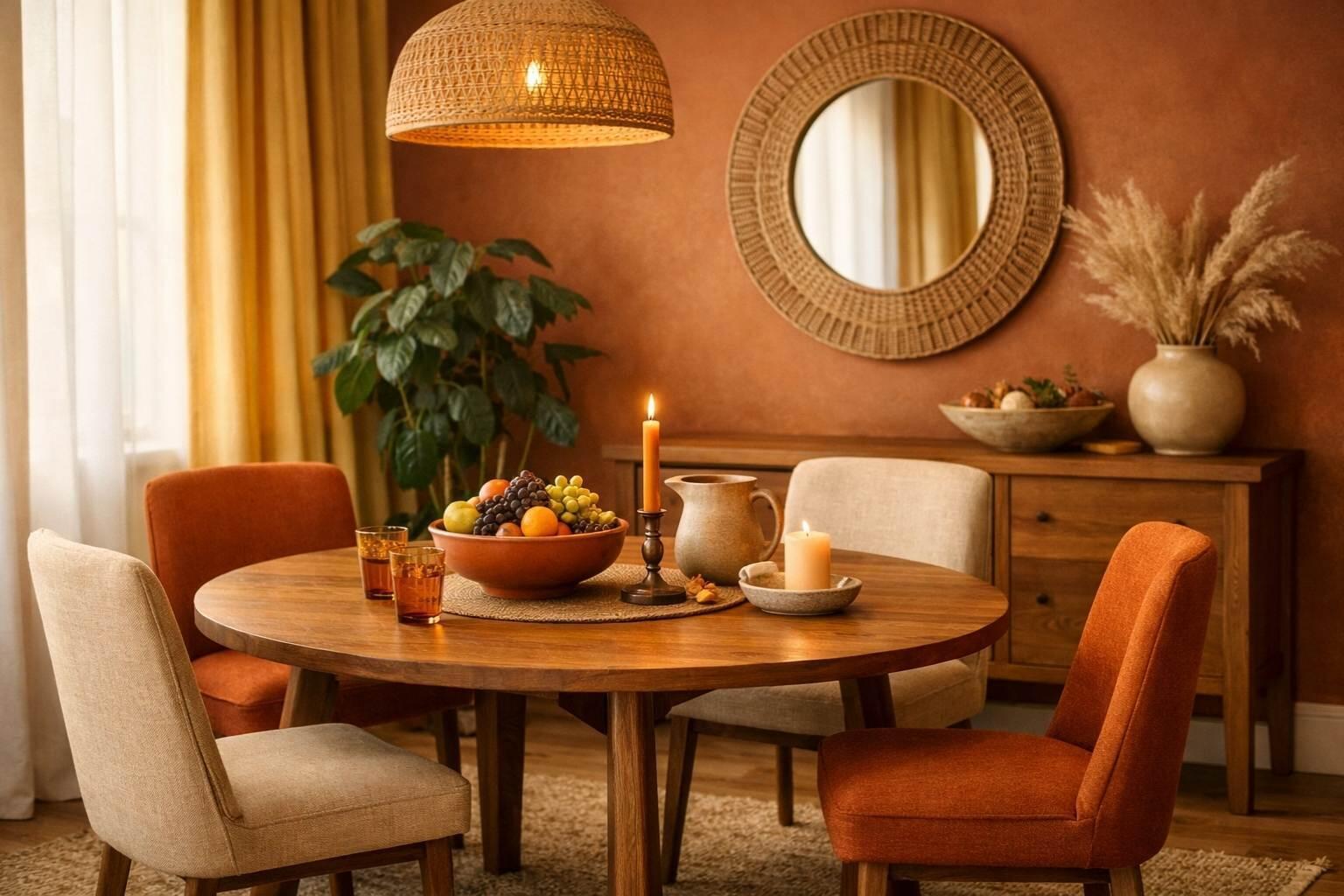
Red is a traditional feng shui dining room color, associated with fire element energy, celebration, and abundance. A deep red accent wall or red-toned decor can be very effective, particularly in a dining room used for entertaining. However, too much red stimulates the environment past "convivial" into "restless" — guests may feel rushed rather than relaxed. Use red as an accent rather than a dominant tone unless you have a large, high-ceilinged space that can absorb the energy.
Colors to Approach with Care
Blue and gray are best used minimally in dining rooms. Both are water element colors that can cool the appetite and slow the social energy of the space — the opposite of what you want when you're gathering to share food. If you love cool tones, balance them with warm wood furniture and amber or gold lighting. Similarly, stark white dining rooms (common in minimalist design) can feel clinical rather than nourishing — they benefit significantly from warm-toned art, textiles, and lighting.
Lighting: The Most Underrated Dining Room Tool
Lighting in the dining room is arguably more important than any decorative element. In feng shui, lighting represents fire element energy — warmth, activation, and visibility. A dining room with poor lighting literally dims the energy of every meal eaten there.
The gold standard for dining room feng shui is a chandelier or pendant light centered directly above the dining table. This creates a focal point, draws the eye upward (which is auspicious — upward-moving chi is positive chi), and bathes the table in warm, flattering light. The fixture should be proportionate to the table — large enough to make a visual impact without overwhelming the space.
Warm vs. Cool Bulbs
Always choose warm-toned bulbs (2700K–3000K) for dining room lighting. Cool white or daylight bulbs (4000K and above) create a harsh, clinical atmosphere that suppresses appetite and social ease — the opposite of what the dining room should do. Dimmable fixtures are ideal: bright for family meals, lower for evening entertaining. If your dining room has a dimmer switch, use it consistently for evening meals.
Symbols and Decor That Activate Abundance
The dining room is one of the best spaces in the home for abundance-activating feng shui symbols. Because the room is associated with nourishment and prosperity, symbols placed here carry particular potency.
Mirrors
A mirror that reflects the dining table is one of the classic feng shui dining room cures. The idea is that reflecting the food on the table symbolically doubles the abundance — you always have more than enough. This works best when the mirror is clean, well-framed, and placed where it genuinely reflects a beautifully set table rather than a cluttered sideboard or a blank wall. A large, decorative mirror on the dining room wall is both aesthetically elegant and energetically active.
Artwork
The dining room is the right place for artwork that depicts abundance, celebration, and the good life. Fruit bowls, feasts, convivial gatherings, lush landscapes — all of these carry abundance-oriented energy. Avoid imagery that feels lonely, dark, or melancholic in this space. Abstract art is fine as long as it's warm-toned and vibrant rather than cold or somber.
Fresh Flowers and Fruit
A centerpiece of fresh flowers or a bowl of seasonal fruit on the dining table is one of the simplest and most effective feng shui cures for this space. Fresh flowers bring living chi and beauty to every meal. Fruit — particularly oranges, apples, and grapes — carries traditional abundance symbolism. These are low-cost, renewable enhancements that keep the table's energy alive between meals.
Table Shape and Seating
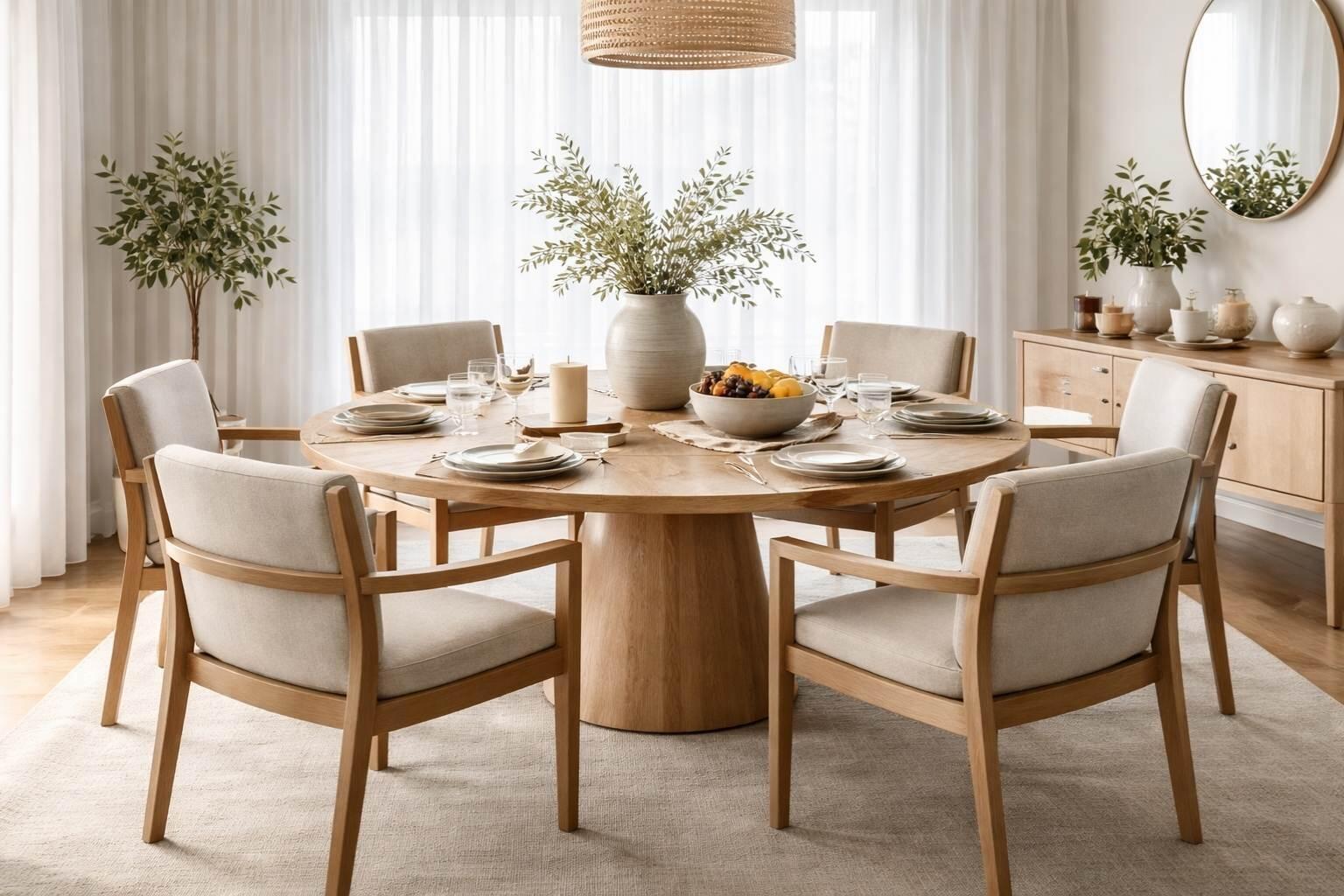
Round and oval tables are considered the most auspicious in feng shui because they have no sharp corners — they encourage equal participation and smooth social energy. Rectangular tables are fine and often necessary in practical terms, but it's worth softening sharp table corners with tablecloths or placemats if you have family members who frequently bump into them (a sign of sha chi from pointed edges).
Ensure there are enough chairs for the table — an oversized table with too few chairs signals a lack. Conversely, a crowded table with chairs that barely fit signals stress and restriction. The ideal is a table comfortably set for the household with room to add a chair or two for guests — this represents abundance with room to share.
What to Remove from the Dining Room
A few things commonly found in dining rooms that work against good feng shui energy: unpaid bills or paperwork left on the table (this directly associates the space of nourishment with financial stress — clear it before meals), dying plants or flowers past their prime (replace promptly — dead plants in any room signal stagnant energy), and excessive electronic devices.
The dining room benefits from being a space of presence and connection. A TV in the dining room, while common, diverts attention from the social energy of the meal. If removing it isn't practical, ensure it's off during meals.
More Feng Shui Tips