
Feng Shui Kitchen Colors: How to Choose the Right Palette for Abundance and Good Energy


Your kitchen is one of the most energetically active spaces in any home. It's where fire meets water, where nourishment is created, and where the day often begins and ends. In feng shui, the kitchen represents prosperity, health, and the family's vitality — and the colors you choose to surround yourself with there have a real impact on how that energy flows.
You don't need to believe in ancient mysticism to appreciate the psychology of color. Research consistently shows that the colors in our environment affect our mood, appetite, focus, and even our stress levels. Feng shui simply takes this one step further, mapping those effects onto the energy system of your home.
The result is a surprisingly practical color guide that works whether you're a feng shui devotee or just someone who wants their kitchen to feel good.
This guide walks you through the best feng shui kitchen colors, the ones to approach with caution, and some simple ways to bring better color energy into your kitchen — even without picking up a paintbrush.
Why Color Matters More in the Kitchen Than Anywhere Else
In feng shui, the kitchen is governed by the Fire element because of the stove. But it also holds strong Water energy from the sink and refrigerator. This inherent tension between fire and water makes the kitchen one of the most energetically complex rooms in the house — and it's exactly why color becomes such an important balancing tool.
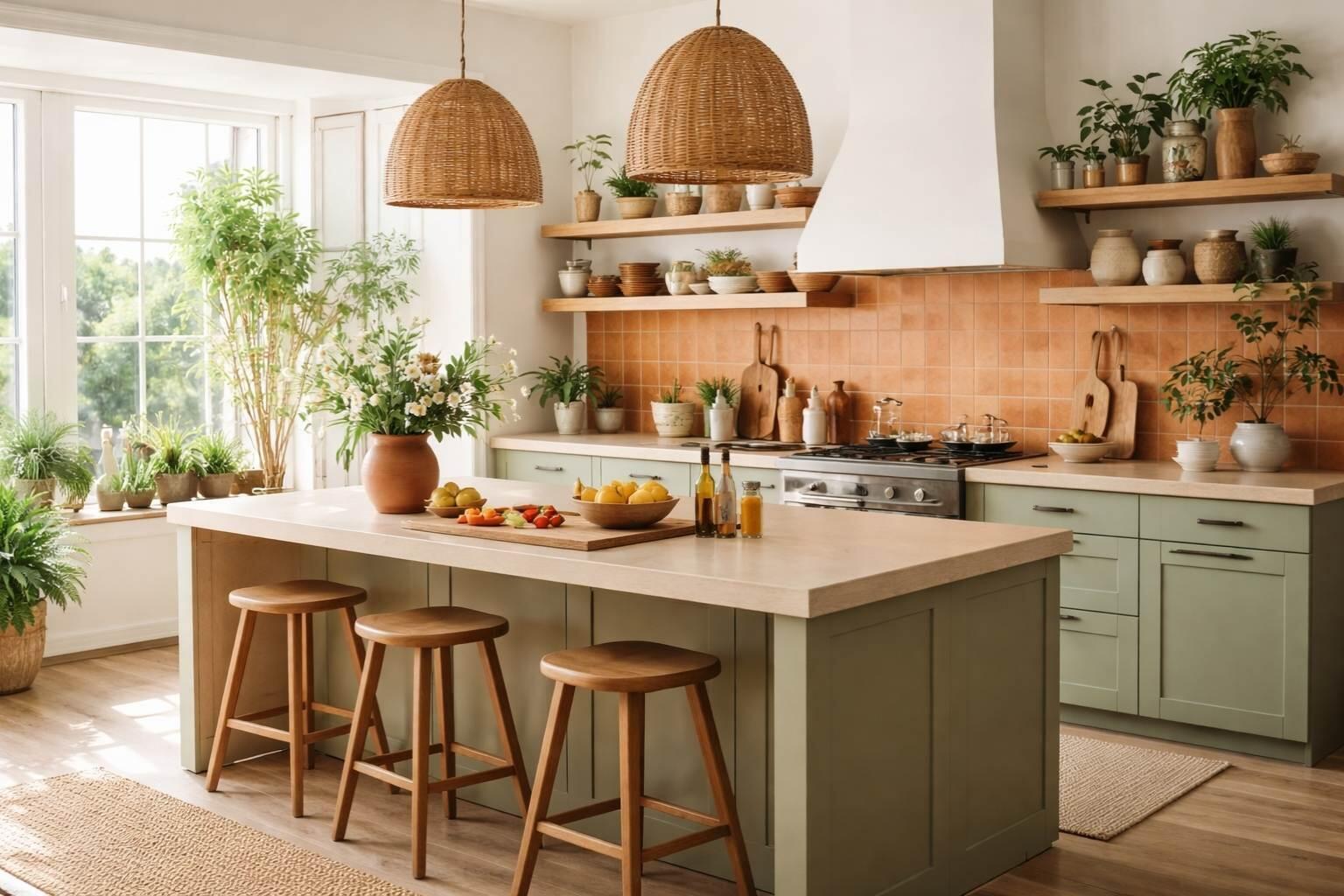
Colors that align with Earth energy (yellows, warm beiges, terracottas) are particularly beneficial in the kitchen because Earth sits between Fire and Water in the five-element cycle. Earth absorbs excess fire and channels water productively, making it a natural mediator. Colors tied to Wood energy (greens, soft teals) feed the fire without overwhelming it — supporting growth and abundance.
Colors that belong to the Water element itself (deep navy, black) can be beautiful but need to be used carefully, since they can dampen the fire energy you want present in a space devoted to cooking and nourishment.
The Best Feng Shui Colors for a Kitchen
These colors tend to work well in most kitchens, regardless of direction or bagua zone. Think of them as starting points rather than strict rules — the best feng shui is always the one that feels right and looks great in your specific space.
Warm White and Cream
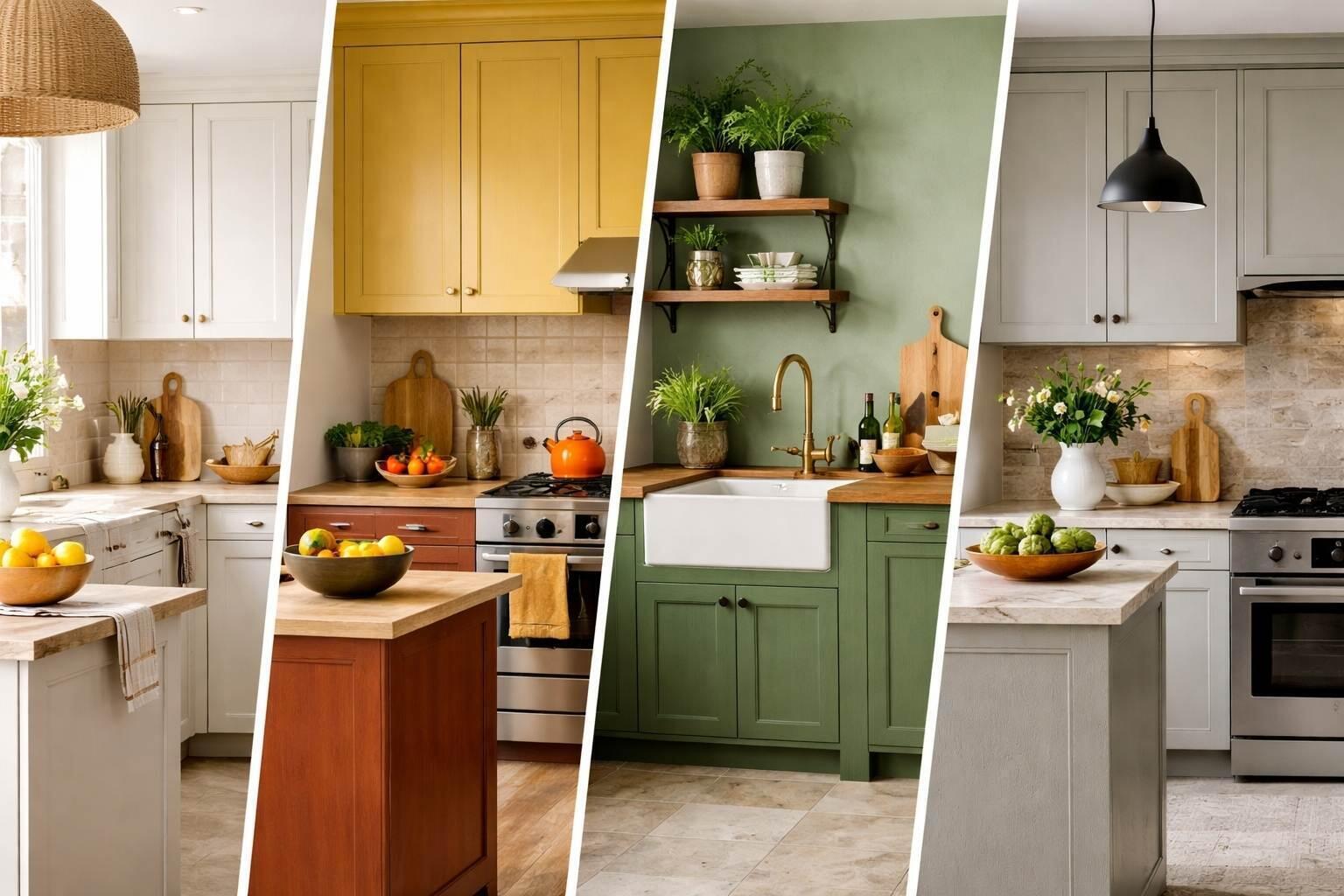
White is often dismissed as a "safe" or boring choice, but in feng shui, it carries strong Metal energy — clarity, precision, and cleanliness. In a kitchen, these are genuinely useful qualities. A warm white or creamy off-white feels fresh without feeling cold, and it keeps visual clutter from accumulating.
It also amplifies natural light, which is one of the most important feng shui factors in any kitchen. If you're uncertain where to start, a warm white is rarely wrong.
Yellow, Ochre, and Earthy Tones
Yellow is the classic feng shui kitchen color for good reason. It connects directly to Earth energy, supports digestion, lifts the mood, and creates a sense of warmth and welcome. The key is choosing the right shade. Golden yellows and ochres tend to feel grounded and sophisticated. Overly bright, acidic yellows can become overwhelming quickly — great for an accent wall or a set of canisters, but intense as a full-room choice. Terracotta, warm beige, and clay tones offer similar benefits with even more visual stability.
Soft and Sage Green
Green brings Wood energy, which nourishes Fire — meaning it naturally supports the kitchen's cooking and life-giving functions. Soft sage greens have become extremely popular in kitchen design recently, and for good feng shui reasons: they suggest freshness, growth, and vitality without competing with food colors. A sage green kitchen feels alive. Deeper forest greens work beautifully as cabinet colors when balanced with lighter walls or countertops.
Light Gray and Warm Stone
Cooler grays carry Metal energy, which can be a positive influence in the kitchen when used thoughtfully. Warm stone grays or greige tones add depth and calm without pulling the space into Water territory. These work especially well in kitchens that already get a lot of natural light, where the cool tone is softened by sunlight throughout the day.
Colors to Approach with Caution in the Kitchen
No color is absolutely forbidden in feng shui — it always depends on the specific balance of your space. That said, some colors require more careful handling in kitchens.
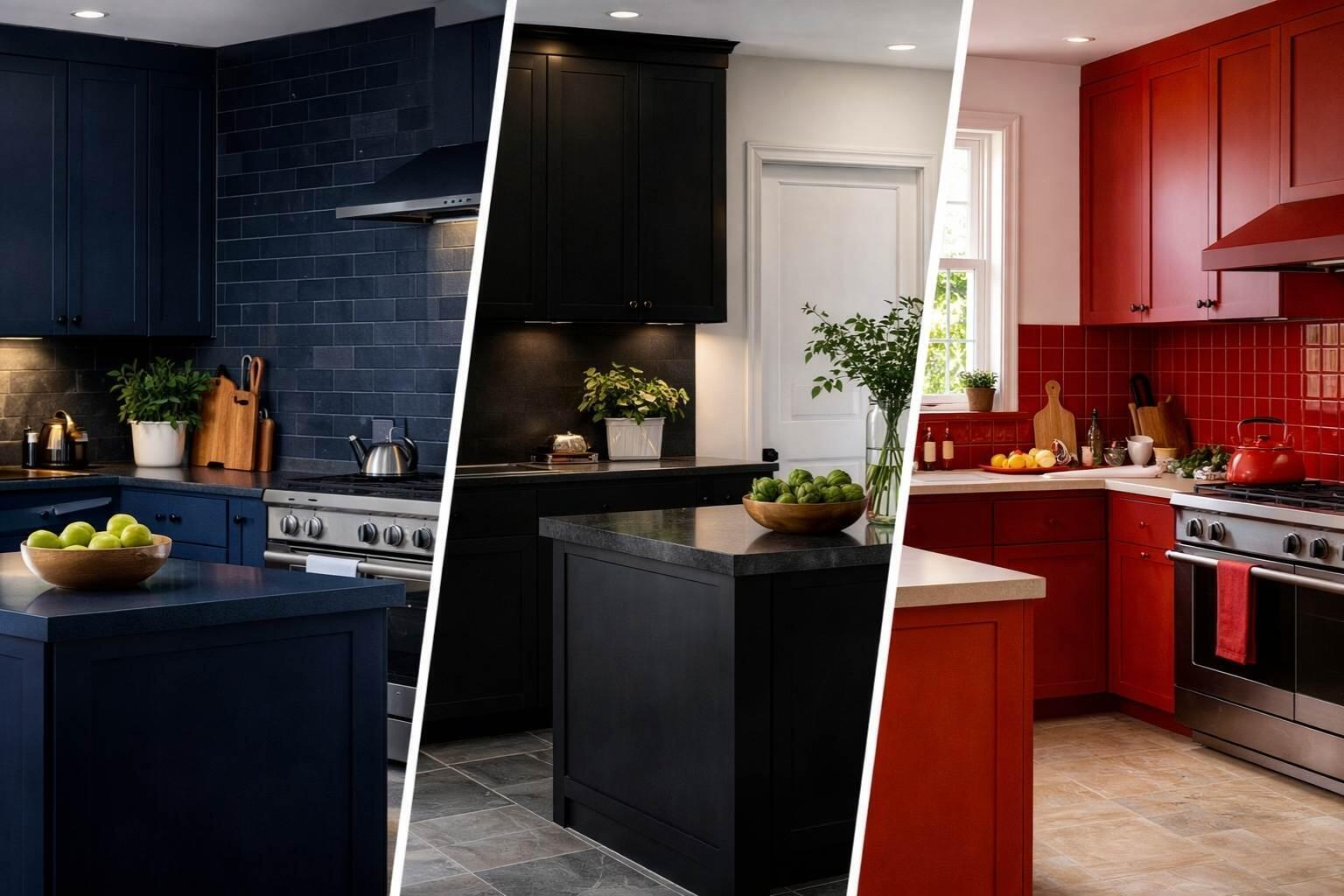
Deep blue and navy bring strong Water energy, which can clash with the kitchen's fire. Small doses work well — a navy island, blue tiles as an accent — but painting an entire kitchen deep blue tends to create a dampening effect that many people describe as making the space feel heavy or cold.
Black has a similar dynamic. Black countertops and hardware are chic and very functional, but an all-black kitchen can be energetically heavy. Balance it with plenty of light colors, plants, or warm wood tones.
Red, the ultimate Fire color, seems like it would be perfect for a kitchen — but it can actually intensify the fire element to the point of imbalance. A red accent wall or red appliances can work beautifully, but a fully red kitchen tends to feel agitated rather than abundant. Think of red as seasoning: powerful and transformative in the right amount, overwhelming in excess.
How the Five Elements Guide Your Final Choice
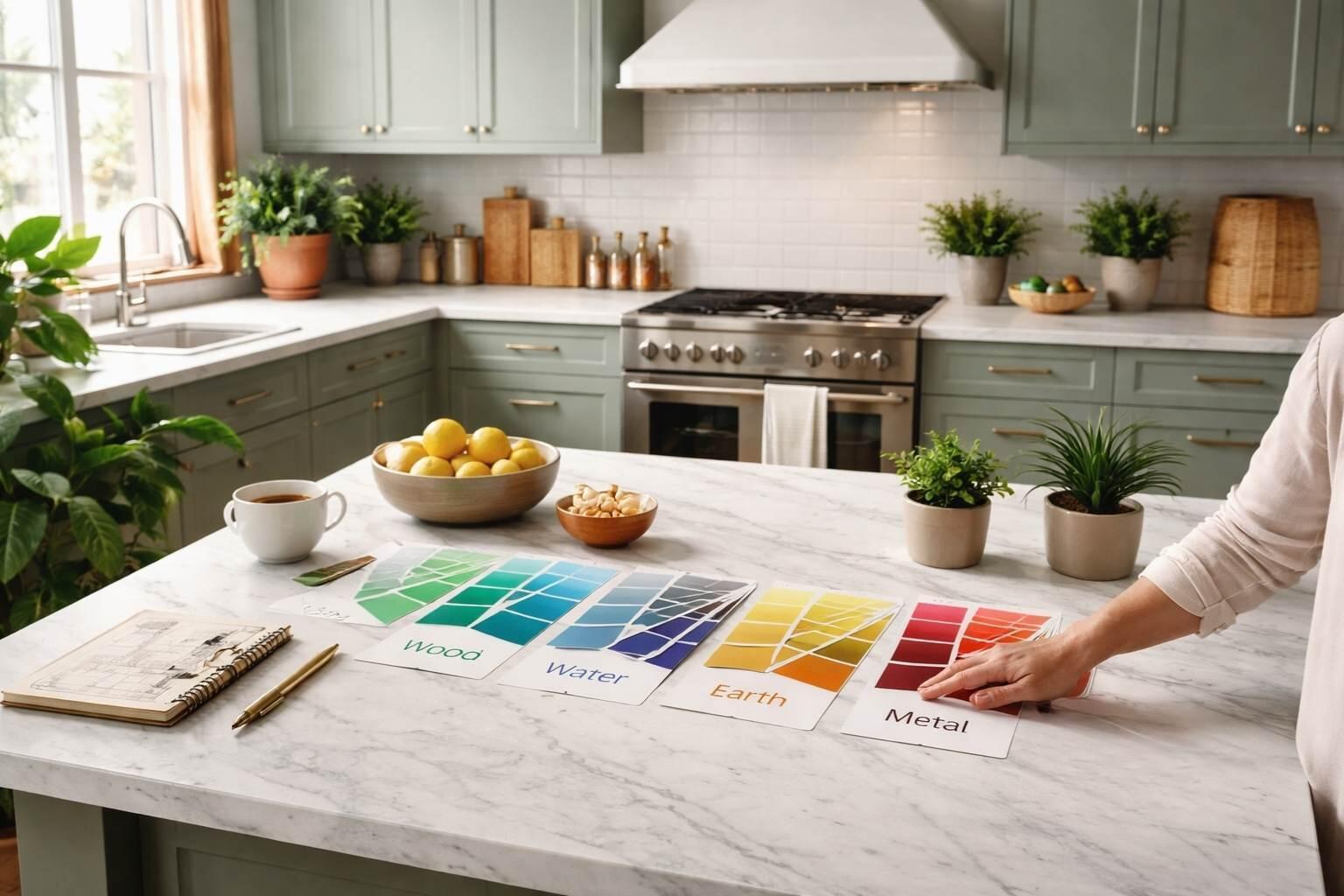
If you want to go a step further than general advice, you can use the five-element cycle to make a more targeted decision for your specific kitchen. First, identify your kitchen's bagua area — where it falls on the map of your home. Then choose colors that support that zone.
A kitchen in the Wealth corner (Southeast) benefits from Wood colors like green or teal. Another in the Career zone (North) can handle more Water energy, so subtle blues or black accents work here better than elsewhere.
The kitchen in the Health area (Center) thrives with Earth tones — yellows, sandy beiges, and terracottas. If you haven't used a bagua map before, the general color recommendations above work well as a universal starting point.
Easy Ways to Add Better Color Energy Without Repainting
A full repaint isn't always realistic — especially in a rented space or a kitchen with recently installed tile or cabinetry. The good news is that feng shui color doesn't require wall paint to make a difference. Smaller changes can shift the energy meaningfully.
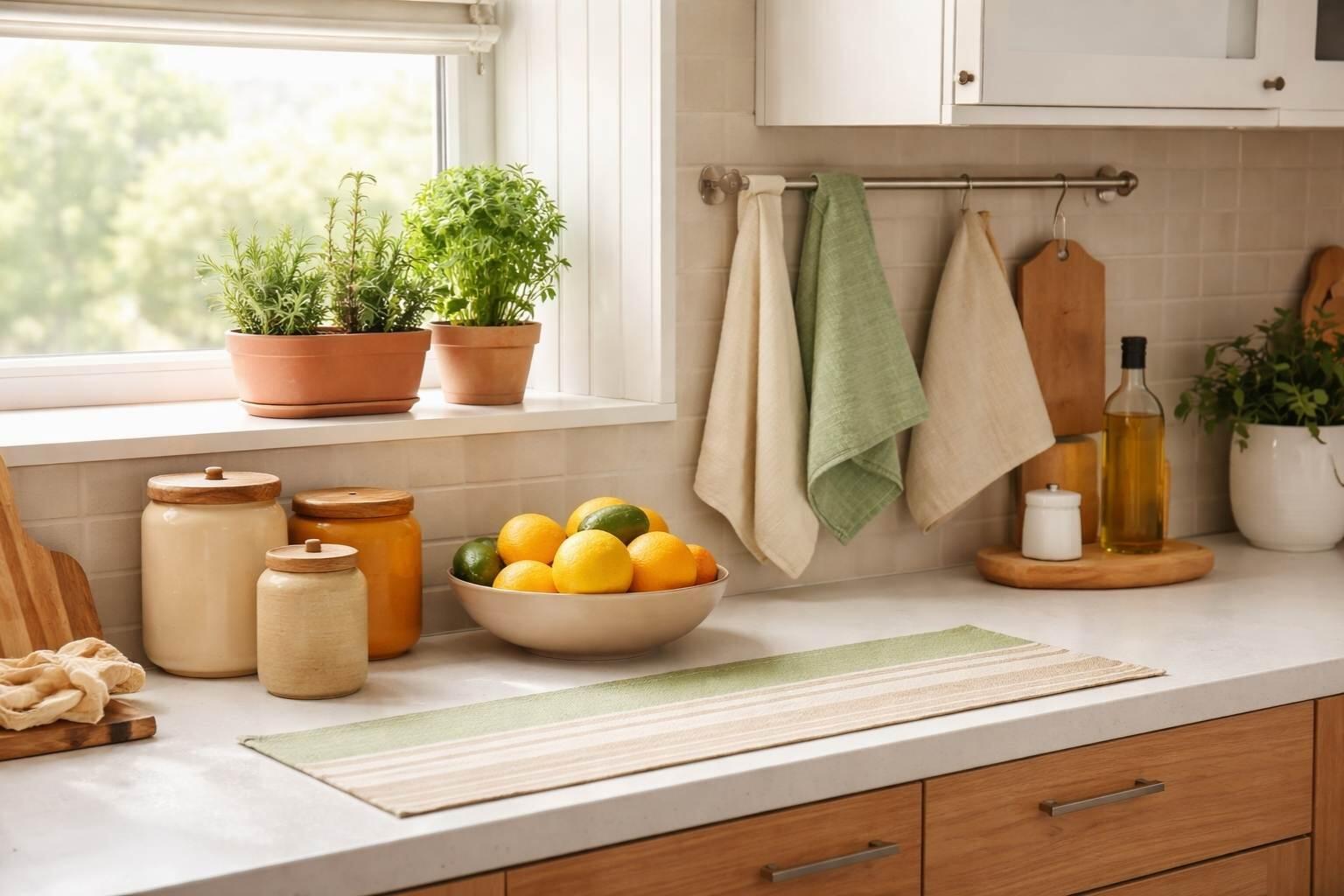
Consider a set of earthy ceramic canisters or a fruit bowl in warm ochre. Swap your dish towels and oven mitts for sage green or warm cream tones. Add a small potted herb garden in a terracotta pot on the windowsill — it brings both green Wood energy and the living vitality that feng shui prizes above almost everything else.
A new set of curtains or a simple runner in the right color can shift how the entire space feels without requiring any renovation.
Putting It All Together
The goal of feng shui kitchen color isn't perfection — it's balance. A kitchen that feels nourishing, bright, clean, and alive is doing its energetic job, regardless of what exact shade is on the walls. Start with a color family that resonates with you from the list above, pay attention to how the light interacts with it throughout the day, and layer in smaller color accents from there.
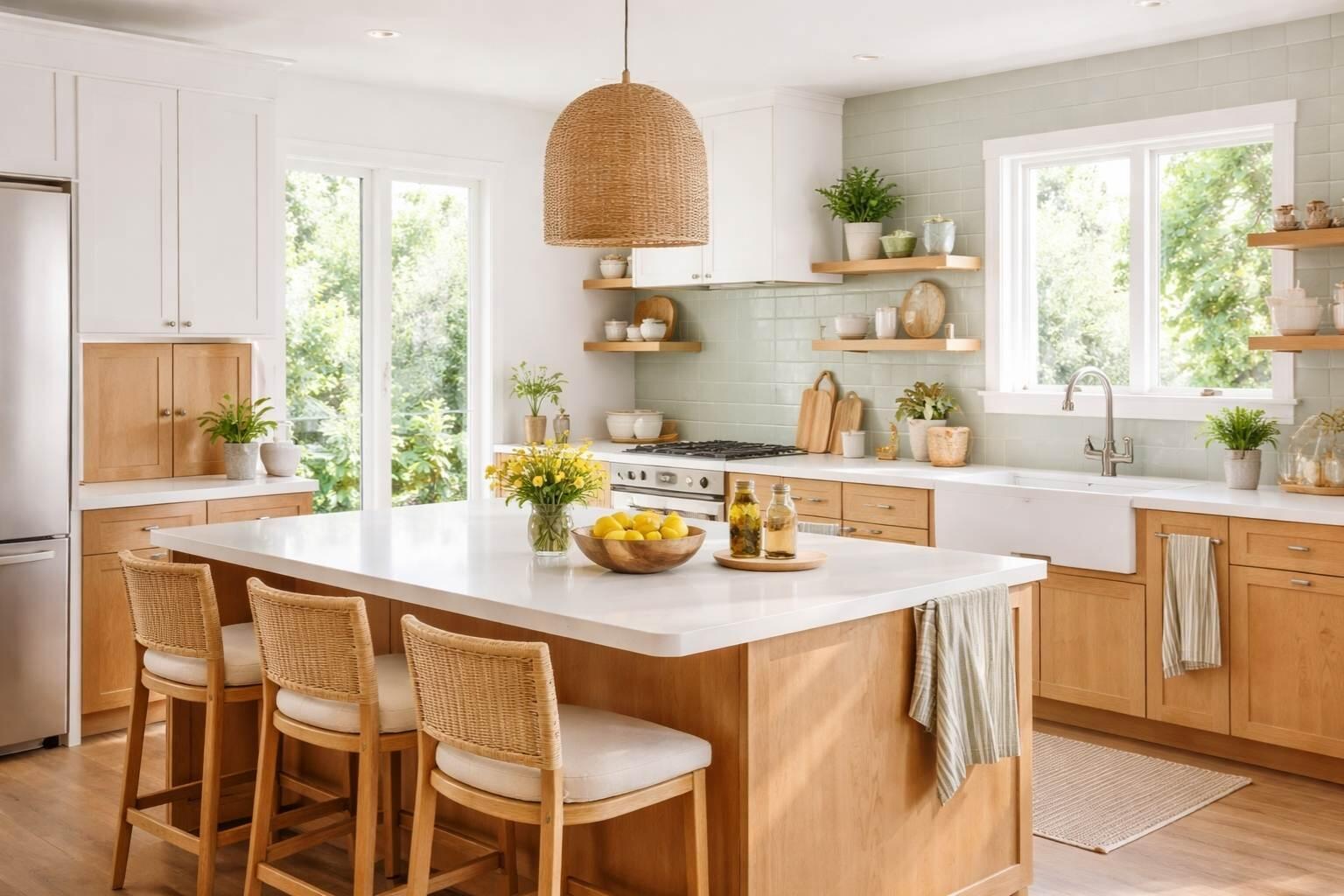
When a kitchen feels heavy, bringing in more light and soft Earth tones can make the space feel more grounded and open. A cold or uninspiring kitchen often benefits from warmer touches, such as yellow, green, or natural wood textures.
In a space that feels chaotic, a simpler color palette with cleaner whites or creamy neutrals usually creates a calmer effect. Ideally, your kitchen should feel like a place where good things are created — because energetically, that is exactly what it is.
More Feng Shui Tips