
Feng Shui Dining Table Placement Rules You Need to Know


Your dining table does more than fill space. In feng shui, it represents connection, nourishment, and the way energy gathers in the home.
The way you place it can affect how comfortable the room feels, how easily people move through it, and whether the space supports calm, shared meals.
If your dining room feels awkward, cramped, or strangely off, the table placement may be part of the problem. The good news is that you do not need a perfect floor plan to improve it. A few smart feng shui adjustments can help your dining area feel more balanced, welcoming, and functional.
- Place the Dining Table in the True Center of the Dining Area
- Keep Clear Space Around the Table for Smooth Energy Flow
- Avoid Placing the Table Directly in Line With the Main Door
- Choose a Table Position That Feels Supported
- Match the Table Shape to the Room Layout
- If You’re Shopping for a New Dining Table, Prioritize These Features
- Use Practical Feng Shui Fixes for Common Placement Problems
- Create a Dining Space That Encourages Connection
Place the Dining Table in the True Center of the Dining Area
In feng shui, the dining table should feel anchored. That usually means placing it in the visual center of the dining zone rather than pushing it too far to one side or crowding it against a wall.
A centered table helps energy circulate more evenly around it. It also creates a stronger sense of stability, which matters in a space connected to food, gathering, and abundance.
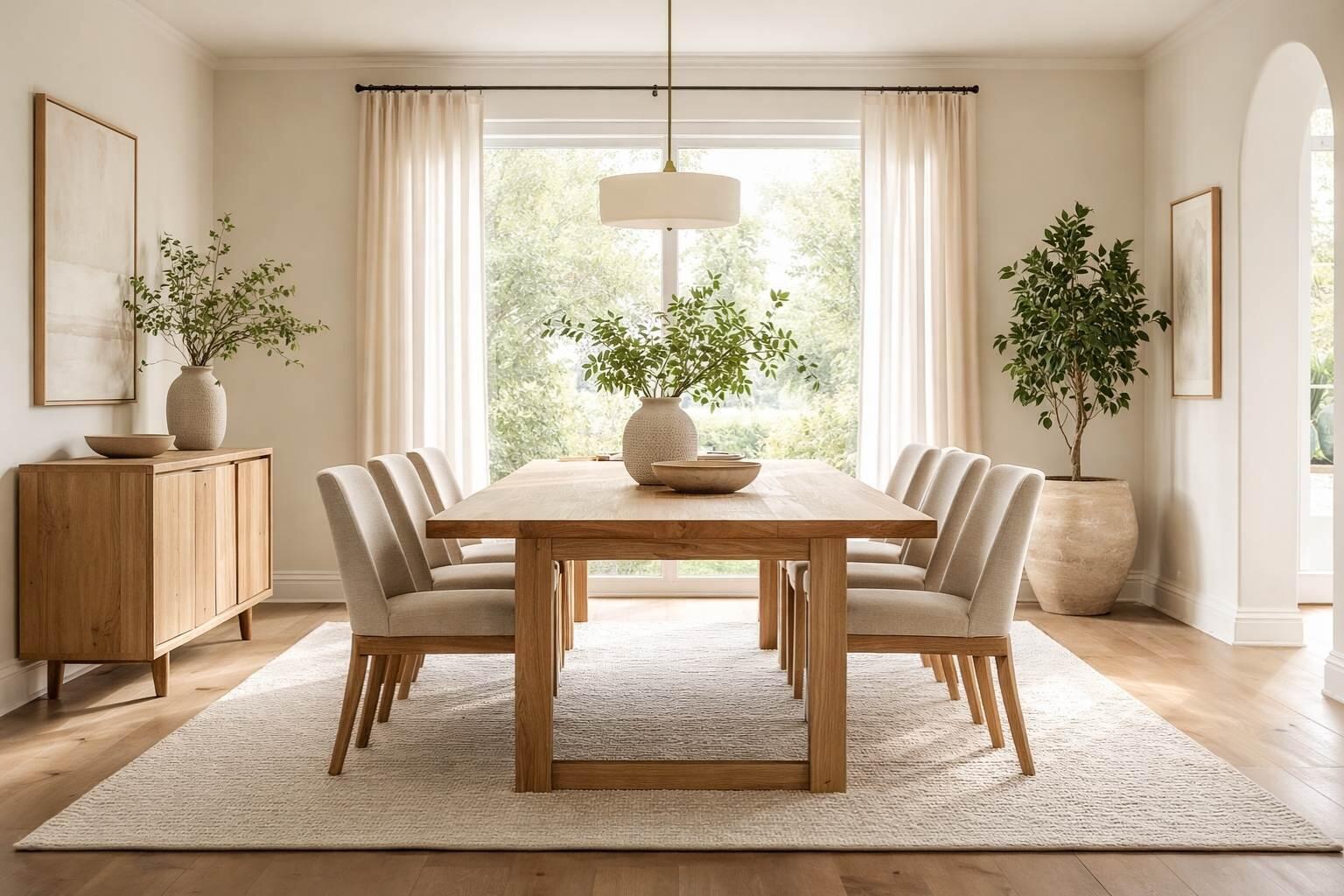
This does not mean measuring for mathematical perfection. It means the table should look and feel like it belongs where it is, with enough room around it to breathe.
Signs the table is well-centered include:
Chairs can be pulled out comfortably
The table does not block the natural path through the room
The room feels balanced from multiple angles
One side of the table does not feel ignored or cramped
If your dining area shares space with a kitchen or living room, use the table placement to clearly define the dining zone.
Keep Clear Space Around the Table for Smooth Energy Flow
One of the most important feng shui principles is flow. If people have to squeeze past chairs, sidestep corners, or constantly adjust around the table, the room can feel stressful instead of supportive.

The dining table should allow easy movement on all sides as much as possible. This helps both practical comfort and energetic ease.
Try to avoid placing the table where it:
Interrupts a doorway path
Blocks access to storage or windows
Forces chairs into a wall when in use
Creates a tight bottleneck between rooms
Even in a small dining room, a little clearance matters. If the space is tight, choosing the right table shape or reducing oversized chairs can improve the layout more than forcing a table that is too large.
A dining room with smooth movement feels more relaxed, and that supports the kind of grounded energy feng shui aims to create.
Avoid Placing the Table Directly in Line With the Main Door
When a dining table sits directly in line with the main entrance or a strong doorway path, energy can move too fast through the space. In feng shui, this can make the room feel unsettled and less anchored.
You want the table to feel protected, not exposed to rushing movement.

If your table is directly aligned with a doorway, you do not necessarily need to move it across the room. Small changes can help soften the effect:
Shift the table slightly off-axis
Add a rug to define and ground the area
Use a light fixture above the table to anchor it visually
Place a plant or furniture piece nearby to slow the visual rush
The goal is to create a sense that the dining area is a destination, not just a pass-through space.
Choose a Table Position That Feels Supported
A strong feng shui layout often includes a feeling of support behind the main furniture pieces. For a dining table, this can mean placing it where at least one side feels visually grounded by a wall, sideboard, or stable architectural feature.
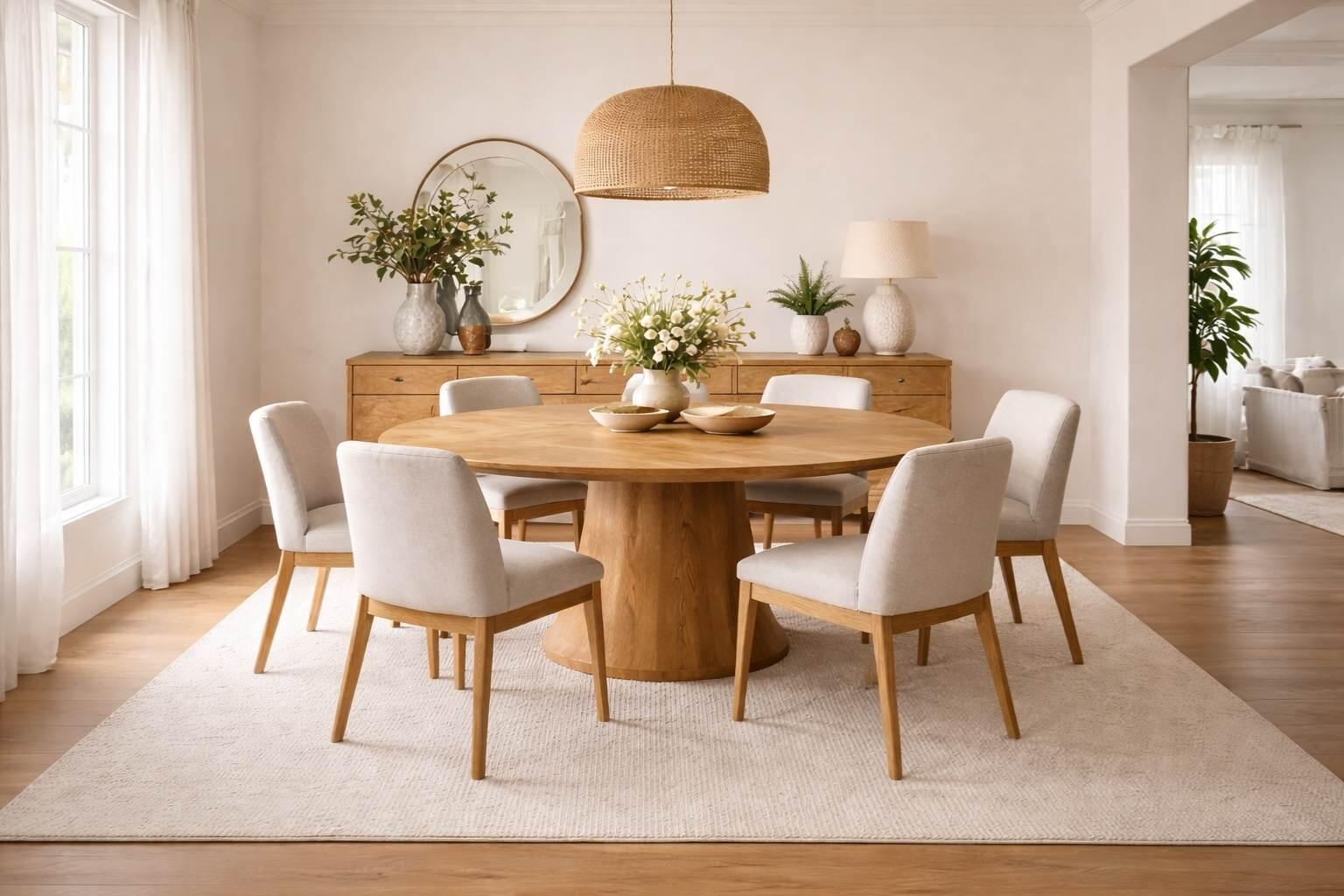
This helps the room feel secure rather than exposed on all sides.
Support does not mean trapping the table in a corner. It means balancing openness with structure. A table floating in the middle of a large room with no visual anchor can feel disconnected, while a table with some support around it often feels more intentional.
Useful forms of support include:
A solid wall behind one side of the room
A buffet or sideboard placed nearby
A defined dining nook
A pendant light centered above the table
These elements help hold the energy of the space together.
Match the Table Shape to the Room Layout
Table shape affects both movement and mood. In feng shui, the best shape is often the one that works naturally with the room rather than fighting against it.
Round tables encourage conversation and soften energy. They work especially well in smaller spaces or square rooms because they improve flow and reduce sharp corners.
Rectangular tables are common and practical, especially in longer rooms. They can work well in feng shui when they fit the space properly and do not create a cramped layout.
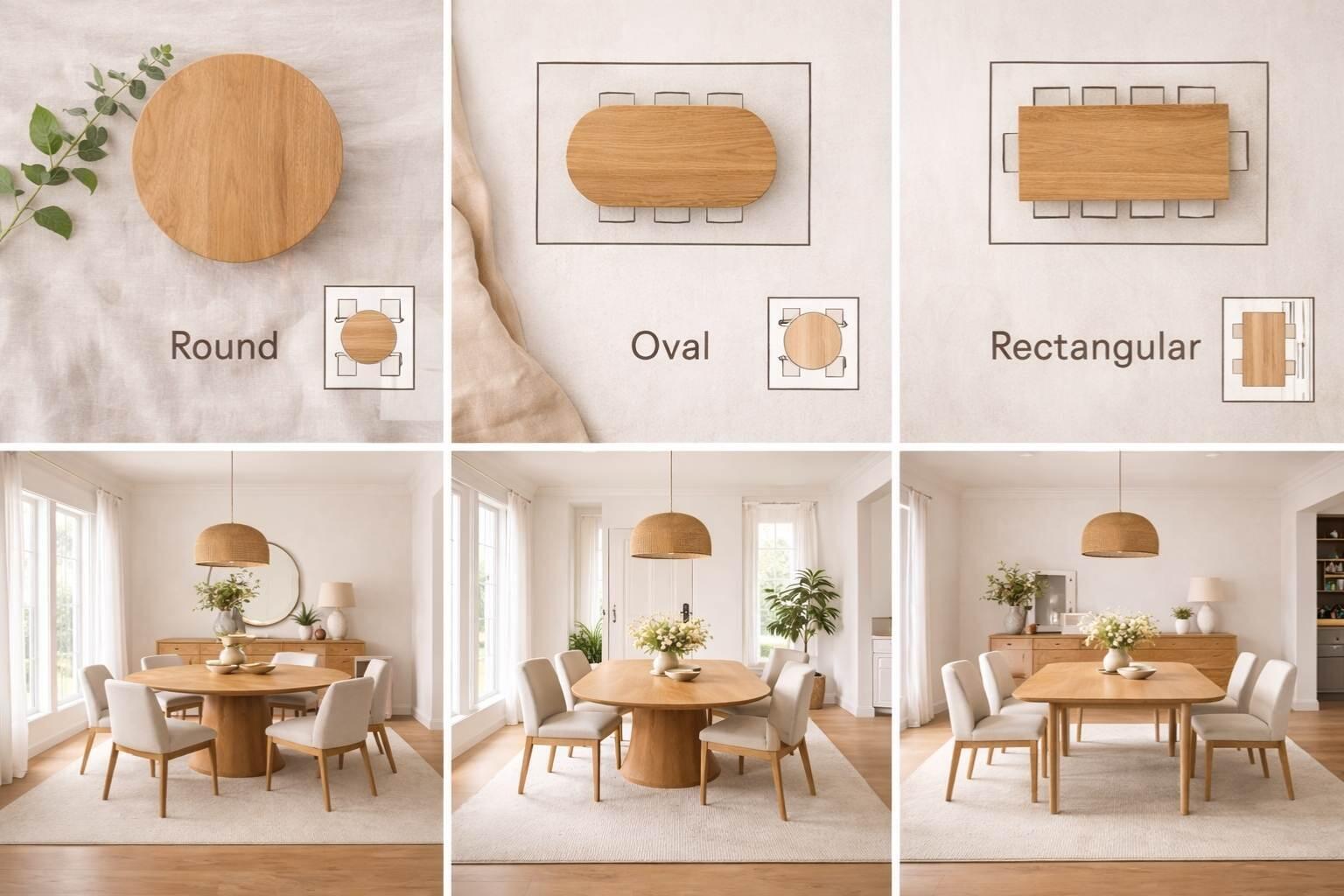
Here is a simple way to think about it:
Round table: good for intimacy, softer movement, smaller dining spaces
Oval table: similar softness with a little more seating flexibility
Rectangular table: useful for longer rooms and larger households
Square table: can work in square rooms, but needs enough breathing room around it
The best feng shui choice is not about trends. It is about proportion, comfort, and flow.
If You’re Shopping for a New Dining Table, Prioritize These Features
Sometimes the easiest way to improve dining room feng shui is to choose a table that fits the space better. If your current table feels too large, too sharp, or awkward in the room, replacing it with a better-sized option can make the layout feel calmer and more functional.
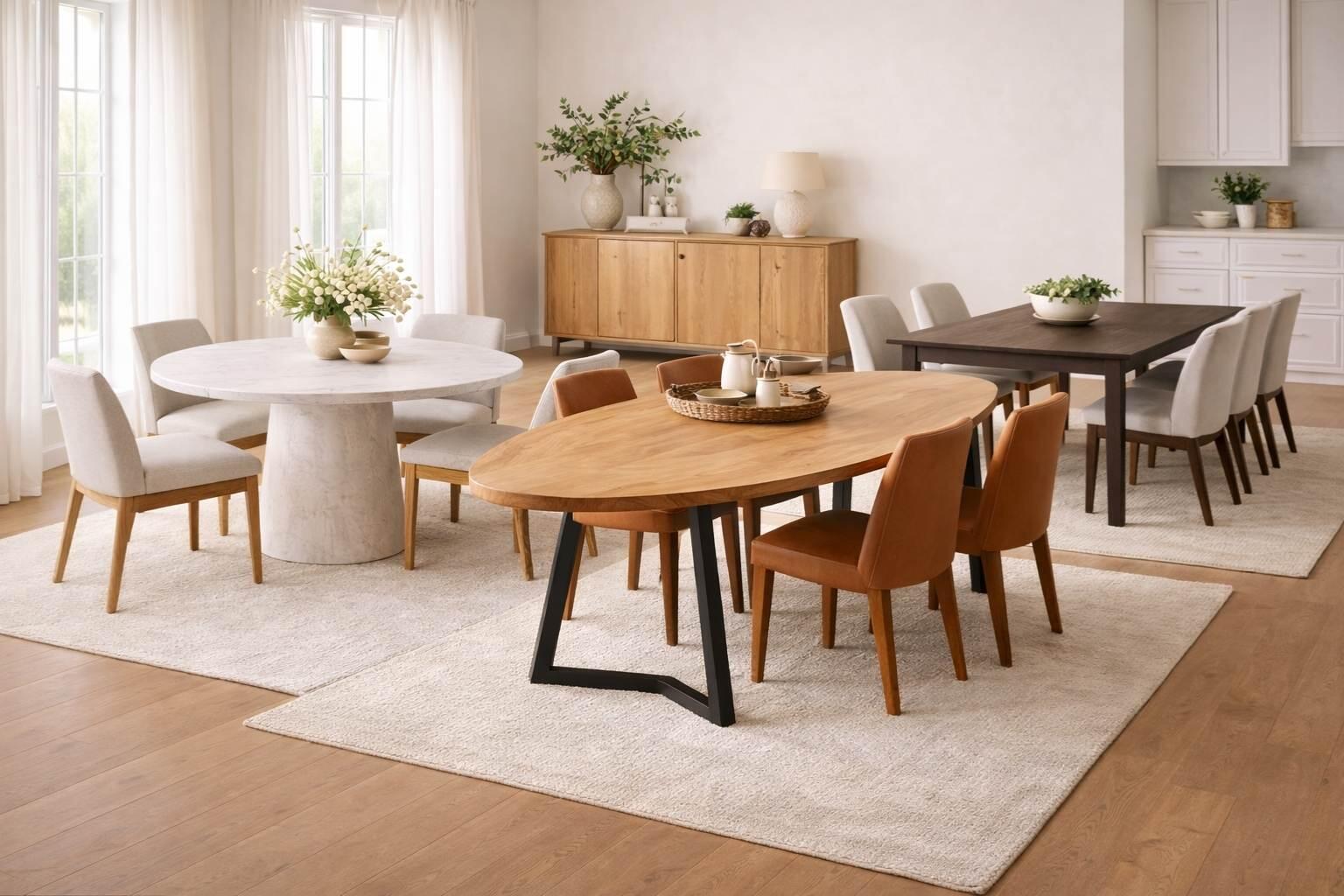
When shopping for a dining table, look for features that support both comfort and flow:
A shape that matches your room layout, such as round for smaller spaces or rectangular for longer rooms
Rounded edges if you want a softer, more relaxed feel
A size that leaves enough space to walk comfortably around the table
A sturdy base that makes the table feel grounded and stable
Materials and finishes that feel warm, simple, and easy to live with
A well-chosen dining table can make the entire room feel more balanced. If you are looking for options that work especially well for comfort, flow, and everyday use, you can browse my recommended dining tables here.
Use Practical Feng Shui Fixes for Common Placement Problems
Not every dining room allows perfect placement. That is normal. Feng shui works best when applied practically, not rigidly.
If your dining table location is limited, focus on improving the feeling of the space with simple fixes.

If the table is too close to a wall
Pull it out slightly if possible, or use fewer chairs so the layout feels less compressed.
If the table is in a heavy traffic path
Define the dining area with a rug, lighting, or nearby furniture to make it feel more intentional and less exposed.
If the room feels unbalanced
Add visual weight where needed with curtains, artwork, or a sideboard so the table does not feel like it is drifting in the room.
If the table feels too large
Scale down accessories, remove extra chairs, or consider a round pedestal table that improves circulation.
If the dining area feels cold or empty
Use warm textures, a centerpiece, or layered lighting to make the table feel active and welcoming.
These adjustments may seem small, but they can make a major difference in how the room functions and feels.
Create a Dining Space That Encourages Connection
The best feng shui dining room is not just arranged well. It feels good to sit in. The table should invite people to slow down, gather, and stay present.

That means placement is only part of the picture. Once the table is in a better position, support it with details that reinforce comfort and harmony:
Keep the tabletop mostly clear
Use lighting that feels warm, not harsh
Repair wobbly chairs or unstable furniture
Avoid storing clutter right next to the dining area
Choose a centerpiece that feels simple and fresh
A dining table placed with care can help the whole room feel more grounded. And when the room feels grounded, shared meals often feel easier too.
Your dining room does not need to be large or perfect to have good feng shui. What matters most is that the table feels centered, supported, and easy to move around. Start with one placement improvement, then notice how the space feels. Often, a small shift is enough to make the entire room feel calmer and more connected.
More Feng Shui Tips