
Feng Shui Living Room Layout: Where to Place Your Sofa, TV, and Furniture


Your living room is one of the most active spaces in your home. It is where energy circulates throughout the day, where people gather, and where rest and connection both happen. Because of that, the layout of your living room matters more than most people realize.
Feng shui living room layout is not about following rigid rules or completely rearranging your space. It is about understanding how furniture placement affects the flow of energy and how small adjustments can make a room feel more grounded, open, and comfortable.
This guide will walk you through the most important placement principles for sofas, TVs, and general furniture in a way that is practical and easy to apply, even in smaller or awkwardly shaped spaces.
Why Layout Matters in Feng Shui
In feng shui, the way furniture is arranged affects how energy, or chi, moves through a room. When furniture blocks natural pathways or pushes people into corners, the room can feel heavy or uncomfortable even if it looks fine on the surface.
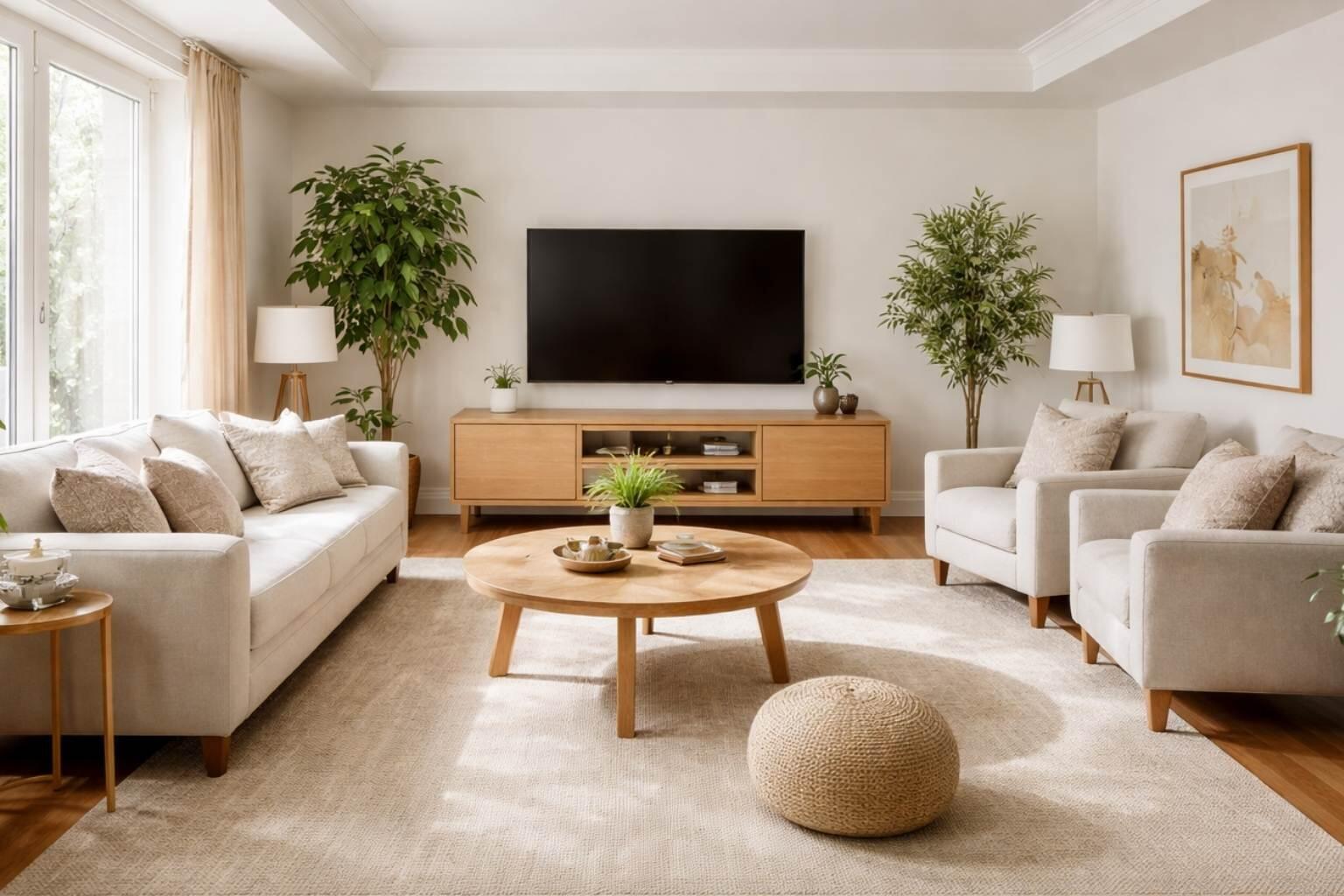
A well-laid-out living room supports easy conversation, natural movement, and a sense of calm. It does not feel crowded or disconnected. The goal is not perfection but a space that supports how you actually live.
The Most Important Rule: The Commanding Position
The commanding position is one of the most foundational ideas in feng shui, and it applies directly to where you place your main seating.
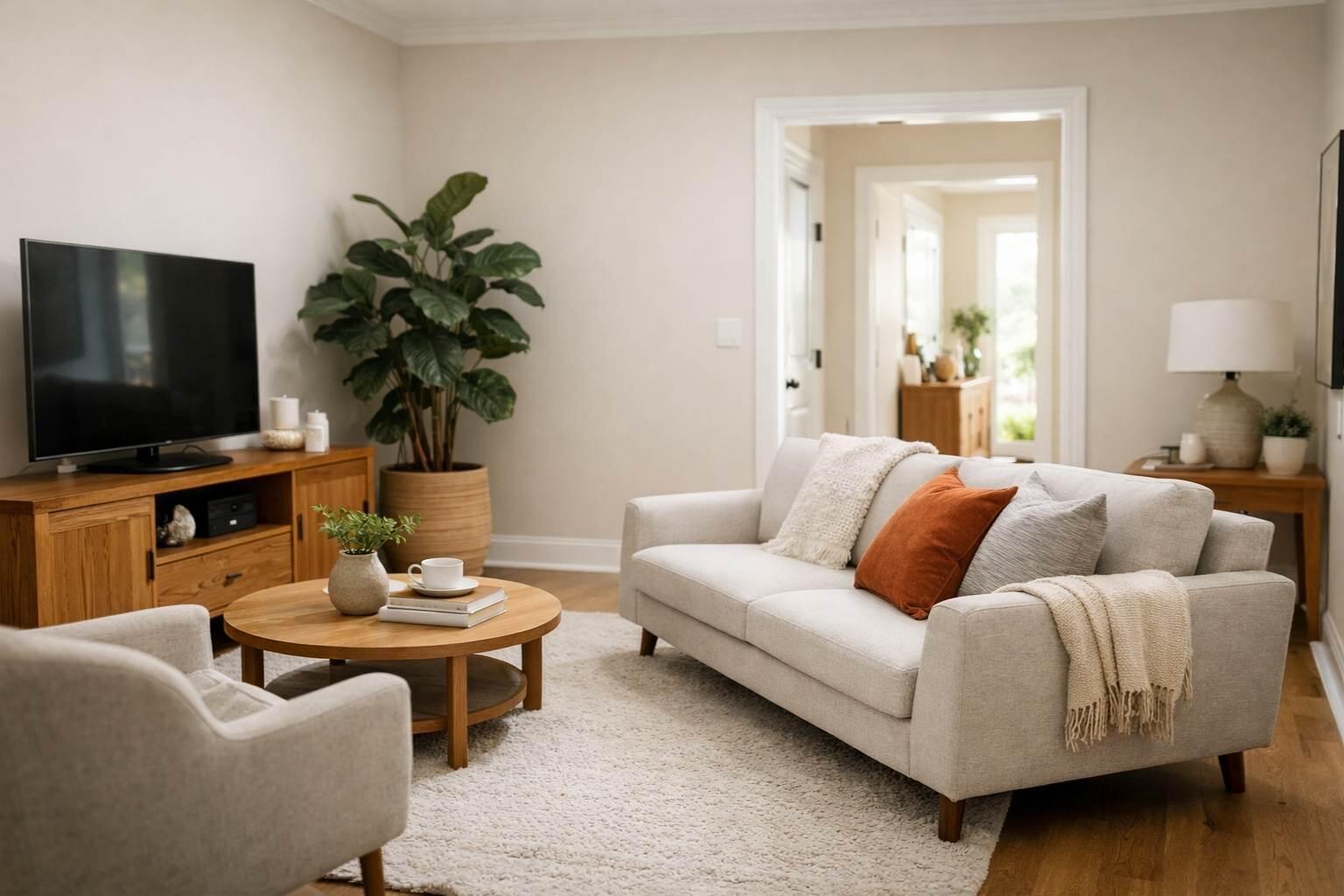
In a living room, the commanding position means your primary sofa or chair should face the door without being directly in line with it. You want a clear view of the entrance so you can see who enters, without sitting with your back to it. This creates a sense of safety and ease that most people feel immediately, even without knowing why.
If your sofa is currently pushed against a wall with its back to the door, try turning it so it faces the entrance at an angle. Even small adjustments here can change how the whole room feels.
How to Place Your Sofa
Back against a solid wall
Placing the sofa with its back against a solid wall gives it a sense of support. Avoid floating the sofa in the middle of the room with nothing behind it, as this can create a feeling of unease or vulnerability.
Avoid placing it under a beam
Seating placed directly under a ceiling beam can feel oppressive over time. If your space has exposed beams and you cannot move the furniture, you can soften the effect with lighting, plants, or fabric treatments above.
Leave breathing room
Your sofa should not be jammed against every wall. Even a few inches of space behind it helps energy move more freely through the room.
Use matching pairs when possible
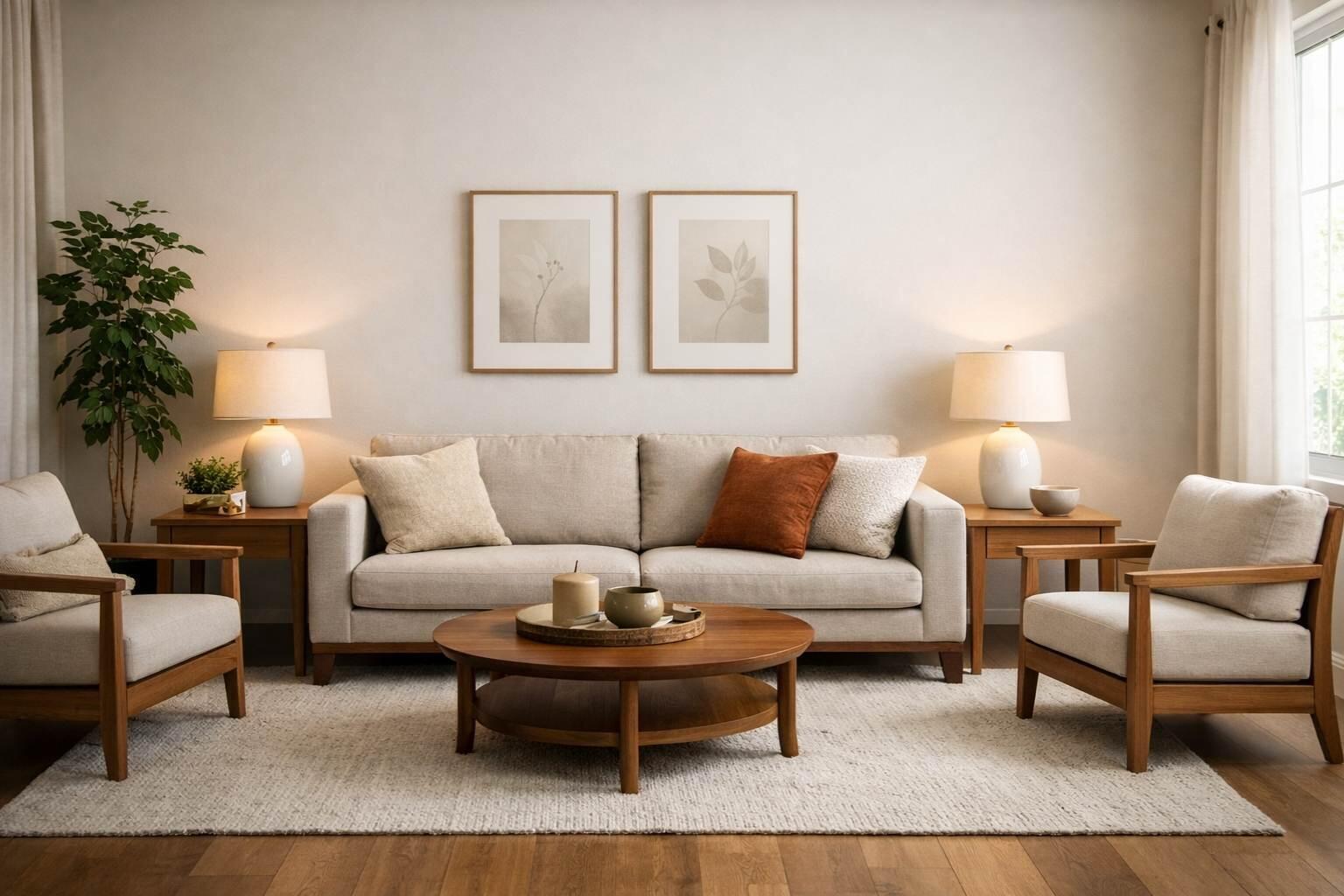
Feng shui tends to favor balanced arrangements. Matching side tables, lamps, or accent chairs on either side of the sofa creates a sense of symmetry that feels grounding and intentional.
Where to Put the TV
The TV is one of the trickier elements in a modern feng shui living room because it introduces active, stimulating energy into a space that is also meant for rest and connection.
The most important placement rule for a TV is to avoid placing it directly opposite the sofa at eye level without any softening elements around it. A bare, black screen facing you like a focal point tends to dominate the energy of the room.
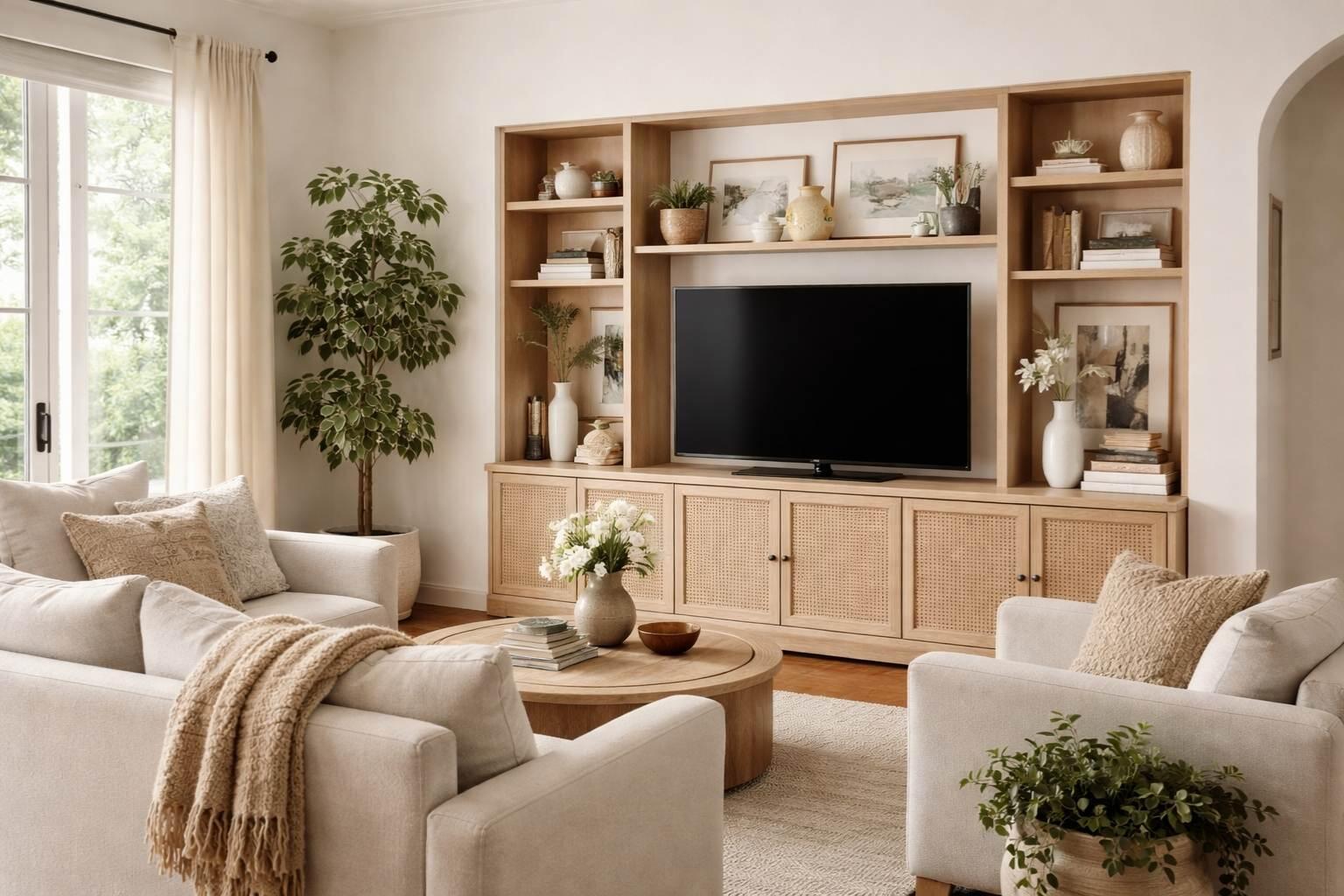
- Place the TV inside a cabinet or media console that can be closed when not in use
- Add framed art, plants, or shelving around it so it feels integrated rather than dominant
- Avoid placing the TV on the same wall as a fireplace or large mirror, as this creates too much competing energy in one area
- If you have a choice, position the TV on the east or north wall of the room
Coffee Table and Accent Furniture Tips
Coffee tables work best when they allow easy movement around them. Leave at least 18 inches of space between the sofa and the table so people can walk and shift comfortably.
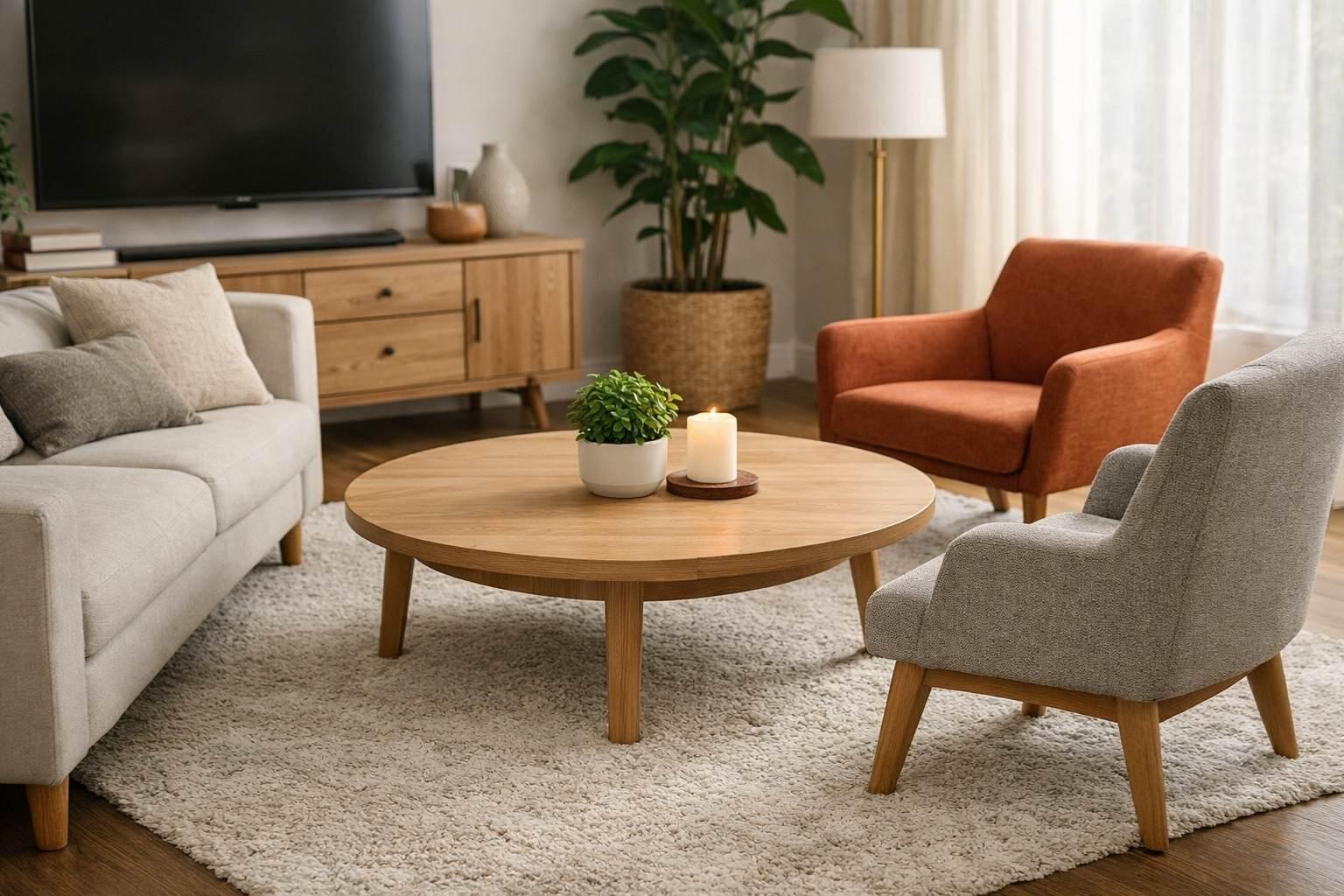
Round or oval coffee tables are often preferred in feng shui because they have no sharp corners pointing at seating. If you have a square or rectangular table, you can soften its energy by keeping a small plant or candle on top.
Accent chairs should be arranged so that all seating faces inward toward the center of the room rather than pointing toward walls or windows. This creates a natural gathering energy and makes conversation feel easier.
How to Improve Energy Flow With What You Already Have
- Clear the pathways. Make sure there is an easy, natural path from the entrance to the seating area. Remove anything that forces people to squeeze past or go around.
- Reduce visual clutter. Too many small objects on every surface makes the eye work overtime, and the room feels restless. Edit down to pieces that feel intentional.
- Add one living element. A healthy plant in the living room introduces wood energy and supports a sense of growth and vitality. It does not need to be large.
- Improve the lighting. A mix of ambient and warm accent lighting makes a living room feel more inviting than overhead lighting alone.
Common Living Room Layout Mistakes
- Sofa with its back to the door. This creates a subtle feeling of unease that is easy to correct by repositioning the seating.
- Furniture was pushed entirely against the walls. This actually makes a room feel less connected, not more spacious. Pulling seating slightly away from walls encourages energy to circulate.
- Blocking the entrance with large furniture. The area near the front door should feel open and welcoming, not like an obstacle course.
- Too many mirrors facing each other. This can amplify energy in a way that feels restless or overstimulating.
- Dead plants or overflowing bookshelves. Both contribute to a heavy, stagnant feeling in the room.
A Simple Layout Reset You Can Do Today
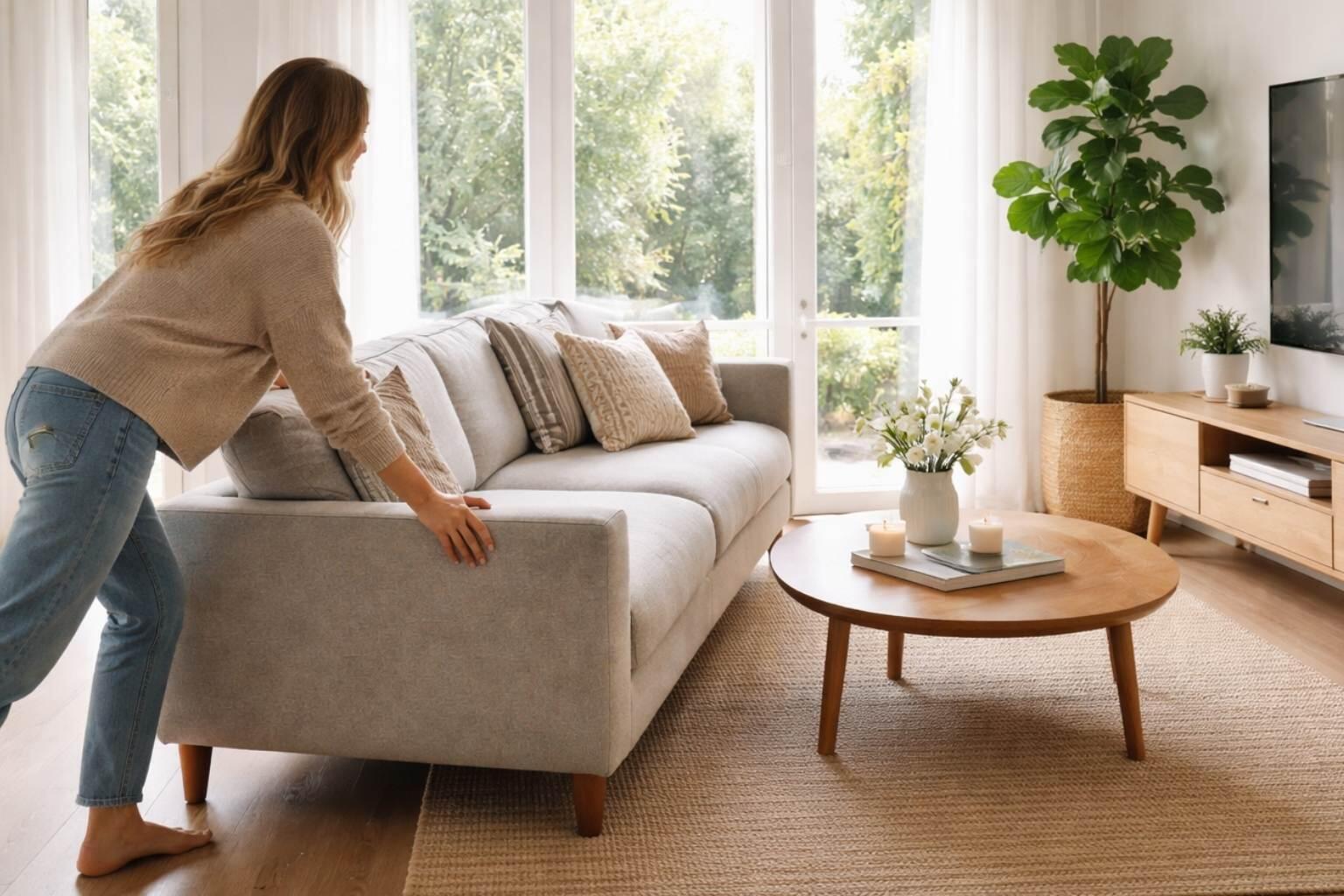
If you want to start improving your living room layout right now, try this quick approach:
First, stand at the entrance to your living room and look in. Notice if the sofa faces the door or has its back to it. If it faces away, consider whether you can shift it without major rearrangement.
Next, walk through the room and notice if any pathways feel blocked. Remove anything that creates an obstacle.
Then, look at the focal point of the room. Is there something grounding and pleasant to look at, or does the TV or clutter dominate? Make one small adjustment to give the eye a better place to rest.
Finally, add or refresh one living element, whether that is a plant, fresh flowers, or a candle. This instantly changes the energy of the room in a way that most people notice right away.
A feng shui living room layout does not have to be perfect to feel better. Even one or two adjustments can shift the way the room feels to everyone who spends time in it. Start with the sofa, clear the pathways, and let the rest follow naturally.
More Feng Shui Tips