
Hamsa Hand in Feng Shui: Meaning, Placement, and How It Protects Your Home


Walk into any metaphysically-minded home and there's a good chance you'll see one: a hand-shaped amulet, often painted in turquoise or white, sometimes featuring an eye in the center, hanging by the door or displayed on a wall. The Hamsa hand is one of the most widely recognized protective symbols in the world — and it translates remarkably well into feng shui practice, even though its origins are rooted in Middle Eastern and North African traditions rather than classical Chinese feng shui.
This post contains affiliate links. If you buy through them, we may earn a small commission at no extra cost to you.
The beauty of modern feng shui is that it's become a global practice, drawing on universal principles of energy, protection, and intention that transcend any single cultural origin. The Hamsa hand, like many symbols that have traveled across cultures, carries a core energetic resonance that aligns naturally with feng shui's emphasis on protection, warding off negative energy, and inviting in good fortune.
Here's what the Hamsa hand really means, how it functions as a feng shui cure, and exactly where to place it in your home for maximum effect.
🔗 AFFILIATE LINK → Amazon: "hamsa hand wall decor"💬 CTA sugerido: "A hamsa wall piece like this one works particularly well positioned above a doorway or on the main wall of your entrance area."
What Is the Hamsa Hand?
The Hamsa (also spelled Khamsa, from the Arabic word for "five") is a palm-shaped symbol featuring five fingers, often with an eye depicted in the center of the palm. It appears in Jewish, Islamic, and early Christian traditions and has ancient roots across the Mediterranean and Middle East. In Hebrew tradition, it's sometimes called the Hand of Miriam; in Islamic tradition, the Hand of Fatima.
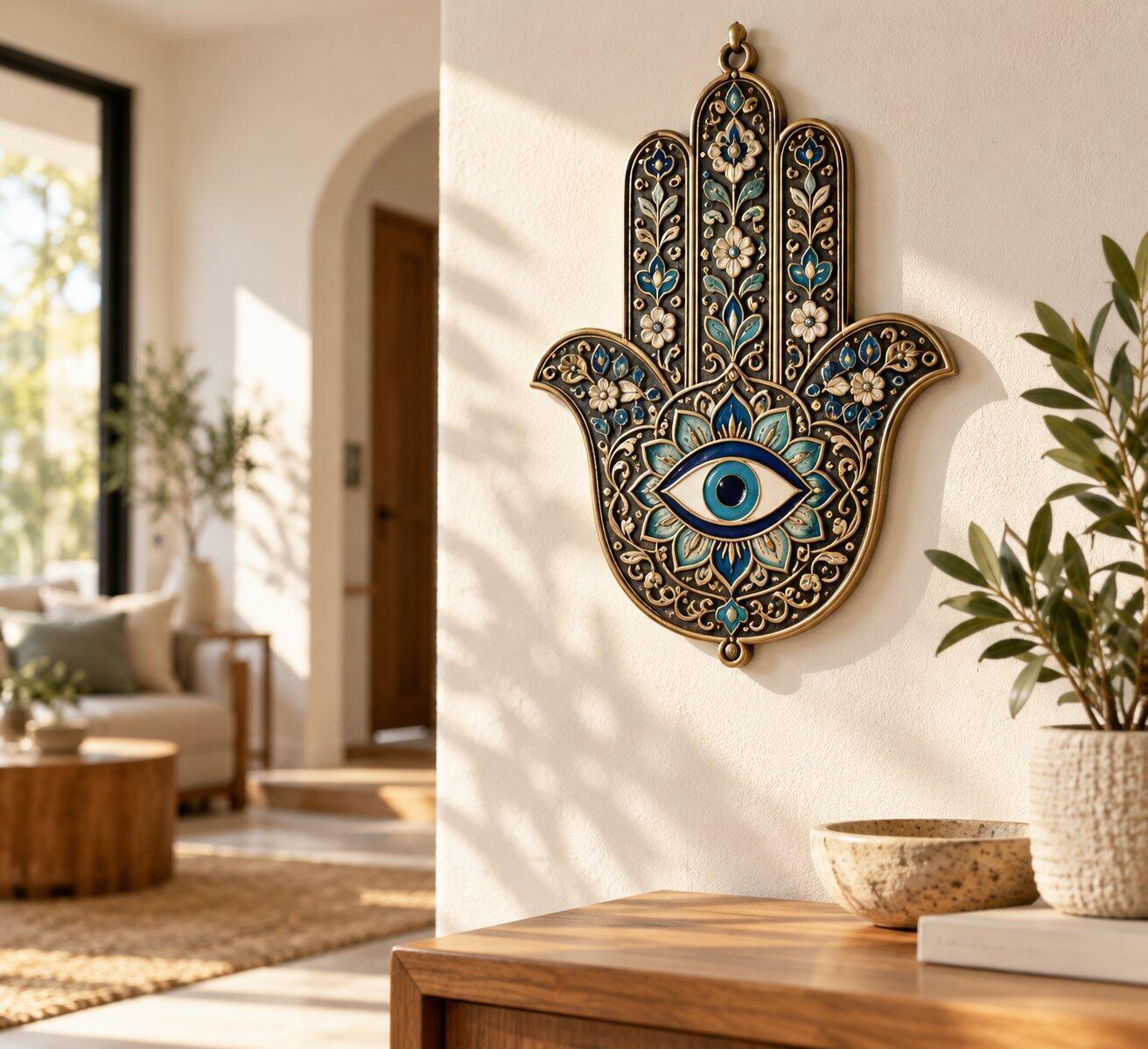
Across all its cultural expressions, the Hamsa carries two core meanings: protection from the evil eye (negative energy directed at you by others, often through envy or ill will) and the attraction of good fortune, blessings, and prosperity. The eye in the center of the palm — when present — is specifically the evil eye protection symbol, deflecting negative energy back to its source.
How the Hamsa Aligns with Feng Shui Principles
In feng shui, the concept of protecting a space from sha chi (negative, attacking energy) is central to creating a harmonious home. Feng shui offers many traditional protective cures — bagua mirrors, fu dogs, certain crystals — and the Hamsa fits naturally into this category. It functions as an energetic shield, much like a feng shui protective symbol, while also functioning as an attractor of good fortune.
The Hamsa sits comfortably next to traditional protective cures such as Fu Dogs and the lucky horseshoe. See our overview of feng shui symbols for protection for more options.
The five fingers of the Hamsa also resonate with feng shui's five-element framework (wood, fire, earth, metal, water), making it a symbol of balance across all energetic dimensions. This is a more interpretive connection, but it's one that many contemporary feng shui practitioners draw on.
Best Placements for the Hamsa Hand in Your Home
Front Door and Entryway
This is the most traditional and most powerful placement for a Hamsa hand. Hanging a Hamsa near or above the front door — ideally facing outward or downward to deflect incoming negative energy — protects the home's main energy entry point. In many cultures, the Hamsa is hung with fingers pointing down specifically to "rain down" blessings on everyone who enters. Fingers pointing up is the more protective stance, deflecting negativity.
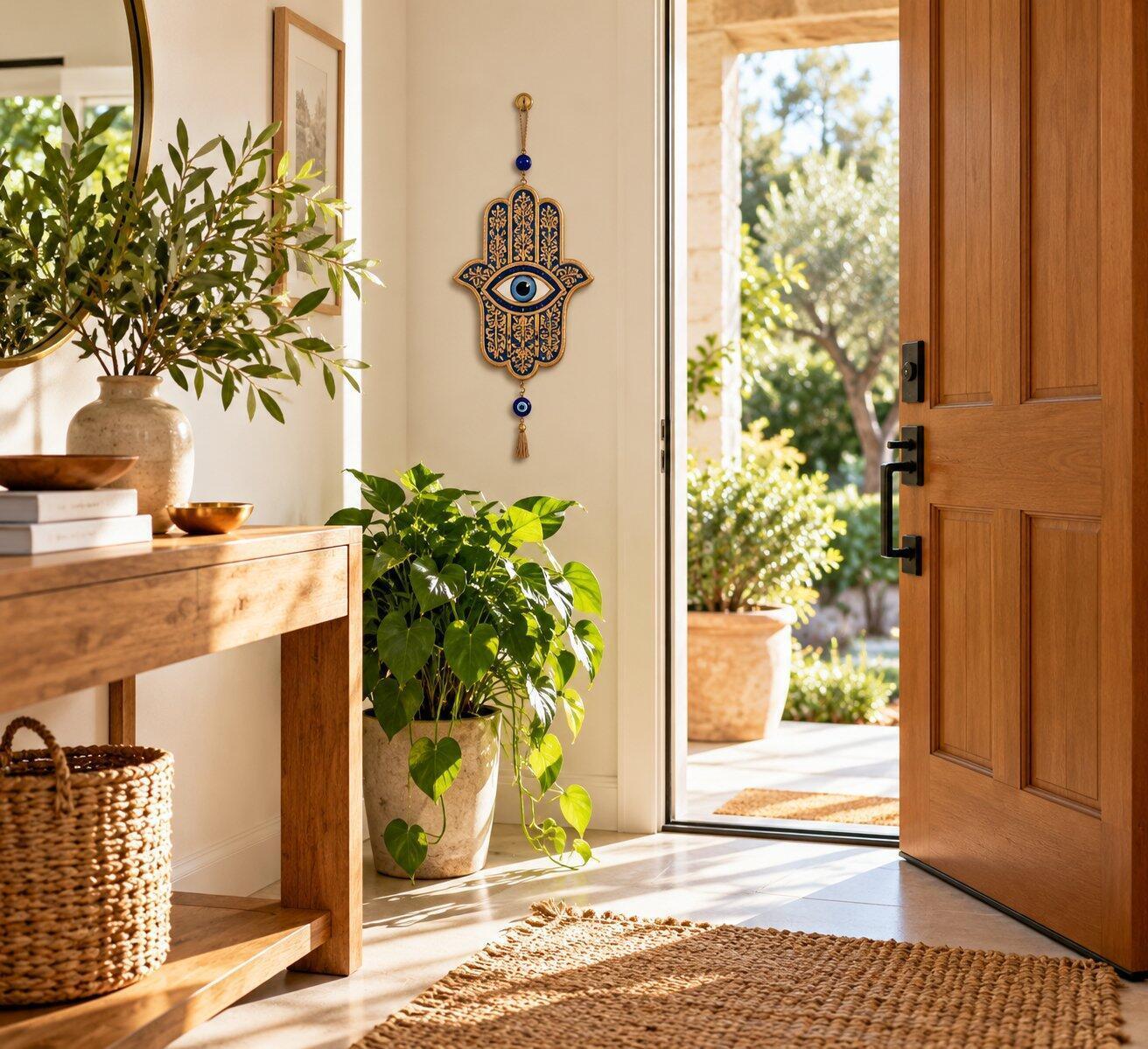
Pair it with a clean, well-lit entrance: our front door feng shui guide and these entryway plants help the whole area feel welcoming.
Choose a Hamsa that resonates with your aesthetic and the color energy you want to activate. Turquoise and blue are classic choices (water element, associated with protection and wisdom), while gold activates prosperity, and white brings purity and clarity.
🔗 AFFILIATE LINK → Amazon: "hamsa hand door hanging"💬 CTA sugerido: "You can find a door hamsa in gold or silver like this to match your entrance hardware and tie the look together naturally."
Living Room
A Hamsa displayed prominently in the living room protects the heart of the household — the space where family gathers, guests are welcomed, and daily life unfolds. In this context, it functions less as a specific directional cure and more as a general protective and blessing presence. A large Hamsa as wall art makes a beautiful focal point while serving its energetic purpose. Pair it with other protective symbols — a small evil eye, a crystal cluster — for a layered protective display.
Bedroom
The bedroom Hamsa is popular for people who want protection during sleep — a time when we're most open and vulnerable energetically. Place it above the bed's headboard or on the wall you face when lying down. Avoid placing it directly facing the foot of the bed (in feng shui, this is a sensitive spot energetically). A smaller Hamsa on a nightstand or hanging from the bedpost is a subtler but equally effective bedroom placement.
Keep the rest of the room calm too, with these bedroom layout rules and restful bedroom colors.
Home Office
In a home office or workspace, the Hamsa offers protection from competitive or draining professional energies. If you work with the public, lead teams, or work in any highly competitive field, a Hamsa in your workspace provides a symbolic layer of energetic shielding. Place it where you can see it from your desk — either above your monitor, on the wall you face, or on a small shelf at eye level.
🔗 AFFILIATE LINK → Amazon: "hamsa office desk decor"💬 CTA sugerido: "A compact hamsa desk piece like this is a subtle way to add protective energy to a workspace without it feeling out of place."
Choosing the Right Style and Material
Hamsa hands come in an extraordinary range of materials, styles, and sizes. For feng shui purposes, the material influences the elemental energy the symbol carries. Ceramic or clay Hamsas bring earth element energy — grounding, stabilizing, and nurturing. Metal Hamsas (silver, gold, brass) bring metal element energy — precision, clarity, and strength. Wooden Hamsas bring wood element energy — growth, vitality, and family energy. Fabric or woven Hamsas are softer and more flexible energetically, suitable for spaces where you want protection without a strong elemental presence.
Where to find one: browse Hamsa hand wall hangings for the entryway or living room, or a Hamsa with an evil eye if you want the extra protective symbol. Metal and ceramic pieces are the easiest to keep clean.
The most important thing is to choose a Hamsa that genuinely appeals to you — one that you feel good looking at every day. A symbol you love carries more personal energy than a "correct" one you feel indifferent toward.
What to Avoid
A few placement notes worth keeping in mind. Avoid placing a Hamsa in the bathroom — in feng shui, protective symbols generally don't belong in spaces associated with waste and drain. The kitchen is acceptable but not ideal unless the Hamsa is in an elevated, respected position (not near food scraps or clutter). And as with any feng shui symbol, keep the area around your Hamsa clean and clear — a dusty, cluttered display undermines the energy of even the most powerful symbol.
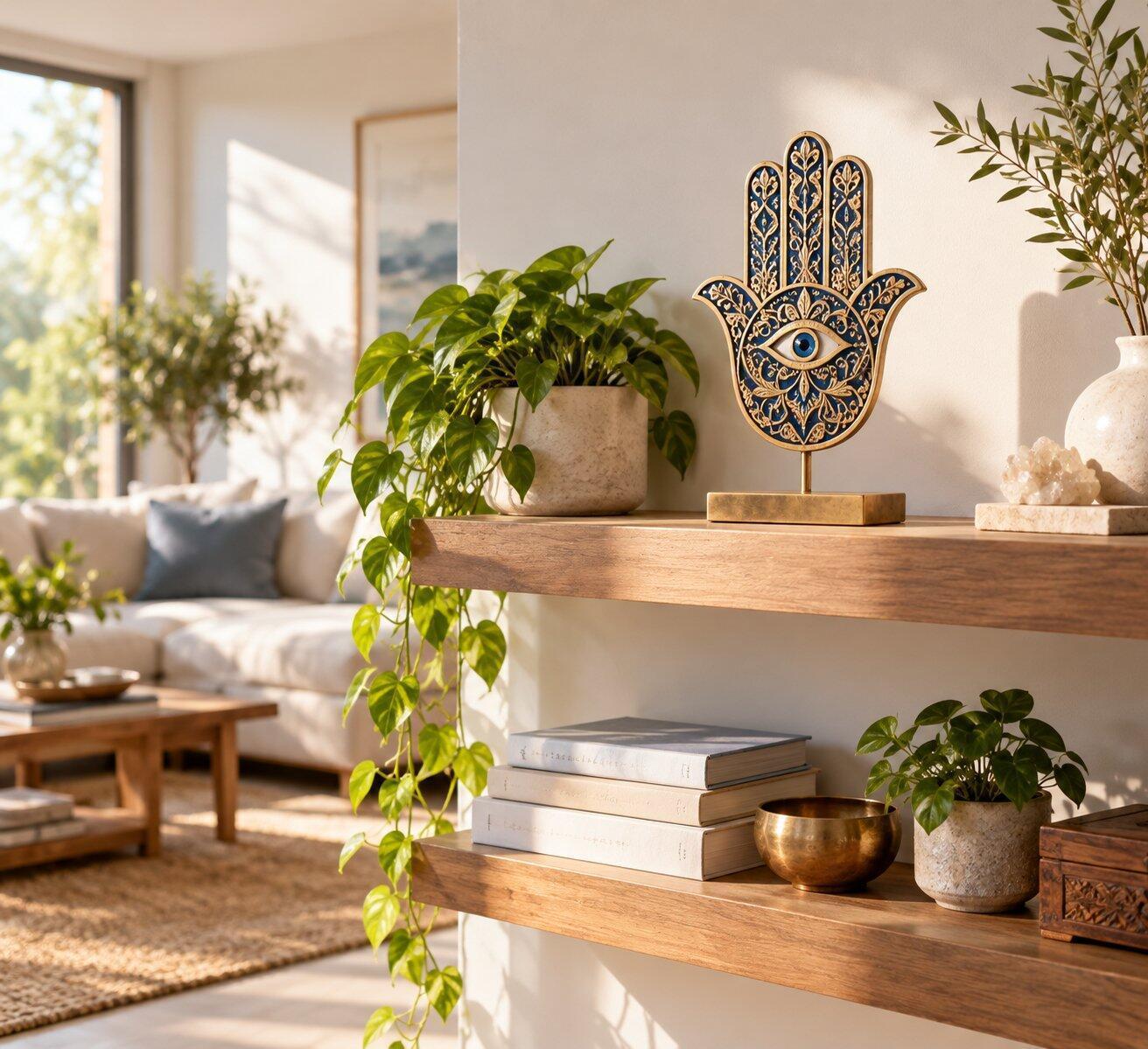
If you receive a Hamsa as a gift, consider it especially auspicious — gifted protective symbols are thought to carry an extra layer of intention from the giver. Treat it with care, place it thoughtfully, and let it do its work.
Hamsa Hand: Frequently Asked Questions
Should the Hamsa hand point up or down?
Fingers pointing up is the more protective position, used to deflect negativity. Fingers pointing down is used to invite blessings and good fortune into the home.
Where is the best place to hang a Hamsa hand?
Near or above the front door is the most traditional spot, because it protects the main entry point of energy into the home.
Can I put a Hamsa hand in the bathroom?
It is best avoided. Protective symbols are usually kept out of bathrooms, which feng shui links with draining energy.
Can I use a Hamsa together with other feng shui symbols?
Yes. It works well with other protective symbols at the entrance, as long as the area stays uncluttered and each piece has space around it.
More Feng Shui Tips