
Maneki Neko Feng Shui: Best Placement for Wealth, Luck, and Protection


The Maneki Neko, often called the lucky cat or beckoning cat, is one of the most recognizable symbols of prosperity in Japanese culture.
It is commonly displayed near entrances in shops and homes, and different paw positions and colors are widely associated with different kinds of luck.
In Feng Shui-inspired decor, many people use it as a symbolic object to support intentions around welcome, abundance, and protection. This guide will help you choose the right Maneki Neko and place it in a way that feels purposeful and visually natural in your space.
- What a Maneki Neko Means
- Best Maneki Neko Placement for Wealth and Luck
- How Paw Position Changes the Meaning
- Maneki Neko Colors and Their Feng Shui Feel
- How to Choose and Buy the Right Maneki Neko
- Where Not to Place a Lucky Cat
- A Simple Way to Style Maneki Neko at Home
- The Best Approach to Maneki Neko Feng Shui
What a Maneki Neko Means
A Maneki Neko is a Japanese figurine of a cat with one raised paw in a beckoning gesture. Although many people casually call it a “waving cat,” the pose is traditionally meant to invite good fortune, customers, or prosperity rather than simply wave hello. It is strongly associated with storefronts, restaurants, and other business entrances, but it is also used in households as a symbol of welcome and good luck.
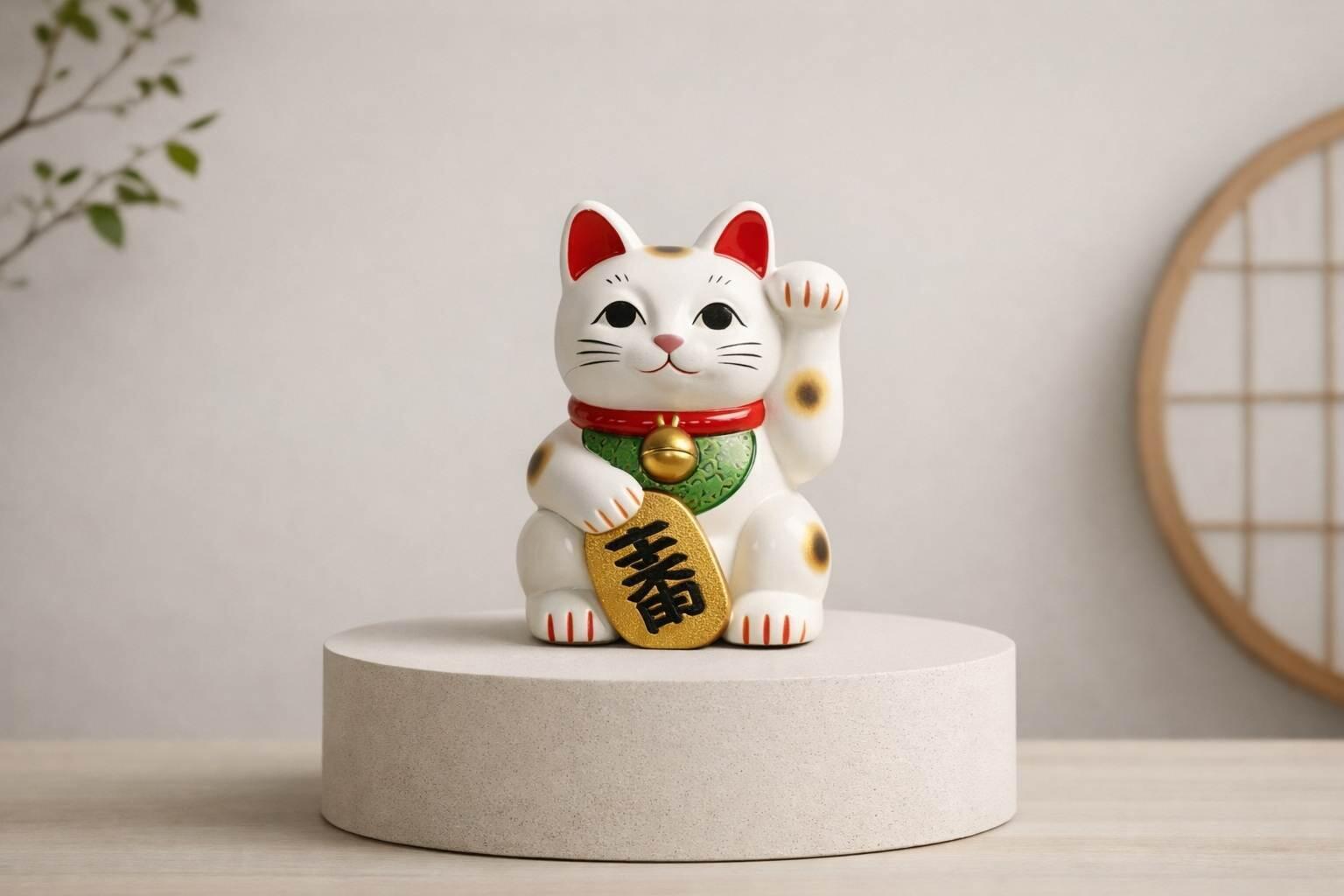
This matters for Feng Shui styling because placement works best when the symbol matches its purpose. A Maneki Neko is not just random decor. It is a symbolic invitation, so where you place it should support the idea of attracting energy into the space rather than hiding it on a shelf with unrelated objects.
Best Maneki Neko Placement for Wealth and Luck
The most common and practical place to display a Maneki Neko is near the front entrance. That matches its traditional use near doors, where it symbolically welcomes people and opportunity into a space. In a home, that can mean an entry console, a shoe cabinet, a foyer shelf, or a small table close to the main door. In a business, it is often placed near the entrance or checkout area where it is visible to arriving customers.
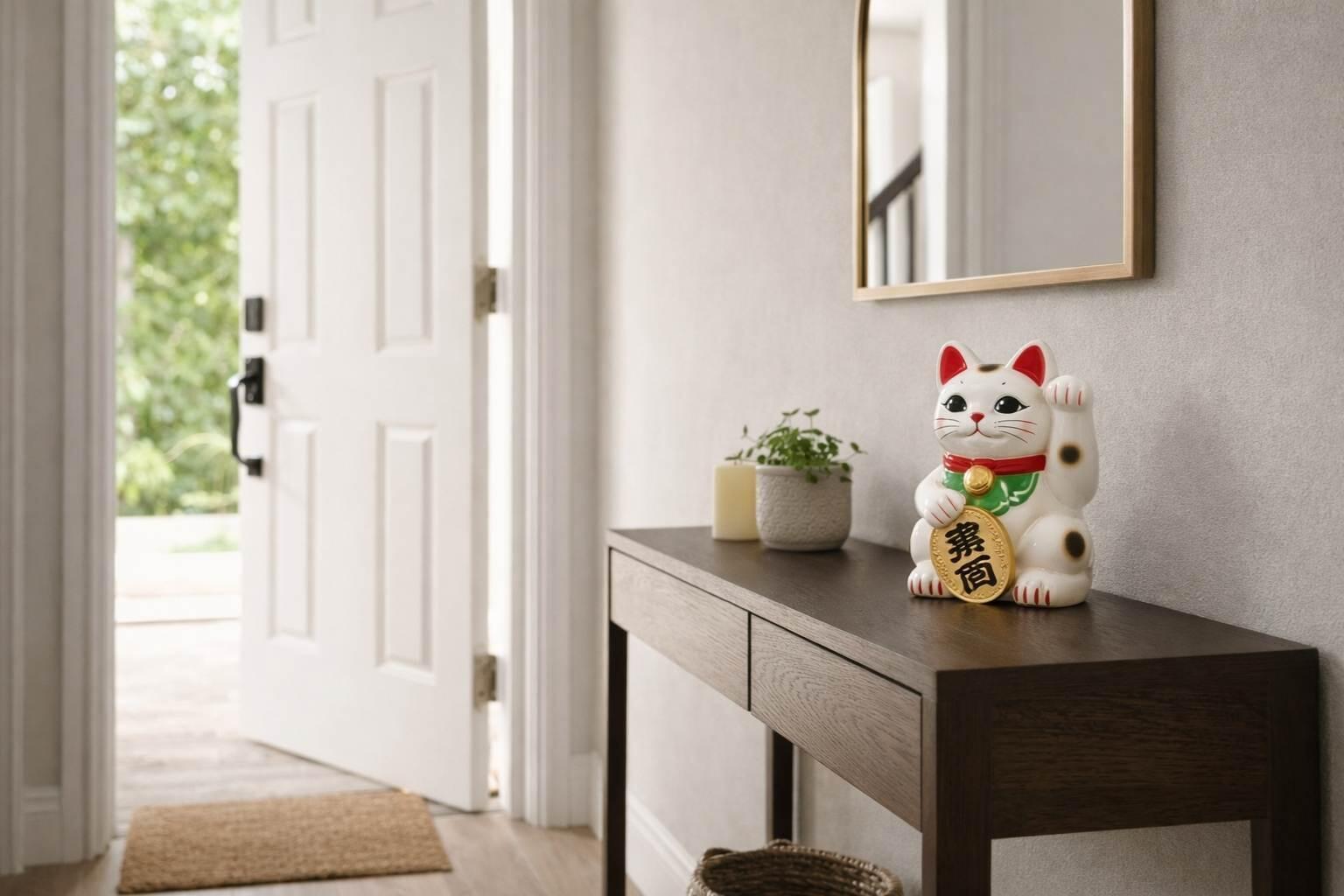
A good placement setup usually looks like this:
visible when entering the space
elevated rather than placed directly on the floor
uncluttered and easy to notice
angled toward the entry or open flow of the room
For wealth-focused styling, choose a spot that feels active rather than forgotten. In Feng Shui terms, symbols meant to invite support tend to work best in areas with movement, light, and daily attention. Even if you do not follow classical Feng Shui rules strictly, this placement logic keeps the object intentional and respectful.
How Paw Position Changes the Meaning
One of the most discussed details is which paw the cat raises. A left paw raised is commonly associated with attracting customers or people, while a right paw raised is commonly linked with attracting money or financial luck. Some versions raise both paws, which is often interpreted as extra protection or broader good fortune, though meanings can vary by maker and region.
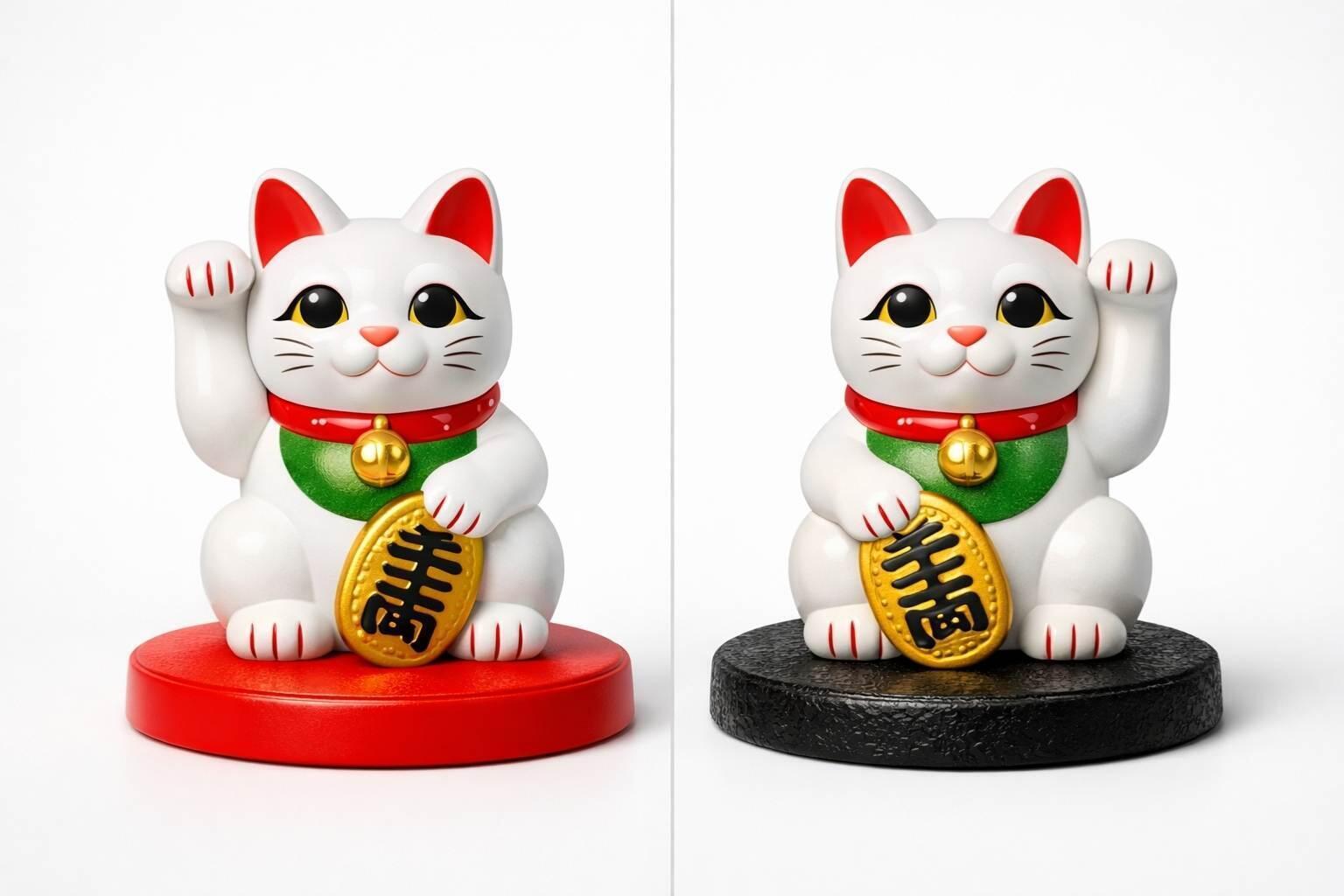
For simple Feng Shui-inspired use, this is an easy way to choose:
Left paw raised
Best for:
welcoming guests
people-centered businesses
relationship-oriented spaces
social areas near the entry
Right paw raised
Best for:
money goals
workspaces
home offices
business counters or cash areas
Both paws raised
Best for:
a more protective symbolism
mixed goals
spaces where you want a bold statement piece
If your main goal is abundance, a right-paw Maneki Neko is usually the clearest fit. If your goal is welcome and flow, the left paw is often the better choice.
Maneki Neko Colors and Their Feng Shui Feel
Color adds another layer of symbolism. Common modern interpretations link different colors with different intentions, though meanings can vary across sellers and traditions. White is often associated with happiness or purity, black with protection, red with health, and gold with wealth or financial prosperity.
Here is a simple way to use those meanings in your home:
Gold Maneki Neko
Use for wealth intentions, money corners, business areas, or a home office.
Black Maneki Neko
Use near the entry when you want the symbol to be more protective than decorative.
White Maneki Neko
Use for a light, balanced, everyday good-luck feeling that blends easily with modern interiors.
Red Maneki Neko
Use when your focus is vitality, health symbolism, or bold visual energy.
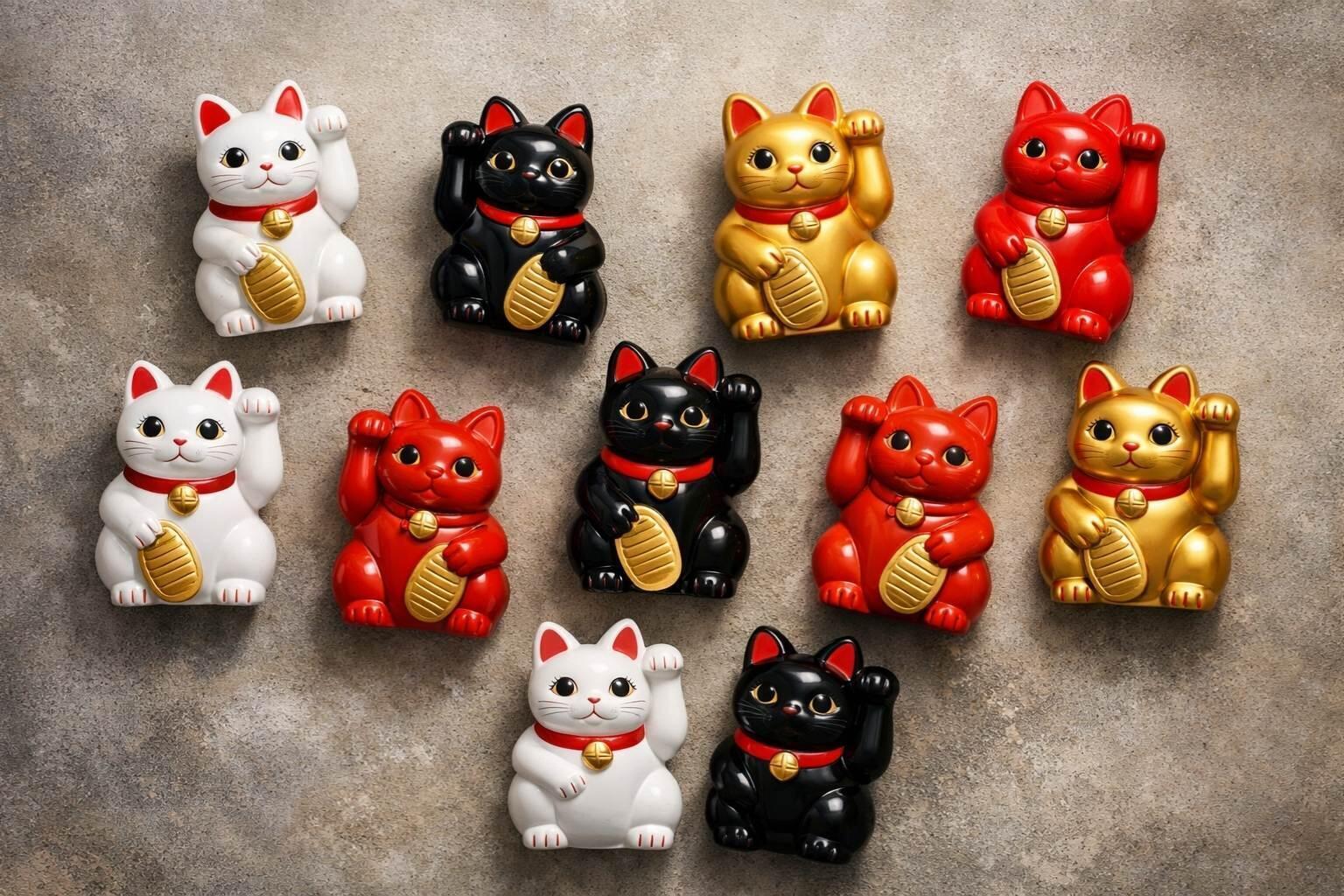
The easiest method is to match the color to the feeling you want the area to hold. That keeps the object integrated into your decor instead of making it look random or overly theme-driven.
How to Choose and Buy the Right Maneki Neko
If you're planning to add a Maneki Neko to your home or workspace, choosing the right one can make the symbol feel more intentional and meaningful. There are many styles available today—from traditional ceramic figurines to modern solar waving Maneki Neko designs—so the key is selecting one that aligns with both your intention and your decor.
Start by thinking about your main goal.
If you want to emphasize wealth and prosperity, a gold Maneki Neko with the right paw raised is one of the most popular options. For homes where the focus is more on welcoming people, a left-paw Maneki Neko may feel like a better symbolic match.
Material and size also matter. Smaller ceramic versions work well for entry consoles, shelves, or desks, while slightly larger pieces can become a focal point in an entryway or business counter. Many people prefer traditional ceramic lucky cats because they most closely resemble classic Japanese design.
When shopping for one, look for:
clear paw position (left or right, depending on your goal)
a color that matches your intention (gold, white, black, or red)
a size that fits comfortably near the entrance or workspace
a design that blends naturally with your home decor
You can find well-made Maneki Neko figurines in home decor shops, Japanese specialty stores, and online marketplaces. If you're looking for an easy starting point, this traditional Maneki Neko option is a popular choice for most entryways and desks.
Click Here to discover the best Maneki Neko for your Home or Business
Choosing a design that feels authentic and visually balanced will help the lucky cat feel like a thoughtful symbol rather than just another decorative object.
Where Not to Place a Lucky Cat
Even symbolic decor can lose impact when it is placed carelessly. A Maneki Neko is usually best avoided in spots that feel dirty, hidden, or overly chaotic.
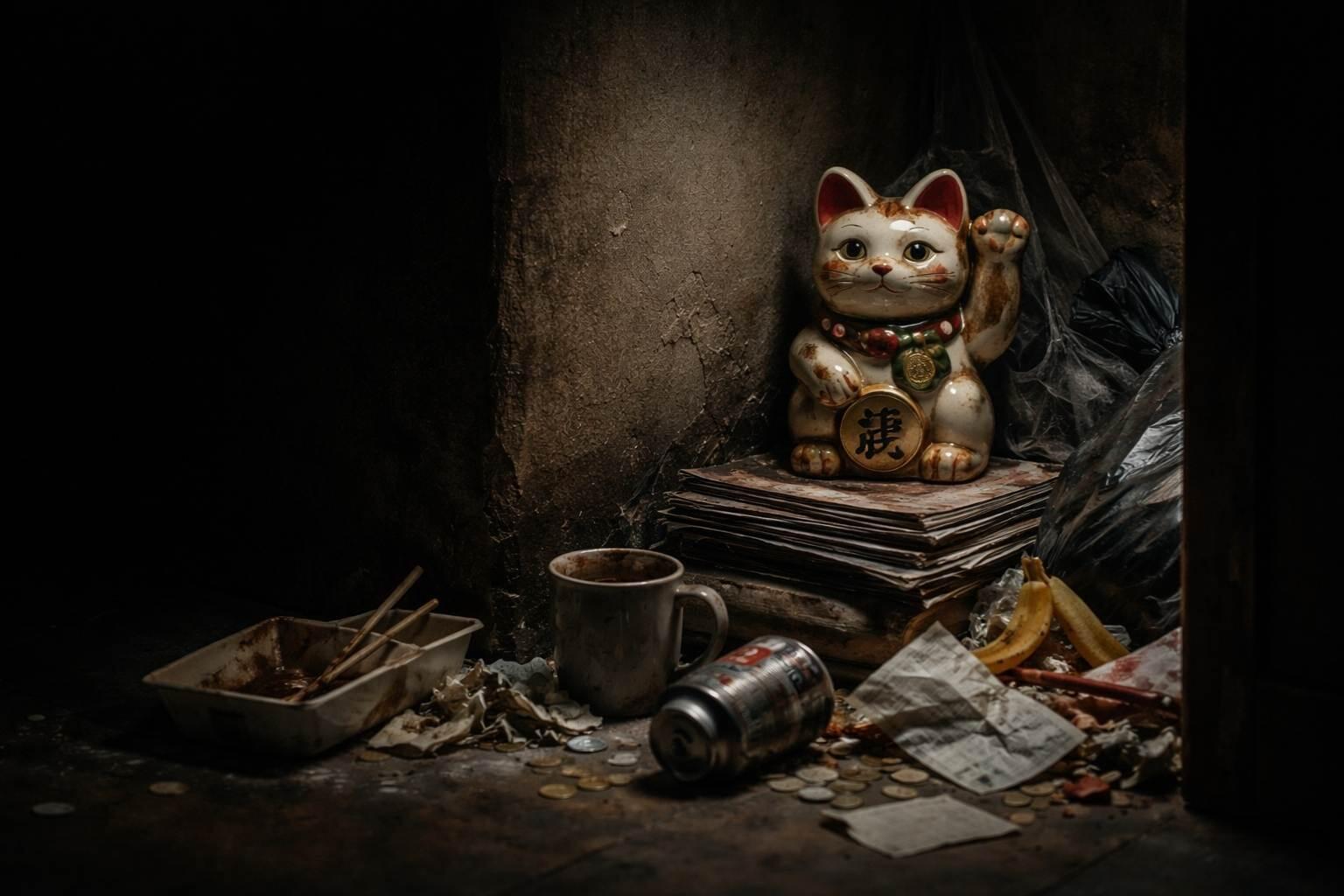
Try not to place it:
Directly on the floor
Inside a crowded storage shelf
In a bathroom
In a laundry corner
Behind larger decor objects
In a dark area, no one notices
These are not rigid rules, but they are helpful styling principles. If the object represents welcome, luck, or protection, it makes sense to place it where those qualities can be seen and acknowledged. That is part of why entrances remain the most intuitive and popular location.
A Simple Way to Style Maneki Neko at Home
You do not need to redesign your whole home to use a lucky cat well. A small, intentional display usually works better than an elaborate setup.
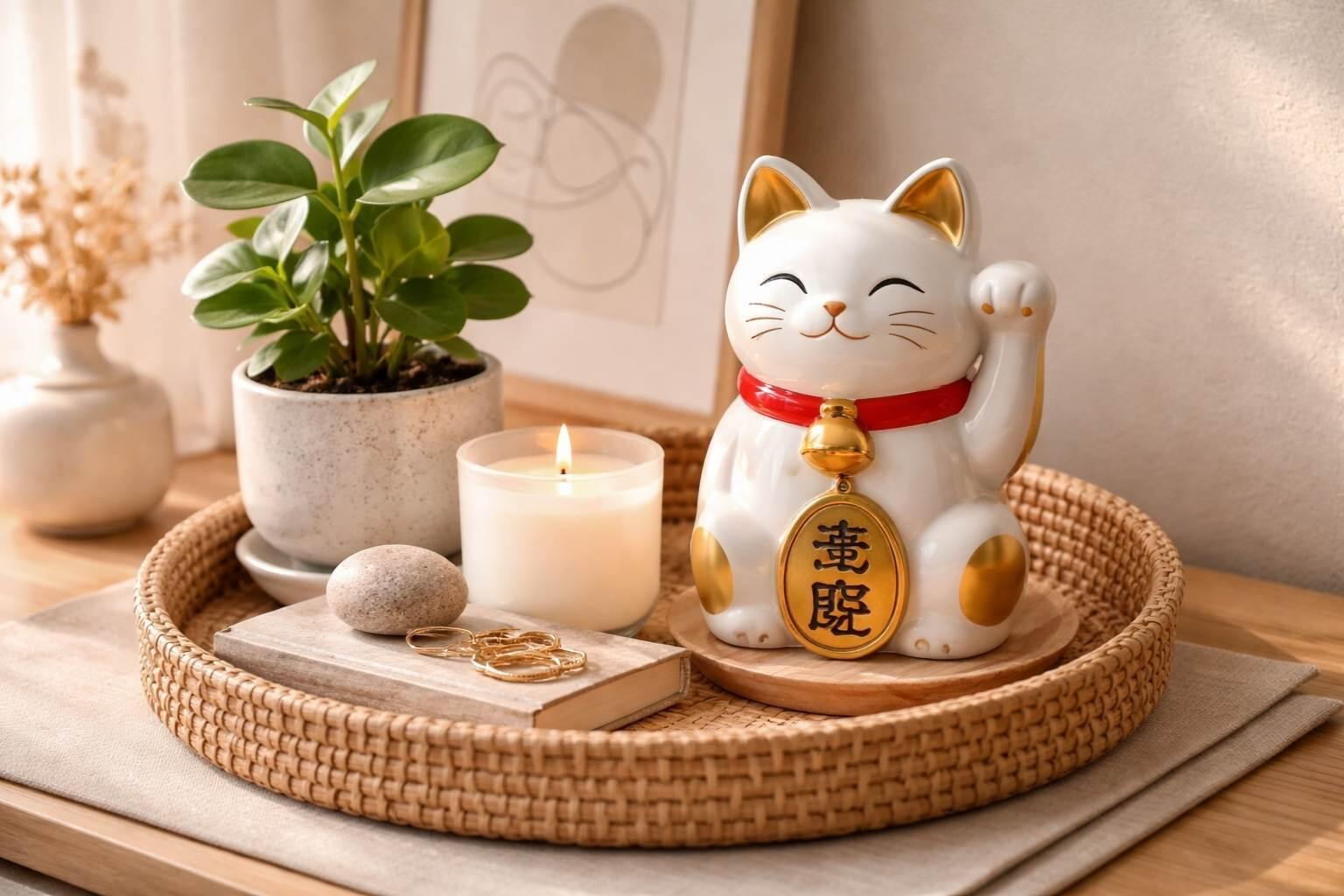
Try this simple formula:
Pick your goal: wealth, welcome, or protection.
Choose the paw position that fits that goal.
Choose a color that supports the mood you want.
Place it near the front entrance or in a purposeful work area.
Keep the surrounding surface clean and visually calm.
For example, a gold right-paw Maneki Neko on a tidy entry console creates a clear abundance theme. A black Maneki Neko near the front door can support a more protective feel. A white left-paw version works well in a bright, friendly foyer where the goal is warmth and welcome.
The Best Approach to Maneki Neko Feng Shui
The best Maneki Neko placement is usually the one that keeps the symbol visible, intentional, and aligned with your goal.
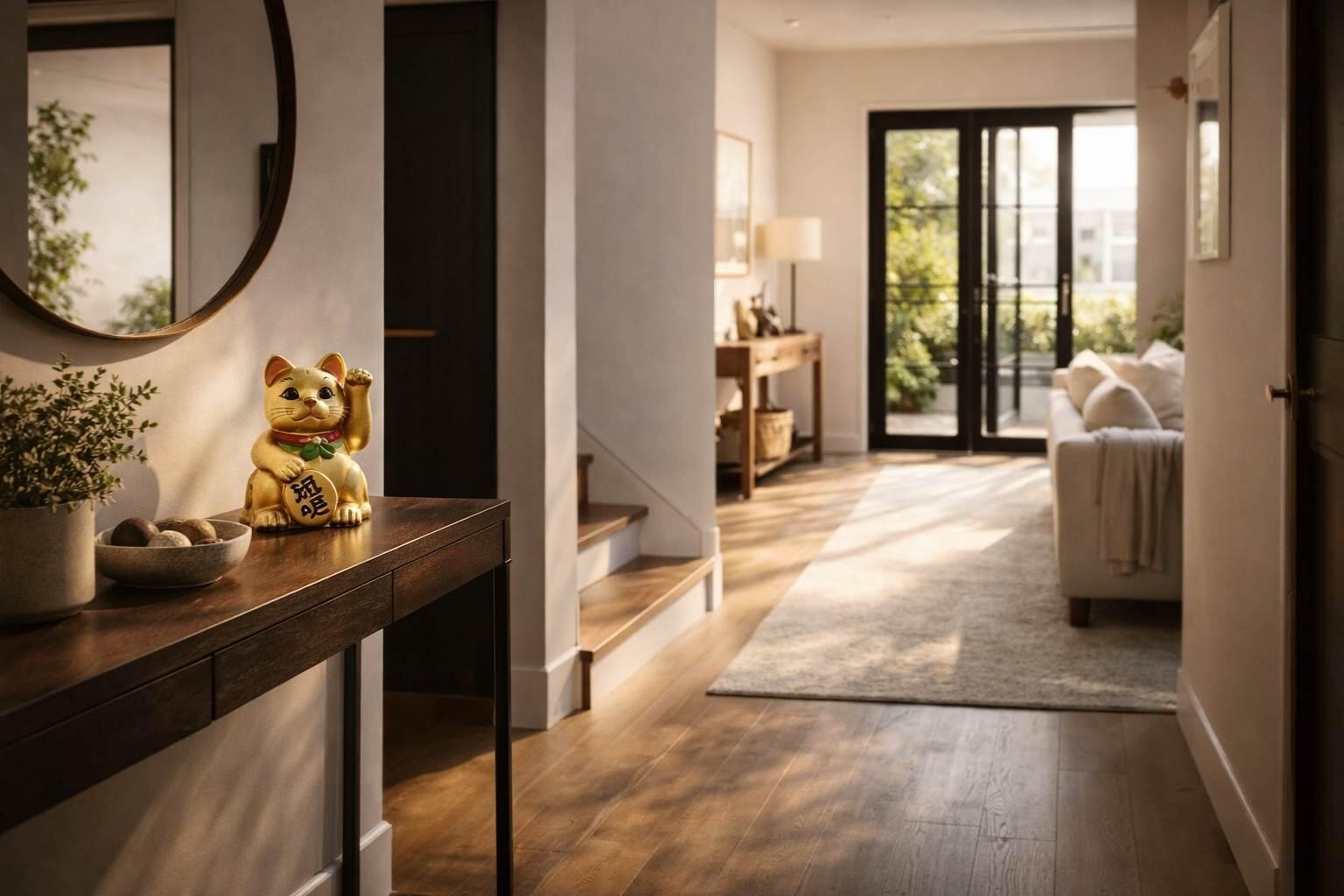
Near the entrance is the most classic choice, while paw position and color help refine the meaning. Tradition and modern decor do not have to clash when you use the object thoughtfully.
If you want to use a lucky cat in your home, start simple: choose one purpose, one placement, and one style that feels natural in your space. That usually creates a stronger result than trying to force too many meanings into one object.
More Feng Shui Tips