
Feng Shui Bedroom Colors: How to Choose the Right Shade for Rest and Romance


The color of your bedroom affects more than just the way it looks. In feng shui, color carries energy, and the shades you surround yourself with while you sleep and rest have a quiet but real influence on how you feel when you wake up, how deeply you rest, and even how connected you feel in your closest relationships.
Choosing the right feng shui bedroom colors is not about following strict rules or painting your walls a specific shade. It is about understanding the energy different colors carry and making choices that support what you actually want your bedroom to do for you, whether that is better sleep, more calm, or a stronger sense of intimacy.
Why Color Matters More in the Bedroom Than Anywhere Else
The bedroom is the most personal room in a home. You spend roughly a third of your life there, and your nervous system is in a more open, receptive state while you sleep. This means the visual and energetic environment of your bedroom has an unusually direct effect on your well-being.
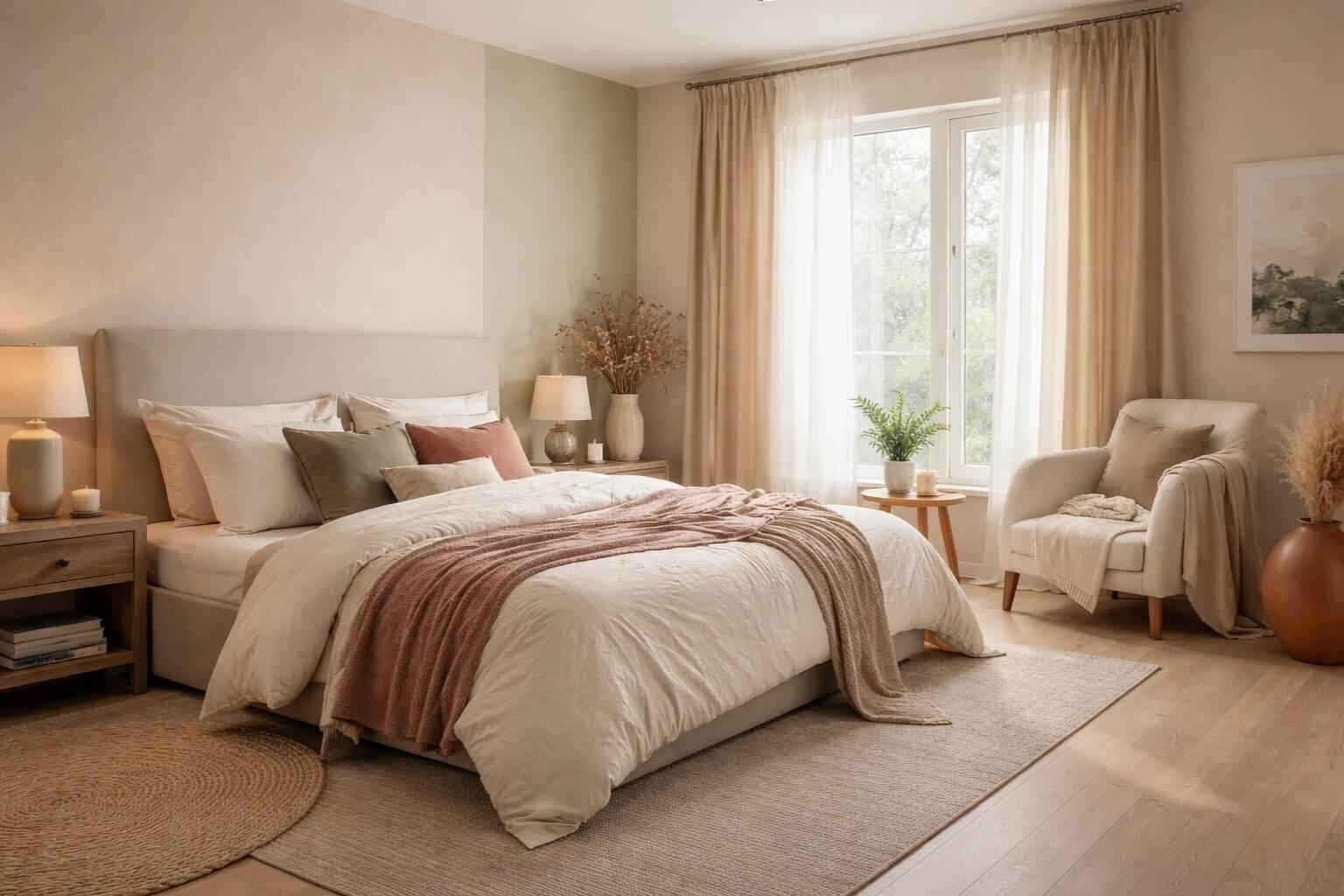
In feng shui, the bedroom is primarily governed by yin energy, which is soft, receptive, and restorative. Colors that support yin energy tend to be muted, warm, or earthy rather than bright, cool, or highly saturated. The goal is to create a space that feels like a genuine retreat.
The Best Feng Shui Bedroom Colors
Soft neutrals and warm whites
Warm whites, creamy off-whites, and soft beiges are some of the most consistently recommended bedroom colors in feng shui. They create a sense of openness and calm without introducing competing energy. They also reflect light gently, which makes a room feel more spacious and airy without feeling clinical.
If your bedroom currently feels heavy or overwhelming, shifting toward a warm neutral palette is often the simplest and most effective change you can make.
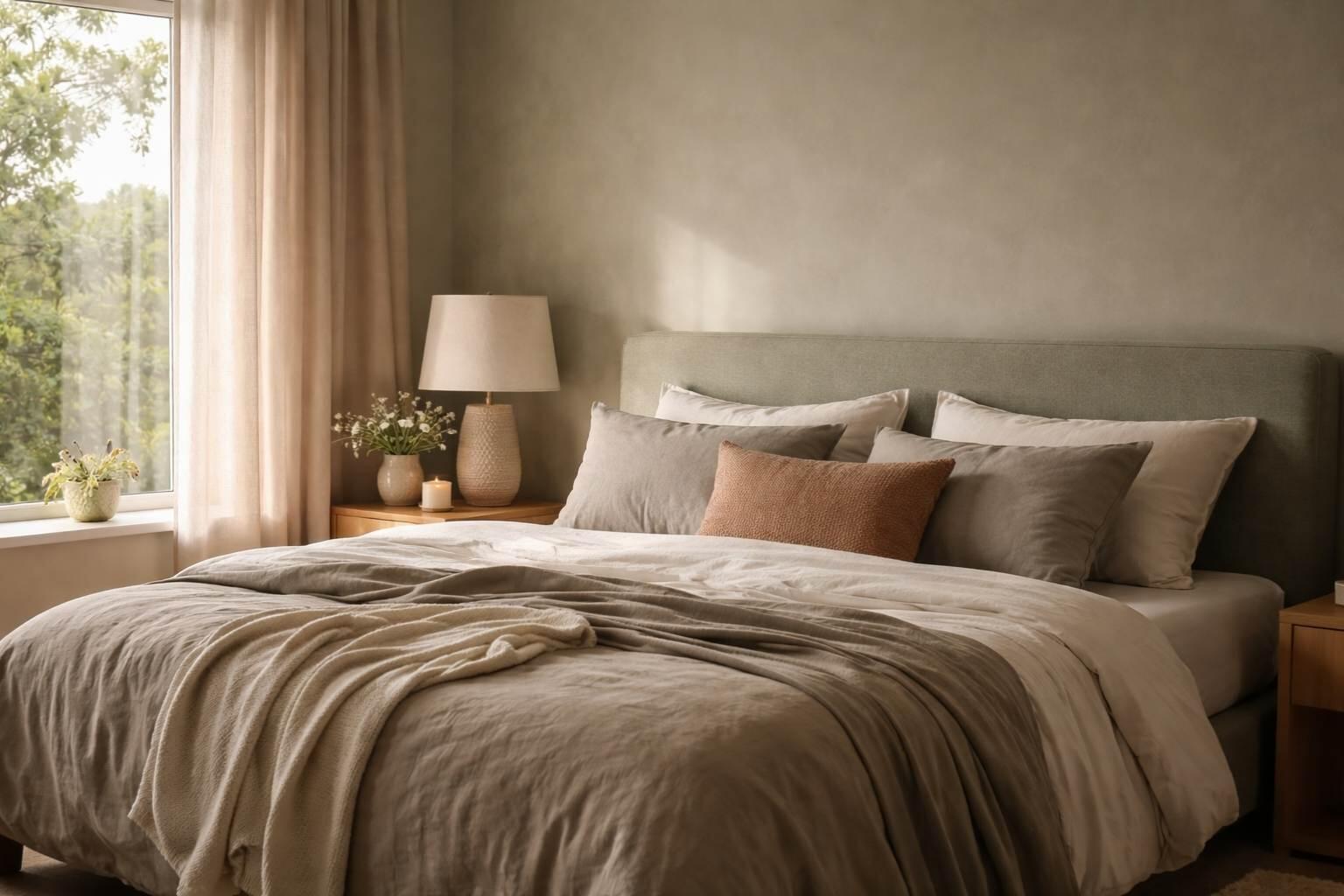
Earth tones: sand, terracotta, warm taupe
Earth tones bring grounding, stability, and a sense of being held. In feng shui, earth energy supports relationships and the sense of being nurtured, which makes these colors particularly good for bedrooms shared by couples. A warm terracotta accent wall, sandy linen bedding, or a taupe rug can introduce earth energy without making the room feel heavy.
Starting with a linen duvet in terracotta or warm sand is one of the simplest ways to shift a bedroom toward a grounding, earth-toned palette.
Soft pinks and peach tones
Pale pinks and warm peach tones are closely associated with the southwest sector of the bagua, which governs relationships and love. These colors are gentle enough to support rest while also introducing a soft, nurturing warmth that benefits both singles and couples. They do not need to dominate the room. A pink throw, blush pillowcases, or a peach lamp shade is often enough to shift the energy.
Muted greens and sage
Soft, desaturated greens like sage, eucalyptus, or dusty olive introduce wood energy in a gentle way. Wood energy supports growth and vitality, and in a muted form it is calm enough for a bedroom. These shades are particularly good if you want the room to feel more alive and connected to nature without sacrificing the sense of rest.
Dusty blues and soft grey-blues
Deeper blues can be cooling and activating in their pure form, but dusty, greyed, or muted blues have a more yin quality that works well in bedrooms. Think slate, dusty teal, or grey-blue rather than bright cerulean or navy. These shades support a sense of calm reflection and tend to pair well with warm wood tones to prevent the room from feeling cold.
Adding sage green curtains or a dusty blue throw introduces calm, muted color energy that supports rest without overpowering the room.
Colors to Use Carefully in the Bedroom
Bright or pure red
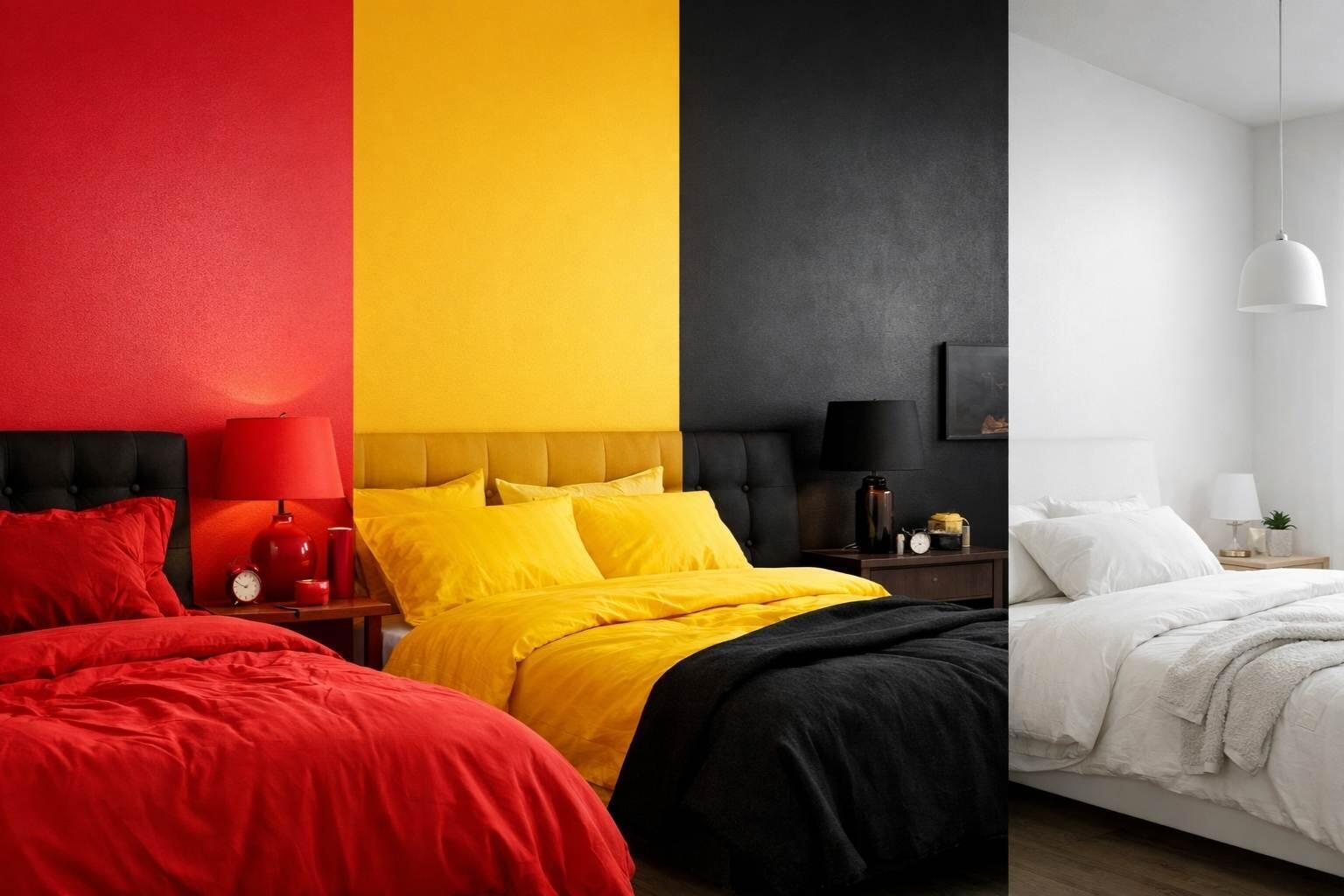
Red is a fire color, and while it is traditionally associated with luck and passion, strong red in a bedroom introduces too much activating energy for most people. It can interfere with sleep and create a sense of restlessness. If you want to introduce the warmth of red, opt for deep burgundy, terracotta, or muted rose instead.
Strong yellow or orange
Bright, saturated yellows and oranges carry a lot of stimulating energy that can work against the restful quality a bedroom needs. Warm, muted versions of these colors, like golden ochre or burnt sienna, are more appropriate and can be used in small doses as accents.
Cool, bright white
Stark bright white, especially with cool undertones, introduces metal energy that can feel sharp or clinical in a bedroom. If you love white, lean toward a warm white with yellow or pink undertones rather than a pure or blue-white.
Dark charcoal or black
While deep, moody bedrooms are popular in interior design, heavy use of very dark colors can create too much yin energy and make the space feel oppressive or draining rather than restful. If you love darker tones, use them as accents against a lighter base and keep the lighting warm.
Choosing Colors Based on Your Bedroom's Bagua Position
If you have mapped out the bagua of your home, the position of your bedroom gives you additional guidance on colors that will feel naturally supported in that space.
- Southwest bedroom (relationships): Earth tones, pinks, soft yellows
- East bedroom (health and family): Sage green, muted teal, warm wood tones
- North bedroom (career): Soft greys, dusty blue, cream with dark blue accents
- Southeast bedroom (wealth): Soft greens, teals, touches of purple
- Northwest bedroom (helpful people): White, grey, metallic accents, warm neutrals

You do not need to repaint every time you consult the bagua. These are starting points that help you understand which direction naturally supports the colors already in the room.
How to Layer Bedroom Colors Effectively
You rarely need to repaint an entire room to shift the energy. Most of the time, layering color through textiles, decor, and lighting is more than enough.
- Bedding is the largest color surface in most bedrooms and one of the easiest to change
- Curtains or blinds affect the quality of light and introduce color at eye level
- A rug grounds the color palette and introduces texture from below
- Accent pillows and throws let you test a color before committing to it
- Lampshades and bulb warmth shift the feel of every color in the room at night
Switching to warm white linen curtains like these softens the light throughout the day and keeps the room feeling open without introducing cool or harsh tones.
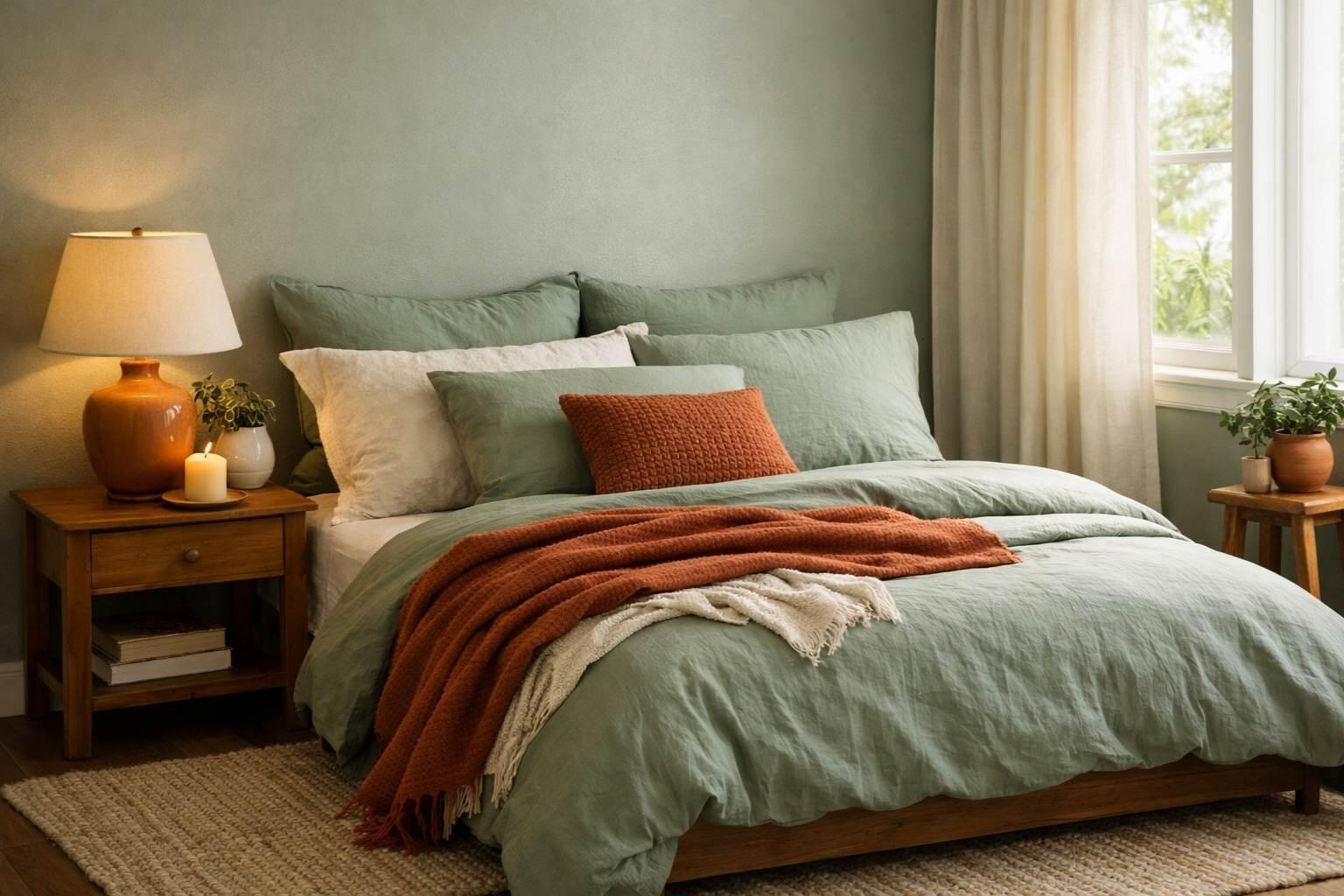
A Simple Color Reset for Your Bedroom
If you are unsure where to start, try this approach. Remove anything in the bedroom that feels visually loud, jarring, or out of place. Then look at what remains and notice if the overall palette feels warm and muted, or if it leans toward bright, cool, or highly saturated tones.
If the room feels more energizing than restful, introduce one soft neutral element. This might be a new set of linen bedding, a warm throw, or simply changing a lampshade to a warmer tone. Give it a week and notice whether the room feels different to sleep in.
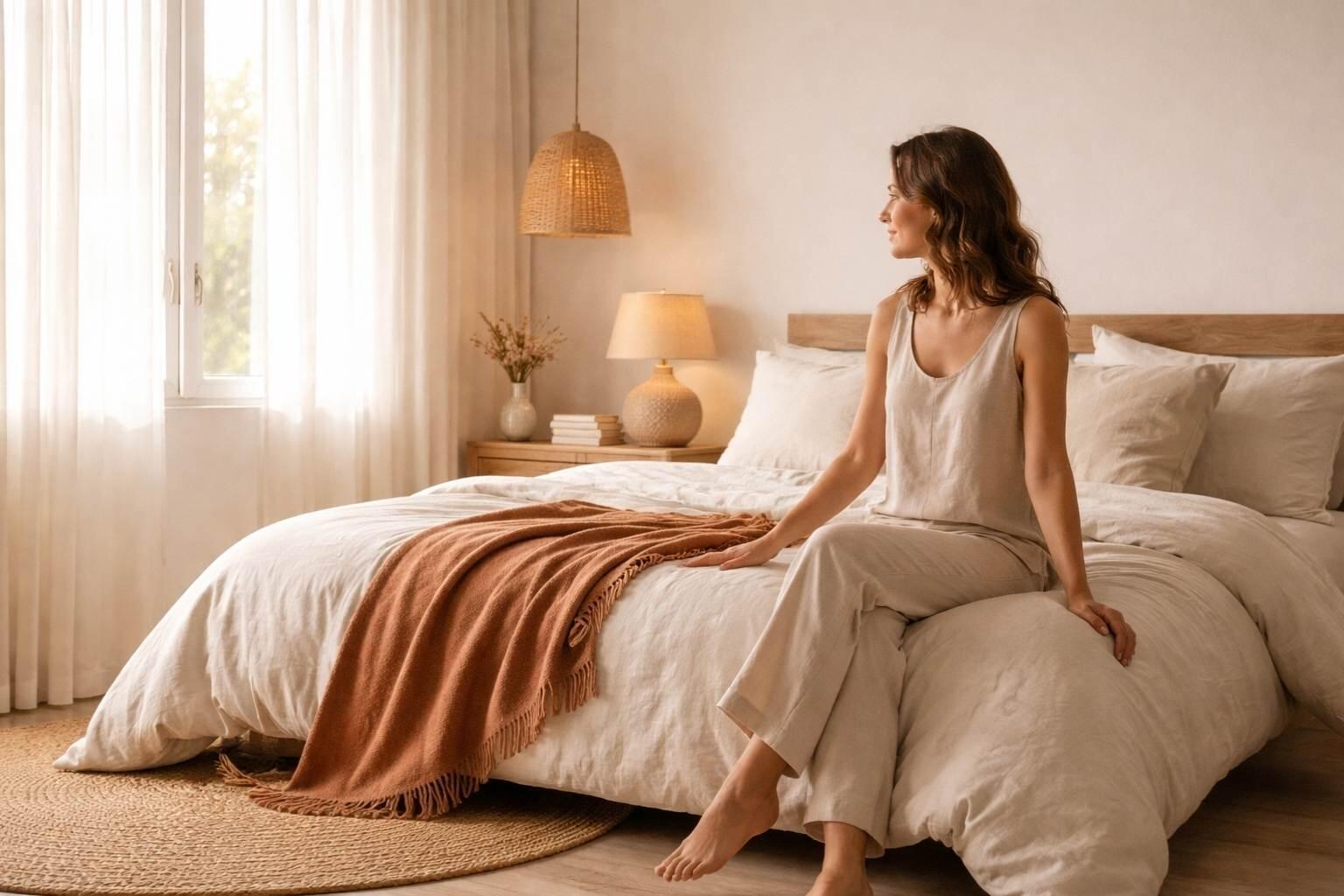
Feng shui bedroom colors are not about achieving a magazine-perfect room. They are about creating a palette that genuinely supports the quality of rest and connection you want your bedroom to provide.
More Feng Shui Tips