
What Is Chi Energy? A Beginner's Guide to Feng Shui Energy Flow at Home


If you've spent any time reading about Feng Shui, you've almost certainly encountered the word chi — sometimes spelled qi. It's described as the life force that flows through everything: your body, your home, your neighborhood.
But what does that actually mean in practical terms? And more importantly, how do you know if your home has good chi or bad chi — and what can you do about it?
This guide cuts through the abstract language and gives you a clear, grounded understanding of chi energy as it applies to your living space. You don't need to embrace ancient Chinese philosophy or believe in invisible forces.
What you need is an understanding of how your environment affects how you feel — and that's something modern psychology, neuroscience, and design theory all confirm. In many ways, Chi is just a name for the quality of your environment.
Whether you're brand new to Feng Shui or you've been dabbling for a while without seeing results, this guide will give you a solid foundation. Once you understand chi, everything else in Feng Shui starts to make sense.
What Is Chi Energy — and Why Does It Matter?
Chi (or qi) is the concept of life energy or vital force that flows through all living things and through space itself. In traditional Chinese thought, chi is the animating force behind health, luck, relationships, and prosperity. In the context of your home, chi refers to the quality and movement of energy through your living space.
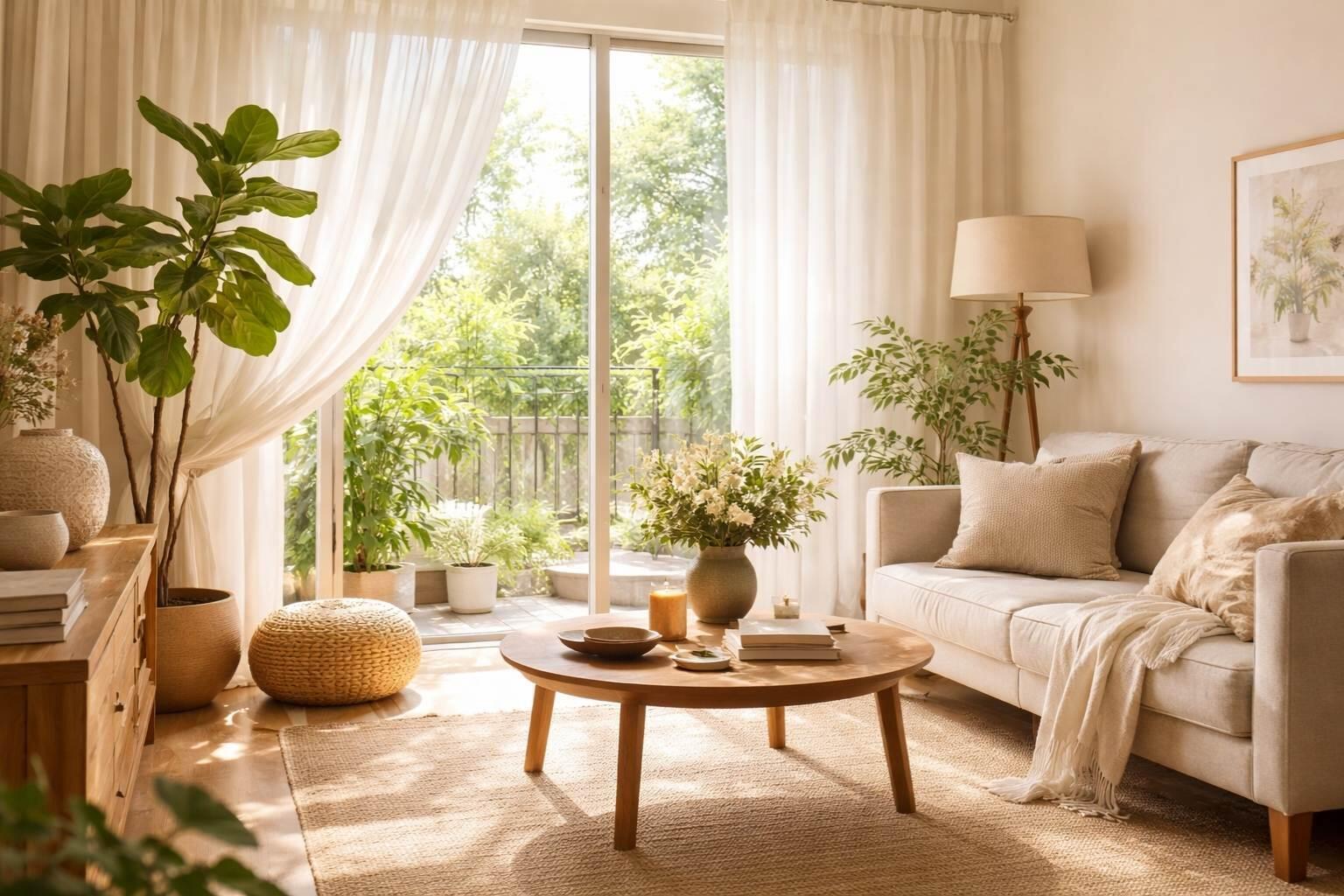
Think of chi like air or water — it can flow freely and nourish everything it touches, or it can stagnate, become blocked, or move too fast and cause turbulence. A home with good chi feels welcoming, calm, and alive. A home with poor chi feels heavy, tense, or draining — even if you can't immediately explain why.
From a modern perspective, what Feng Shui practitioners call "chi" maps closely onto concepts like air quality, natural light, acoustic comfort, spatial flow, and sensory experience. Research in environmental psychology consistently shows that our surroundings profoundly affect our mood, focus, stress levels, and even immune function. When Feng Shui says "improve the chi in this room," it's essentially saying: make this environment better support human wellbeing. That's something everyone can get behind, regardless of their beliefs.
How Chi Moves Through Your Home
Chi enters your home primarily through the front door — which is why Feng Shui puts such emphasis on entryways. From there, it circulates through rooms the way wind or water would: it flows along pathways, pools in open spaces, and gets stuck in corners or cramped areas. The goal is to encourage chi to move gently and evenly throughout your home, reaching every room without rushing or stagnating.

Several factors influence how chi moves:
Layout and pathways: Long, straight hallways allow chi to rush through too quickly (like a river with no curves). Furniture arranged in ways that block natural traffic flow creates obstacles. The ideal layout has gentle curves, clear pathways, and no dead ends.
Light and air: Natural light and fresh air are carriers of chi. Rooms that feel dim, stuffy, or closed off have poor chi circulation. Opening windows regularly, using mirrors to reflect light into darker corners, and keeping air-purifying plants all support good chi movement.
Clutter: Perhaps the most significant chi-blocker in modern homes. Piles of belongings, overcrowded shelves, and unused items create energetic "dams" that prevent chi from flowing freely. In practical terms, clutter creates visual noise that keeps your nervous system in a low-level state of agitation.
A well-placed air-purifying plant does double duty — cleaning your air and keeping stagnant energy moving in corners that need it most.
Signs That Chi Is Blocked or Stagnant in Your Space
One of the most useful skills in Feng Shui is learning to read the energy of a space. Here are common signs that chi is blocked or stagnant in your home:
You feel tired or unmotivated at home, even after a full night's sleep. When the environment doesn't support you energetically, your body responds with fatigue and low drive.

Arguments happen more frequently in certain rooms. Rooms with poor chi — cramped, cluttered, or poorly lit spaces — create friction between the people who use them. The kitchen, in particular, is often a hotspot.
Things break down repeatedly. In Feng Shui, broken items symbolize and perpetuate stagnant energy. Leaky faucets, burned-out bulbs, and broken fixtures that never get repaired are signs that chi isn't circulating well — and they compound the problem.
You avoid certain rooms. If there's a room in your home you instinctively don't spend time in, that's your body telling you the energy there isn't working for you. This might be a home office where you can't focus, a guest room that feels heavy, or a basement that feels oppressive.
You feel relief when you leave home. Your home should feel like a refuge. If you consistently feel lighter or better when you step out, the chi inside needs attention.
Five Practical Ways to Improve Chi Flow at Home
The good news is that improving chi doesn't require major renovations or expensive purchases. Most of the most effective chi-enhancing changes are free or very low cost.
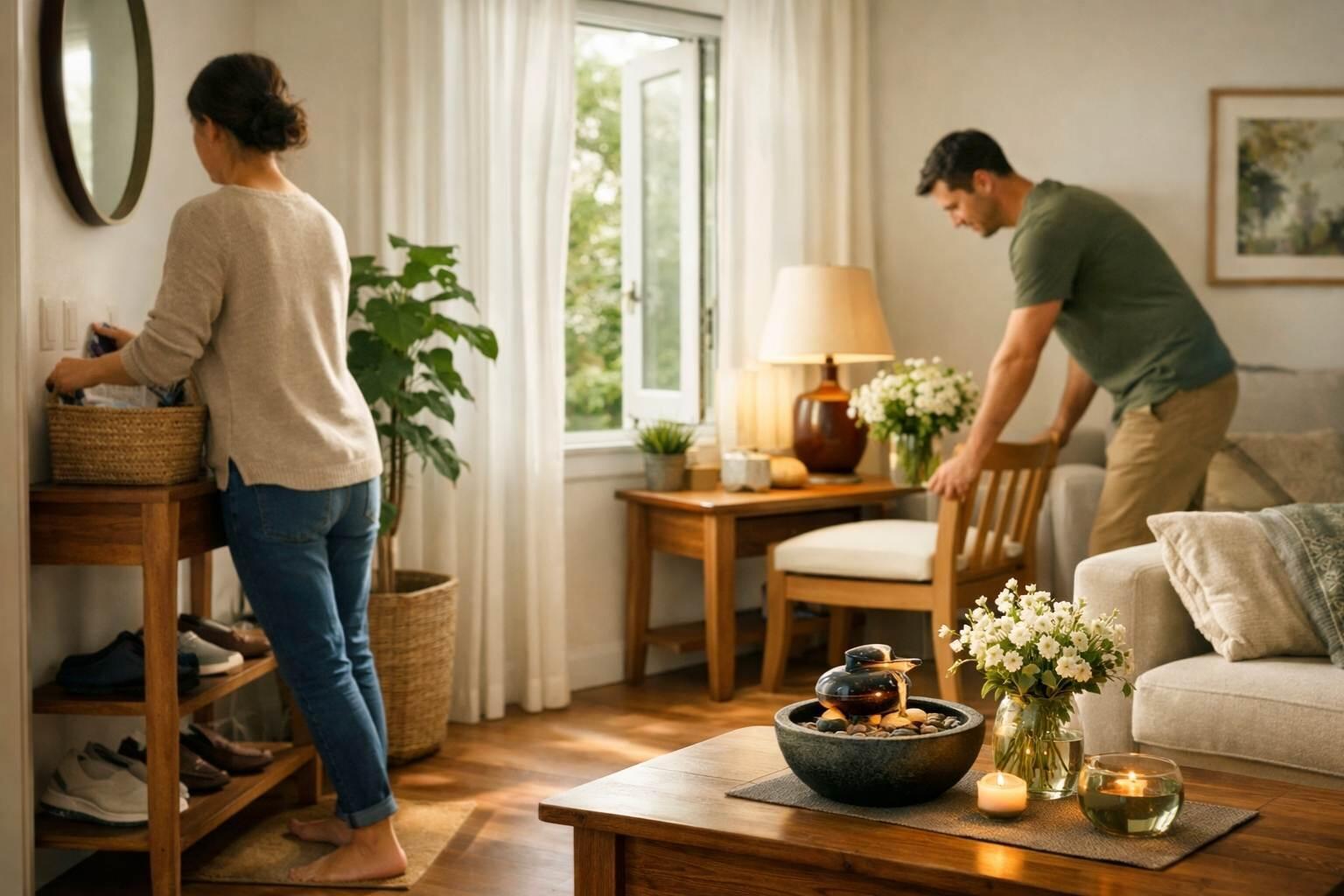
1. Clear clutter immediately. Start with the entrance and any areas you identified as chi-blocked. You don't have to tackle everything at once — even clearing one surface or one corner has a noticeable effect. Get rid of anything broken, unused, or that you genuinely don't love.
2. Improve light and airflow. Open your curtains fully every morning. If natural light is limited, add warm-toned lamps to dark corners. Open windows for at least 15 minutes daily to refresh the air. These simple habits have an outsized impact on how a space feels.
3. Fix what's broken. Make a list of everything in your home that's broken, damaged, or not working as it should. Prioritize fixing these. Even small repairs — replacing a burned-out bulb, fixing a sticky drawer, tightening a loose doorknob — create an immediate sense of flow and forward momentum.
4. Add living elements. Plants, fresh flowers, and flowing water (even a small tabletop fountain) all activate and circulate chi. Choose plants that thrive in your specific light conditions so they stay healthy — a struggling plant creates stagnant energy rather than improving it.
A small indoor water fountain near your entrance or in your living room is one of the easiest ways to keep chi moving — the gentle sound alone shifts the feel of a space.
5. Rearrange furniture for flow. Walk through your home and notice where you naturally hesitate, step around something, or feel cramped. These are chi-blocking spots. Move furniture so pathways are clear, your back isn't to doors when you're seated, and rooms feel open rather than crowded. You don't need to follow strict Feng Shui rules — just follow what feels better to navigate.
Common Chi-Blocking Mistakes People Make Without Realizing It
Even people who are trying to apply Feng Shui sometimes make these common chi-blocking mistakes:
Keeping the front door area cluttered. Shoes piled by the door, overflowing coat racks, and mail stacking up right at the entrance all prevent chi from entering your home freely. Keep this area as clear and welcoming as possible.
Placing the bed or desk with your back to the door. Sitting or sleeping with your back to the main entrance puts your subconscious on alert, which creates ongoing low-level stress. Position yourself so you can see the door — this single change often improves sleep and work productivity significantly.
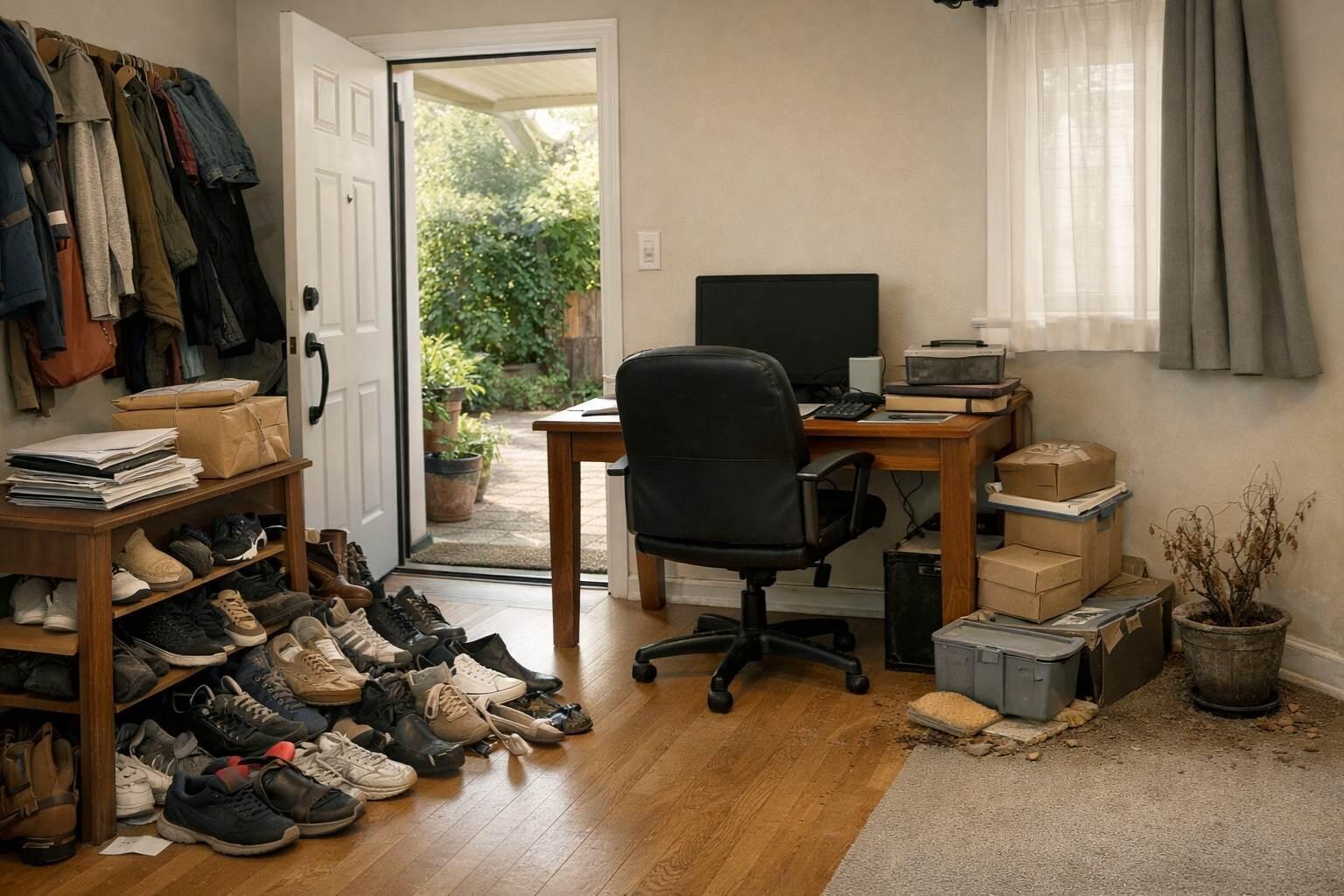
Blocking windows. Windows are how light and chi enter. Furniture placed in front of windows, heavy curtains that are rarely opened, or windows that are never cleaned all reduce the amount of chi coming in.
Keeping things "just in case." Storage areas filled with items you haven't used in years are major chi drains. Every object you own holds a thread of your attention. Releasing what you no longer need frees up your mental and energetic bandwidth.
Ignoring dead corners. Every room has corners where chi can pool and stagnate. A healthy plant, a floor lamp, or even a small piece of meaningful art in a dead corner activates that area and keeps energy moving through the whole room.
Building a Chi-Friendly Home Over Time
Improving the chi in your home isn't a one-time project — it's an ongoing relationship with your space. Start by addressing the most obvious blocks: clutter, poor light, broken items. Then pay attention to how the space makes you feel as you make changes. Your own responses are the most reliable chi detector you have.
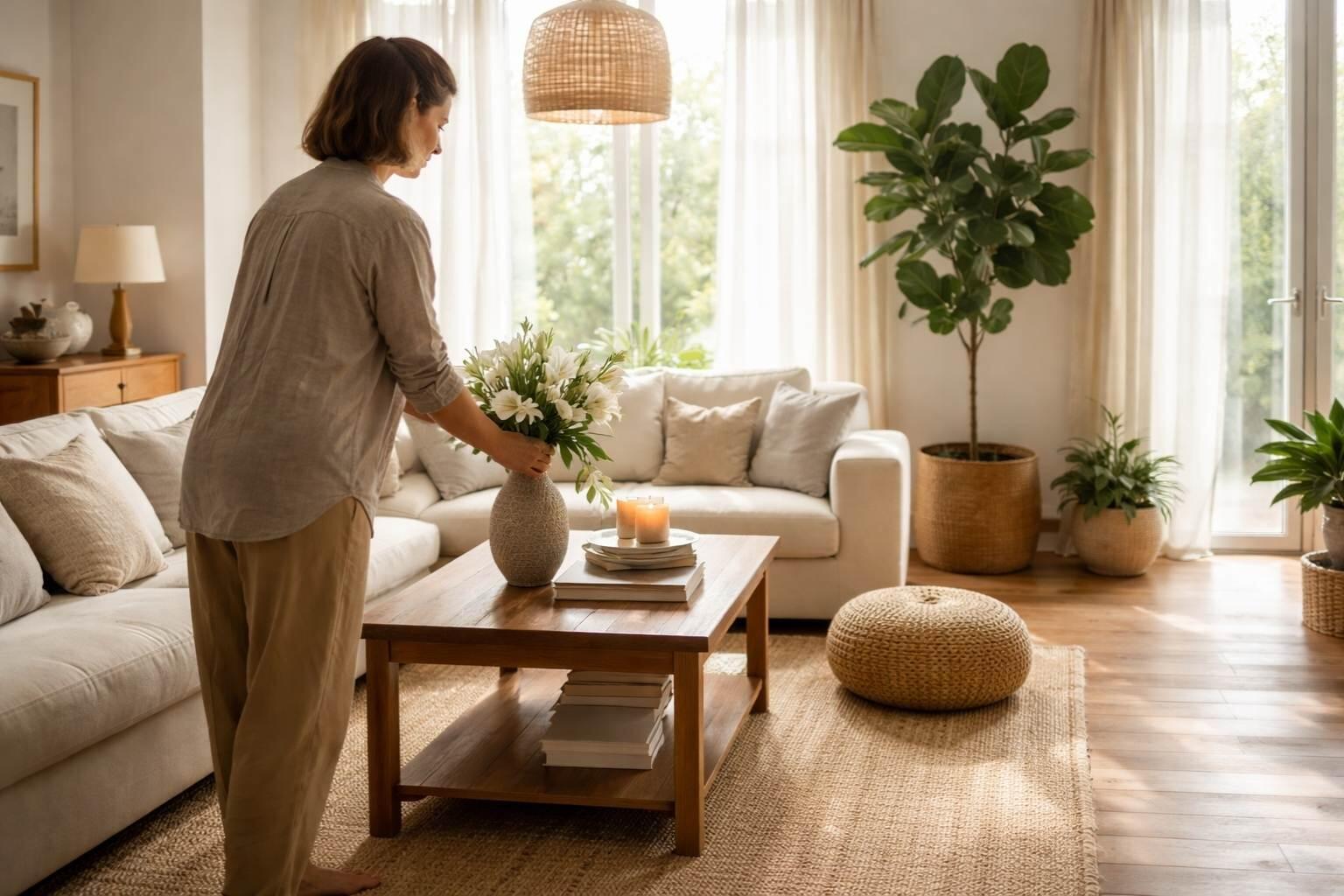
Over time, you'll develop an instinct for what good chi feels like in a room — that sense of ease, openness, and quiet vitality. Once you can recognize it, you'll also be able to identify when something's off and course-correct before small issues become big ones.
The real promise of Feng Shui isn't magical transformation — it's the practical improvement that comes from designing your environment intentionally. When chi flows well, your home supports rather than drains you. And that difference, lived out day after day, genuinely changes your quality of life.
More Feng Shui Tips