
Feng Shui Elephant: Meaning, Benefits, and Where to Place It in Your Home


Few feng shui symbols carry as much warmth and staying power as the elephant. Revered across multiple cultures — from ancient India to Southeast Asia, from Africa to China — the elephant represents strength, wisdom, protection, and good fortune.
In feng shui specifically, the elephant is one of the most versatile and beloved cures you can bring into a home. Whether you're looking to attract luck, stabilize your energy, or protect your space from negativity, there's likely an elephant placement that fits your intention.
The best part: you don't need to subscribe to any particular spiritual belief to appreciate what a well-placed elephant figurine can do for a room.
At its most practical level, it's a meaningful object that draws the eye, anchors a corner, and reminds you of qualities you want to cultivate. At its most energetic level, it's a powerful feng shui activator.
Let's break down what the feng shui elephant actually means, which styles carry which meanings, and exactly where to place one — or a pair — in your home for maximum effect.
A trunk-up elephant near the entrance or on a prominent shelf is the most traditional feng shui placement for welcoming good fortune into the home.
What Does the Feng Shui Elephant Symbolize?
In feng shui tradition, the elephant primarily symbolizes protection, wisdom, longevity, and the removal of obstacles. It's also associated with fertility and family unity, which is why elephant pairs and mother-and-calf figurines are popular gifts for couples and new parents.
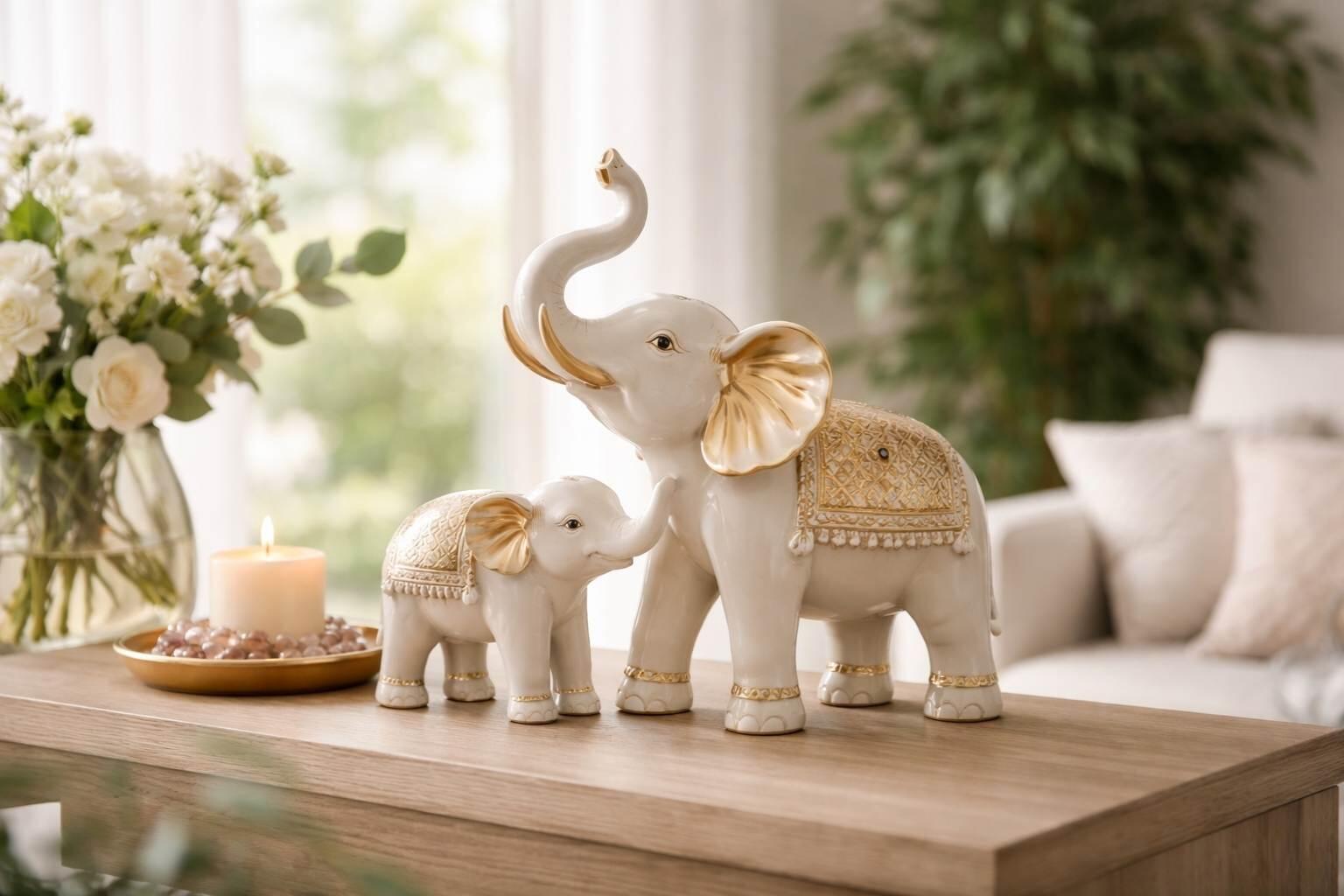
The elephant's size and strength make it a natural symbol of stability — when things feel uncertain or chaotic, an elephant placement can serve as a grounding anchor. Its long memory (a quality recognized universally) connects it to wisdom and patience.
And its gentle nature, despite its immense power, aligns with the feng shui ideal of force in service of harmony rather than aggression.
Trunk Up vs. Trunk Down: Does It Matter?
This is one of the most common feng shui questions about elephants, and the answer goes beyond a simple yes or no. An upward trunk symbolizes luck flowing into the air and spreading throughout the home, like a fountain of good fortune.
A downward trunk represents groundedness, fertility, and the steady accumulation of energy rather than its outward expression.
Both are considered positive in feng shui, despite what you might read online suggesting that trunk-down elephants are "bad luck." That's not an accurate reading of the tradition. Choose the style that appeals to you aesthetically and feels right for your intention.
Best Placements for Feng Shui Elephants
Where you place your elephant matters as much as which style you choose. The good news is that elephants are among the more flexible feng shui cures — they work in almost every room, unlike some symbols that are room-specific.
Front Door and Entryway
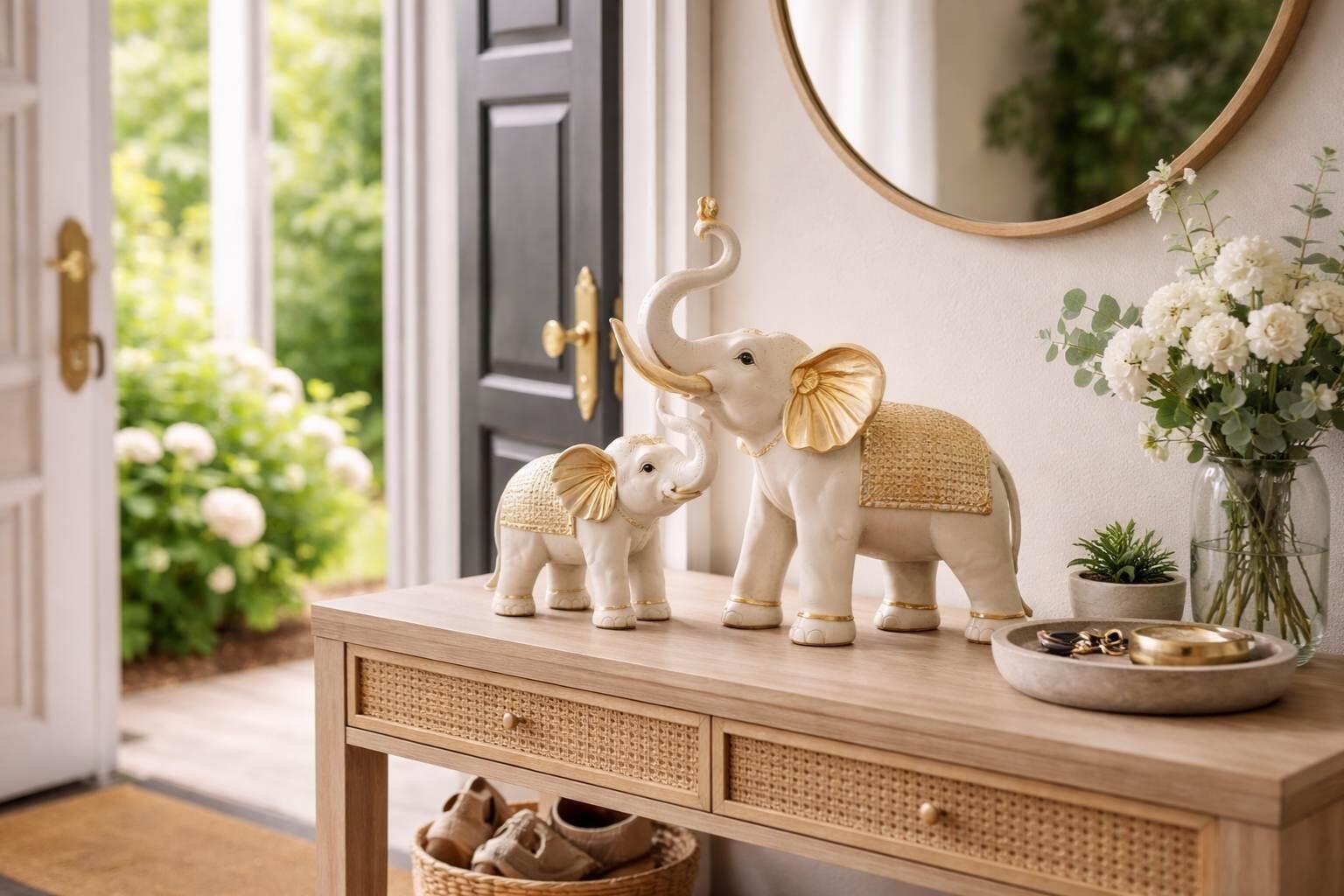
Placing a pair of elephants flanking your front door — either just inside or just outside — is a classic protective placement. They serve as guardians of the home, stabilizing the energy that enters and preventing negative influences from crossing the threshold.
Facing them inward (toward the interior of the home) is thought to welcome good luck inside; facing them outward is more of a protective, warding stance.
Living Room
In the living room, elephants placed near the main entrance or in a prominent corner activate protection and abundance for the whole family. A pair on a console table, a single statement piece on a bookshelf, or small elephants on a coffee table can all work well.
The living room is also a good place for an elephant with its trunk raised if you want to invite more social energy or prosperity.
For a more visible display, a larger elephant statue works well as a grounding focal point on a console table or living room shelving unit.
Home Office
The home office is one of the strongest placements for an elephant in feng shui. An elephant on the desk — particularly in the career area (north) or the knowledge area (northeast) of your desk or room — is thought to boost focus, memory, and professional stability. It's especially meaningful for anyone in a role that requires strategic thinking, leadership, or long-term planning.
Bedroom
Elephants in the bedroom are best used intentionally. A pair of elephants is a popular cure for relationship harmony and fertility. Place them on the nightstand, dresser, or a shelf where they're visible but not dominating the space. Avoid placing very large elephants in the bedroom — scale matters, and oversized pieces can make a bedroom feel heavy rather than restful.
What to Avoid When Placing Feng Shui Elephants
A few placement guidelines to keep in mind. Avoid placing elephants in the bathroom — water areas can dilute the symbolic energy of protective figures. Similarly, avoid the floor (it's considered disrespectful to place meaningful symbols at ground level). Shelves, mantels, side tables, and desks are all appropriate surfaces.
If you're gifting an elephant to someone, opt for the classic gold, white, or natural stone finishes — these are the most universally auspicious.
Black elephants can work in feng shui (they carry water element energy), but they're better suited to specific placements rather than general use.
Choosing the Right Material and Color
Material and color influence the elemental energy of your elephant. Here's a quick reference for the most common options.
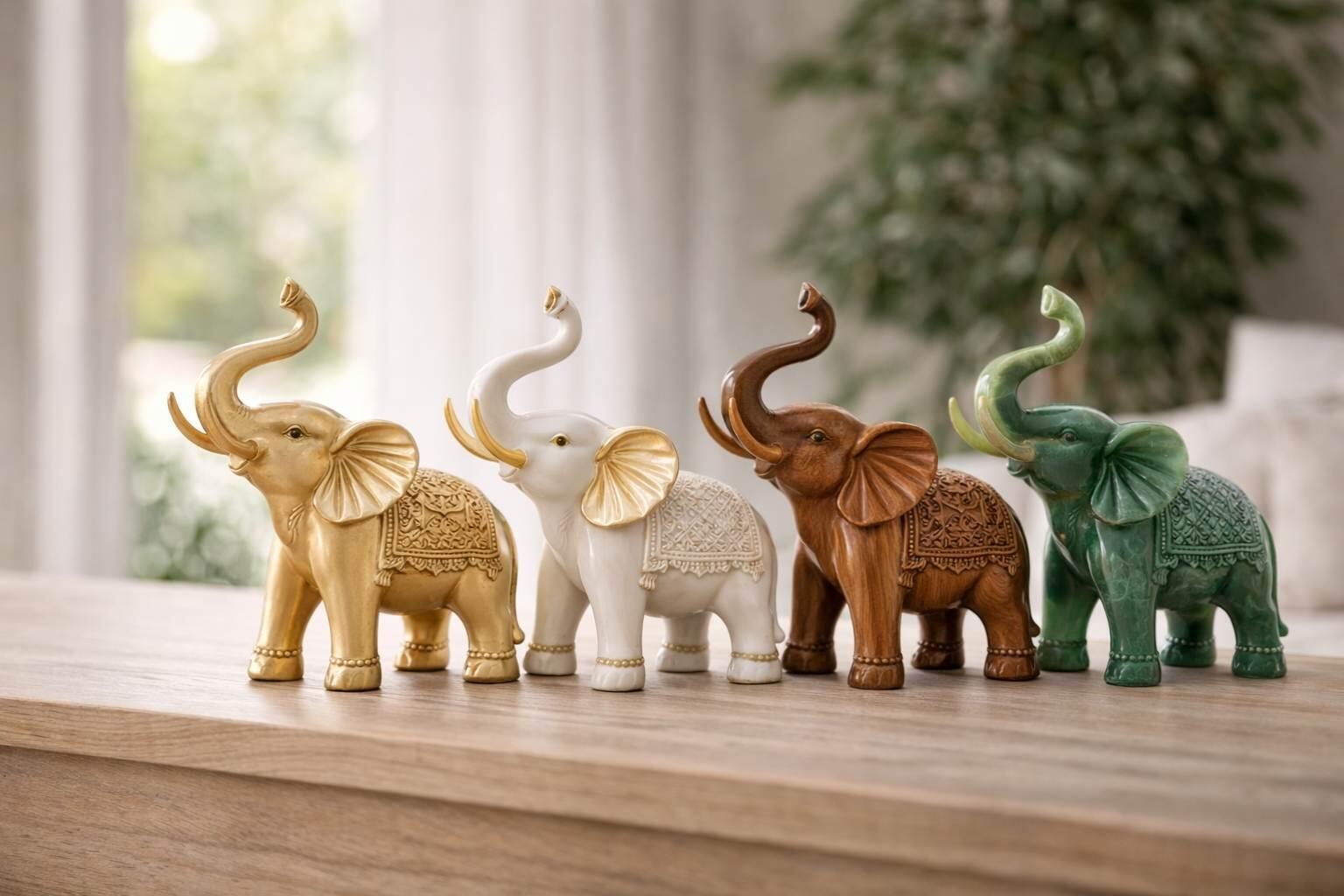
Gold or brass elephants activate the metal element and strongly connect with wealth and prestige — making them an excellent choice for home office or wealth corner placements.
White or light stone elephants (marble, jade) bring metal and earth energy, offering clarity and stability. Wooden elephants bring the wood element — growth, family, and vitality — making them lovely in the east (family) or southeast (wealth) areas.
Green jade elephants hold a special place in feng shui because they combine protective qualities with the ability to attract prosperity.
How Many Elephants Should You Have?
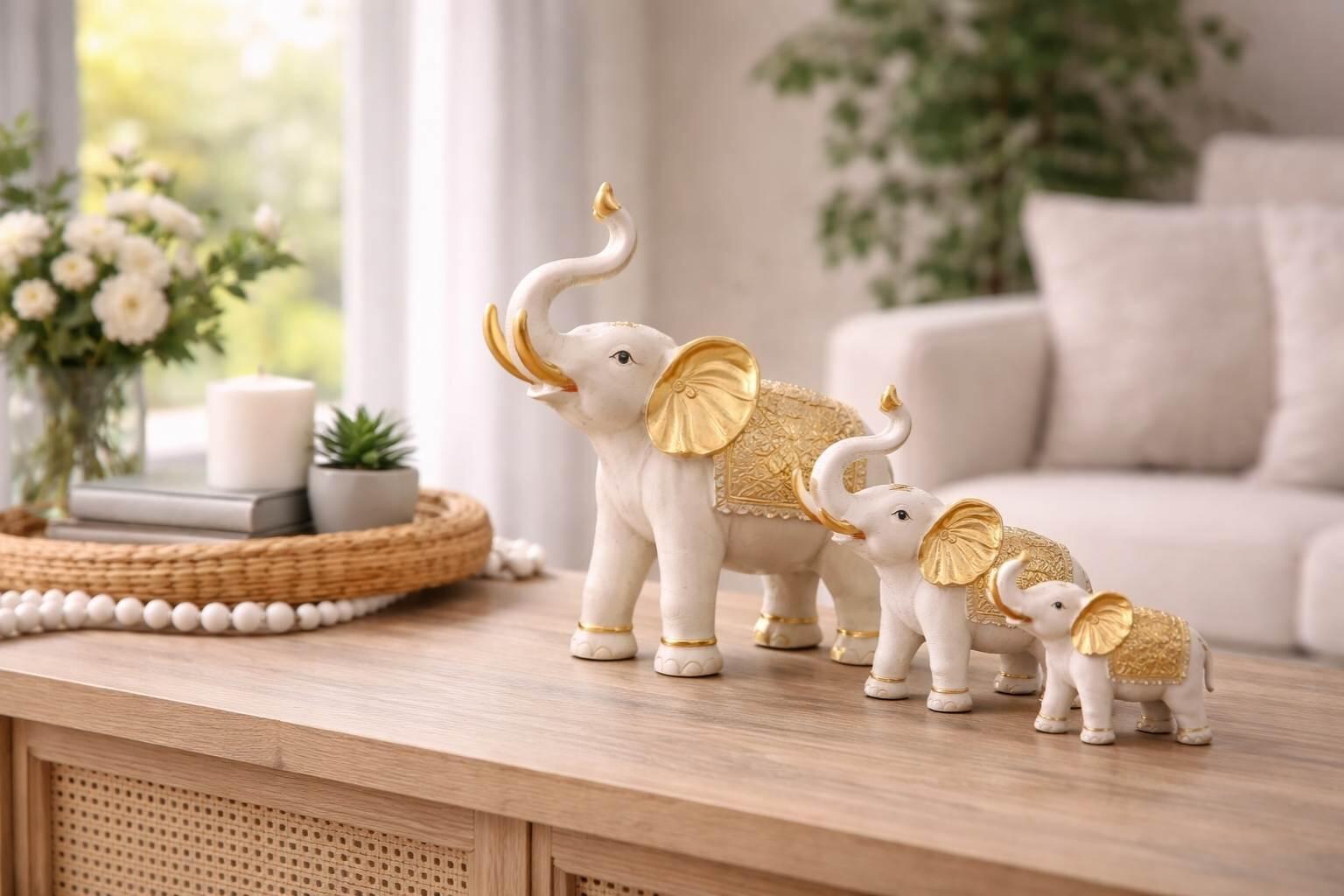
One is always meaningful and sufficient. A pair is traditional for relationship and protection purposes. Groups of three or more elephants in descending size represent family unity and generational continuity — a lovely concept for a family home.
Feng shui does not restrict using multiple elephants in different rooms, as long as you place each one with intention and the overall effect does not feel cluttered.
The most important thing is to choose an elephant you genuinely like — one that draws you in, feels beautiful in your space, and reminds you of the quality you want to cultivate.
Feng shui works best when the symbols you choose resonate personally, not just symbolically.
More Feng Shui Tips