
Feng Shui Colors by Bagua Area: A Room-by-Room Guide to Choosing the Right Palette


If you've ever walked into a room and immediately felt calm, creative, or strangely unsettled without knowing exactly why, color was likely part of the reason. In feng shui, color is one of the most powerful and accessible tools for shifting the energy of a space. Unlike furniture placement or architectural features, you can change paint colors relatively quickly — and the impact on both the visual atmosphere and the energetic feel of a room can be immediate.
Most feng shui color guides focus on a single room: the bedroom, living room, and kitchen. But the Bagua map gives us a broader framework — a way of thinking about which colors support which areas of life throughout the entire home. When you align your color choices with the Bagua, you're working with the specific energy you want to cultivate, not just choosing what looks nice.
This guide covers the eight Bagua areas (plus the center), the element and energy associated with each, and the colors that best support them. Use this as a starting point, not a rulebook — and always balance feng shui principles with what actually feels good to live in.
If you want a visual reference while decorating, a bagua map wall print like this one is a simple way to keep the nine areas in mind at a glance.
- A Quick Bagua Refresher
- Bagua Areas, Elements, and Their Colors
- North — Career (Water Element)
- Northeast — Knowledge and Self-Cultivation (Earth Element)
- East — Family and Heritage (Wood Element)
- Southeast — Wealth and Abundance (Wood Element)
- South — Fame and Reputation (Fire Element)
- Southwest — Love and Relationships (Earth Element)
- West — Creativity and Children (Metal Element)
- Northwest — Helpful People and Travel (Metal Element)
- Center — Health and Wellbeing (Earth Element)
- Practical Tips for Using Feng Shui Colors
A Quick Bagua Refresher
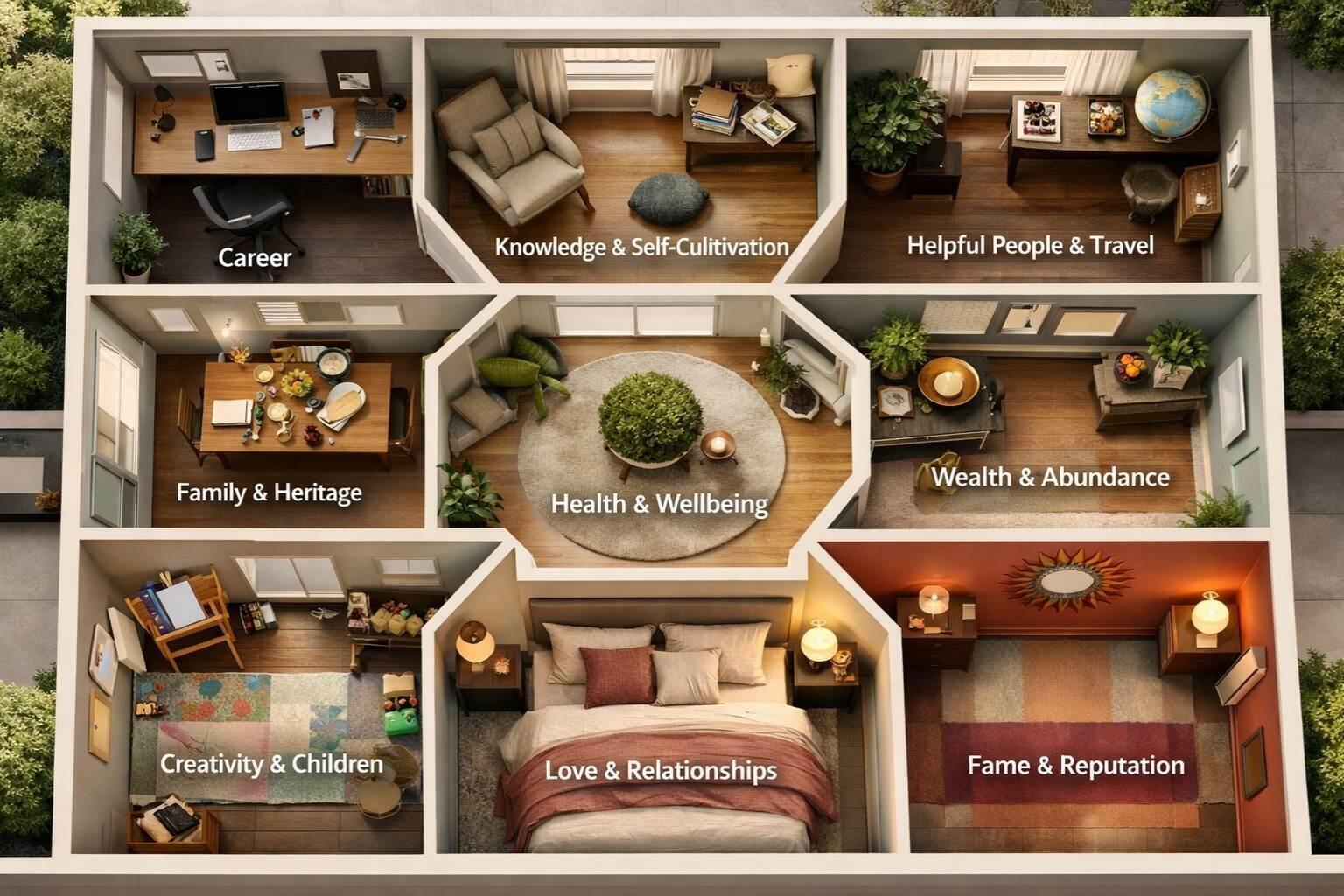
The Bagua is an octagonal energy map overlaid onto your floor plan to identify which areas of your home correspond to which life areas. The eight areas are: Career (north), Knowledge and Self-Cultivation (northeast), Family and Heritage (east), Wealth and Abundance (southeast), Fame and Reputation (south), Love and Relationships (southwest), Creativity and Children (west), and Helpful People and Travel (northwest). The center represents Overall Health and Well-being.
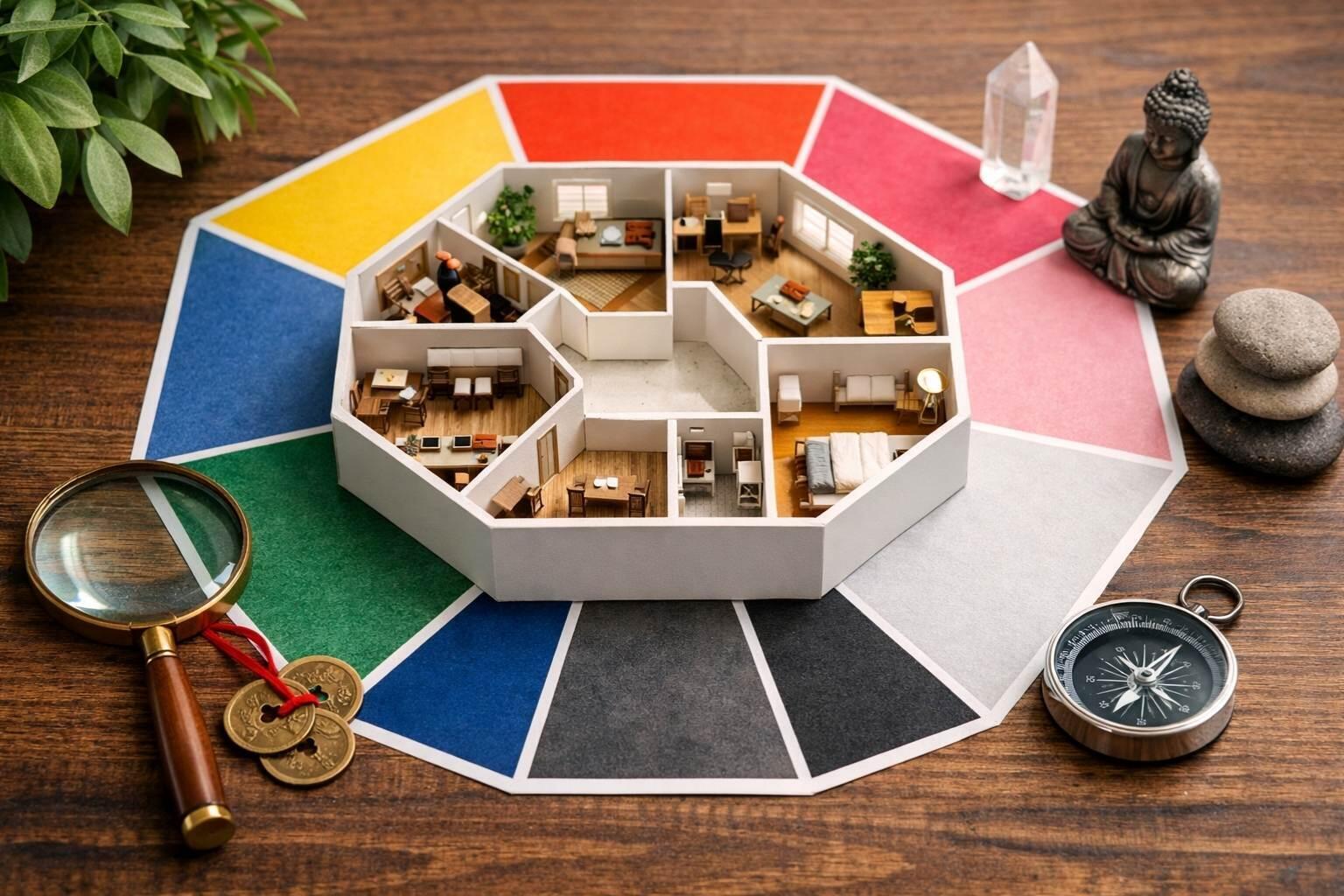
You can apply the Bagua to your entire home, to individual rooms, or even to a single piece of furniture. For color purposes, we'll focus on the full-home application — which areas of your house fall into which Bagua zone and which colors to use there.
Bagua Areas, Elements, and Their Colors
North — Career (Water Element)
The north area is governed by the water element and relates to your career, life path, and sense of flow. Water element colors are black and very dark navy or charcoal. Supporting colors include blues and grays. A north-facing room or corner benefits from these deep, still tones — think a navy accent wall in a home office or a charcoal gray hallway. Mirrors (which symbolize water) are also highly effective in this area.
Northeast — Knowledge and Self-Cultivation (Earth Element)
The northeast is an earth element area associated with learning, wisdom, and self-improvement. Earth tones work beautifully here: warm beiges, sandy yellows, terracotta, and light browns. This is a lovely area for a reading nook, study space, or meditation corner. Keep the palette grounded and calm — this isn't the area for bright, stimulating colors.
East — Family and Heritage (Wood Element)
The east is governed by the wood element and represents family relationships, health, and new beginnings. The colors here are greens and blues — especially fresh, living greens that evoke growth and vitality. This is an ideal area for houseplants (which bring literal wood energy), green walls or accents, and natural wood furniture. Family photos and heirlooms belong in this zone.
Adding a botanical print to the east area is one of the easiest ways to reinforce wood energy without rearranging any furniture.
Southeast — Wealth and Abundance (Wood Element)
The southeast is also a wood element area, but with a focus on prosperity, gratitude, and the flow of material resources. Like the east, greens work beautifully here, along with purple, which is the traditional feng shui color for wealth and luxury. Gold accents are also highly effective in this area. If your living room or a prominent corner falls in the southeast, consider adding a purple throw pillow, a green plant, or a gold-framed piece of art.
South — Fame and Reputation (Fire Element)
The south is fire element territory — passionate, bright, and energizing. The colors here are reds, oranges, hot pinks, and all fiery tones. The south area of your home supports recognition, visibility, and how the outside world perceives you. A broad red accent, candles, or a bold piece of art with warm tones can activate this area powerfully. Just don't overdo it — too much fire element can tip into aggression or burnout.
Southwest — Love and Relationships (Earth Element)
The southwest is an earth element area and represents romantic partnerships, marriage, and important relationships. The colors are pinks, peaches, beige, and all soft, warm earth tones. This is the most important area to pay attention to if you're looking to attract or strengthen a romantic relationship. Pairs of objects, rose quartz, and soft pink accents all belong here.
West — Creativity and Children (Metal Element)
The west is governed by the metal element and relates to creativity, joy, and children. Metal element colors are white, gray, and metallic tones — silver, gold, and copper. This area benefits from clean, crisp walls (white or very light gray), metallic accents, and circular shapes (which represent the metal element). If you have a creative studio or a children's room in the west of your home, you're already in an energetically supportive position.
Northwest — Helpful People and Travel (Metal Element)
The northwest is also a metal element, associated with mentors, support from others, and travel. Colors are the same as in the West: whites, grays, and metallic tones. This is a good area for a home office if you rely on networking and collaboration, or for a guest room if you frequently host visitors who support you in meaningful ways.
Center — Health and Wellbeing (Earth Element)
The center of the home is perhaps the most important area in feng shui — it affects all the other areas, like the hub of a wheel. It's governed by the earth element, and the colors here are warm earth tones: yellow, ochre, terracotta, and sandy beige. Keeping the center of your home clear, clean, and decorated with grounding earth tones has a stabilizing effect on the entire household's energy.
Practical Tips for Using Feng Shui Colors
You don't need to repaint every room to apply Bagua colors. Accent walls, throw pillows, rugs, curtains, art, and decorative objects can all carry color energy without full commitment. If you love your existing wall color but want to bring in more of the Bagua-appropriate energy, start with one or two accent pieces in the corresponding color.
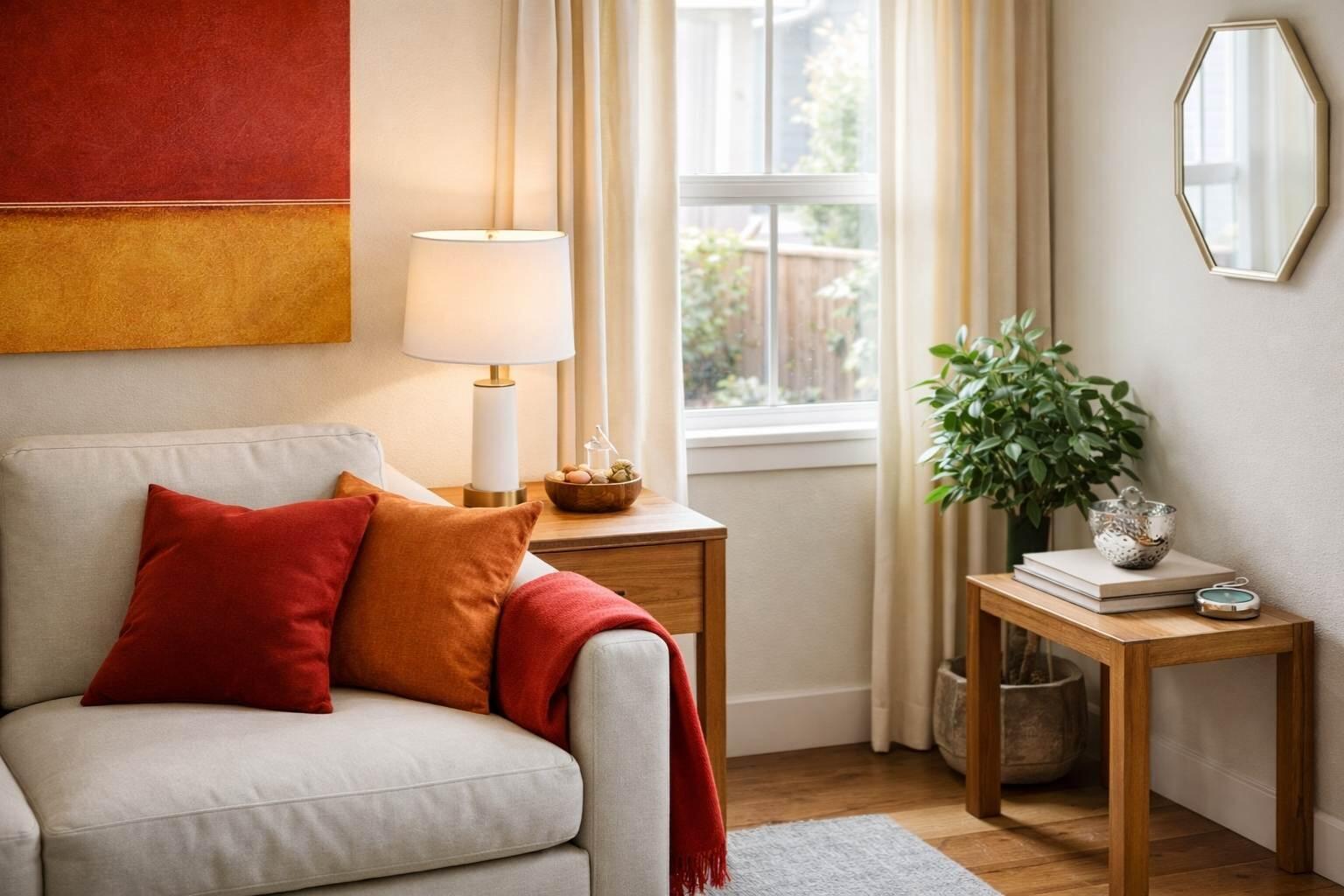
Also, remember that in feng shui, the goal is always balance. A south wall covered entirely in red may technically support fame energy, but it will be exhausting to live with.
Use the suggested colors as a guide, then dial them to a level that feels harmonious in person. A touch of red in the south goes a long way.
More Feng Shui Tips